Google AI Mode: the Evolution of Search and the New Rules of SEO

SEO
December 11, 2025
9 mins
Google AI Mode and SEO
Content

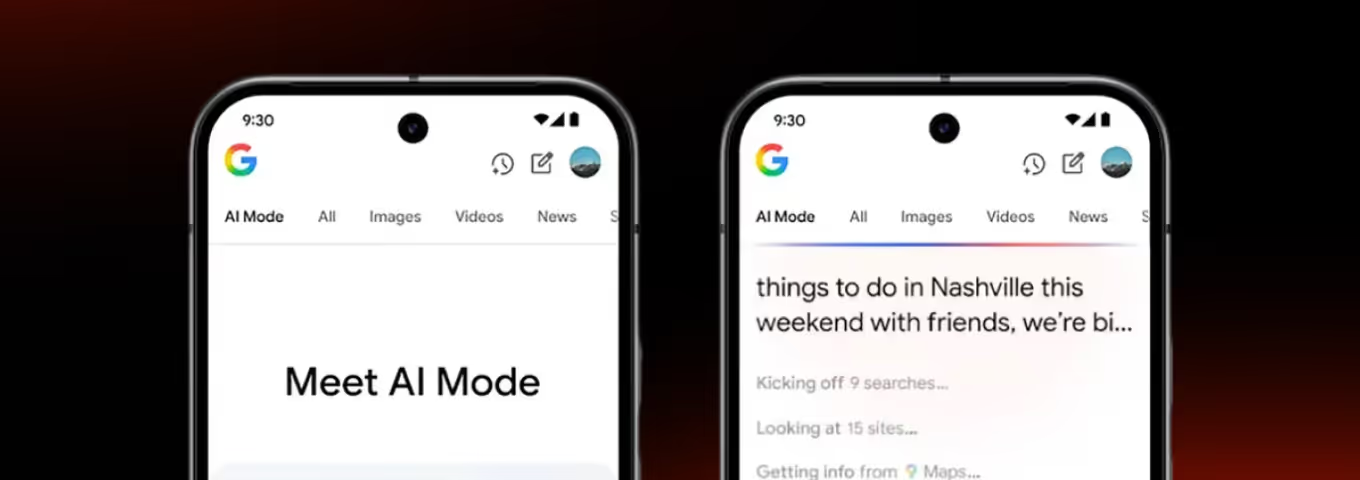
Google AI Mode is an innovative, experimental search interface that leverages the power of large language models (LLMs), such as Gemini, to generate synthesized, comprehensive answers to complex queries directly within the search results.

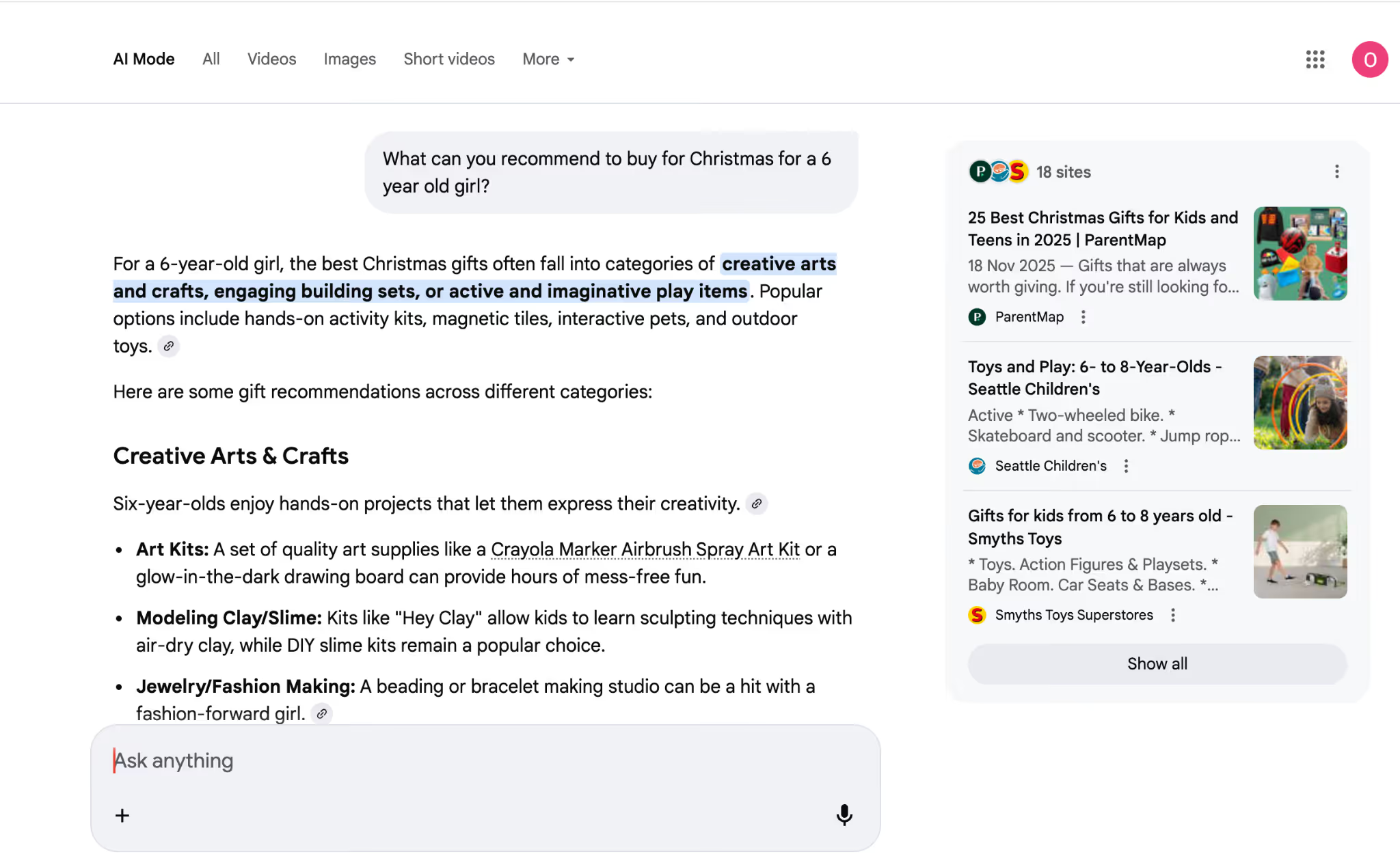
Instead of a traditional list of links, the user receives a ready-made, well-structured overview of the topic — complete with cited sources, multimedia elements, and the ability to refine the query in a conversational format.

AI Mode doesn’t replace traditional search and SEO optimization.
It introduces a new, deeper way of interacting with information — one designed for solving complex tasks, planning, analysis, and in-depth research.

In essence, it’s “search + conversation + deep exploration,” where the final results are shaped not only by the classical ranking algorithm, but also by an advanced language model.
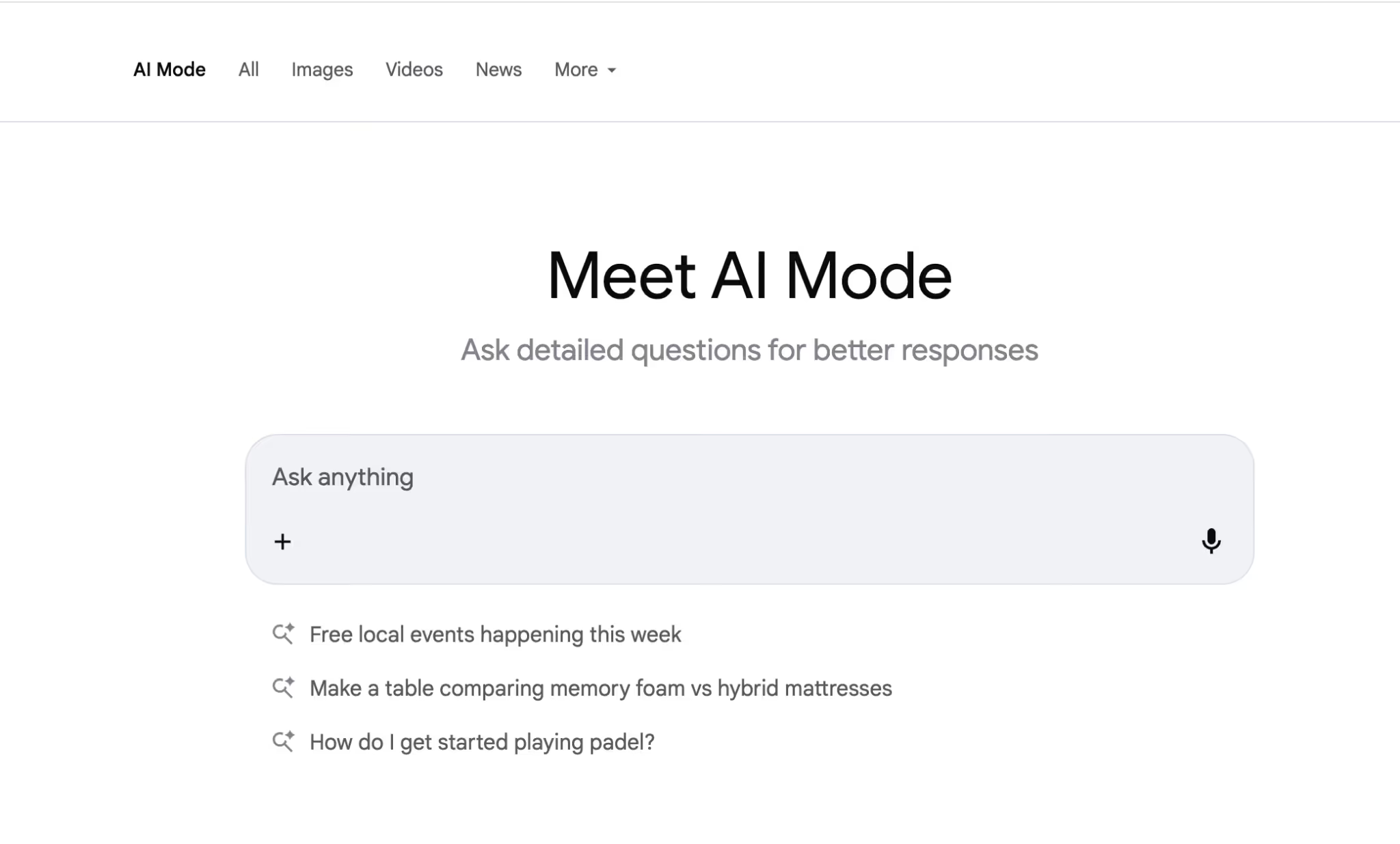
what is AI mode

Where AI Mode Is Available and How to Enable It

By the end of 2025, Google rolled out AI Mode in more than 180 countries.

How to enable it:

  1. Go to google.com or open the Google app.
  2. Enter a query — in some cases, a dedicated “AI Mode” tab will appear.
  3. On mobile, you can activate the mode through the search method selection panel.
  4. In certain regions, full functionality requires a Google One AI Premium subscription.

Google also recommends enabling Search History (Web & App Activity) so the mode can “remember” your context and deliver more relevant results.

How AI Mode Works

1. Query Fan-Out — breaking the query into subtopics

This is the core technique behind AI Mode.

How it works:

  • It receives the query (text, voice, image, or PDF).
  • Breaks it down into several logical sub-questions.
  • Performs search operations for each sub-query across multiple sources.
  • Collects the findings and sends them to the Gemini LLM.
  • The model synthesizes a single, comprehensive answer.

2. Multimodality

AI Mode supports:

  • text-based queries,
  • voice search,
  • image uploads,
  • PDF documents for analysis,
  • visual search

3. Synthesized answer + conversational mode

AI Mode generates a cohesive response with source citations, and the user can:

  • ask a follow-up question,
  • expand the topic,
  • change the direction of the search.

4. Deep Search

For more complex subjects, Google may automatically suggest Deep Search — an expanded, more detailed exploration that pulls information from a broader set of sources.
Key Capabilities of AI Mode

  • Comprehensive answers to complex questions.
  • Multimodal input: voice, text, images, and documents.
  • Contextual sessions — the ability to “remember” context within a single search session.
  • Topic deepening — AI Mode uncovers related angles and subtopics.
  • Source citations with clickable links.
  • Agent-like features: planning, booking assistance, and option discovery.
  • Canvas — a workspace for saving and organizing information.
  • Automations: price tracking, event monitoring, ticket alerts.

the example of answer in AI mode

SEO in 2026: How to Optimize Content for AI Mode

AI Mode fundamentally reshapes SEO. Google is shifting from “keyword-based search” to semantic, multi-layered topic exploration.

Today, several key strategies already stand out:

1. Structured Content

  • multiple subheadings (H2–H3),
  • lists, fact boxes, tables,
  • clear separation of topics into subtopics.

This helps the query fan-out algorithm identify the right fragments.

2. Semantic Topic Coverage

Google prioritizes content that covers a topic thoroughly and comprehensively.

It’s no longer about a single keyword — it’s about the semantic core, all topic clusters and subtopics that AI Mode can use in its synthesized answer.

3. Relevance Engineering / AI-First Optimization

A new trend focused on optimizing content for how AI Mode selects sources and how the LLM synthesizes answers.

This includes:

  • concise responses to user questions,
  • explanatory blocks within articles,
  • coverage of related themes and subtopics.

4. E-E-A-T

Experience → Expertise → Authoritativeness → Trust.
For AI Mode, this component is even more critical than in traditional search.

5. Structured Data (Schema.org)

Helps Google index, understand, and “cite” your page more accurately.

6. Multimedia

Content enriched with images, videos, and infographics performs better — AI Mode supports multimodal responses.

Want AI Mode to Mention Your Brand?
Contact our SEO team!


How AI Mode Changes Traditional SEO?

AI Mode shifts the focus from exact-match keywords to semantic depth, because the system analyzes not just phrases but the full context of a query and its subtopics.

Zero-click searches continue to rise as users get immediate answers without leaving the search results. Meanwhile, backlinks become less decisive: AI Mode selects sources based on content quality, structure, and expertise — not link volume.

In essence, traditional SEO is moving from optimization for ranking to optimization for understanding. What truly matters now is creating deep, trustworthy, well-structured content that the system can confidently use in its generative responses.

AI Overviews vs. AI Mode

Key DifferencesAI OverviewsAI Mode
Response FormatShort, automatic summaries that appear above traditional search results.Expanded, in-depth, detailed answers with full topic synthesis.
Interactivity LevelStatic block with no option for dialogue.Full conversational mode with follow-up questions.
Information DepthCovers only the essential aspects of the query.Unpacks subtopics and provides multi-layered explanations.
Use CasesBest for quick answers to simple informational queries.Designed for complex research, planning, and in-depth topic exploration.
MultimodalityWorks primarily with text.Accepts text, voice, images, and PDF documents.

AI Overviews are a “quick answer”, while AI Mode is a “deep exploration.” They are complementary tools — not replacements for one another.

AI Mode vs. ChatGPT Search

Although AI Mode and ChatGPT Search both rely on LLMs to answer user queries, they operate within fundamentally different ecosystems.

Key DifferencesAI ModeChatGPT
Multimodality & CapabilitiesSupports voice, images, PDFs, planning, and agent-like actions.Primarily focused on text, with occasional additional tools.
Information FreshnessWorks with real-time data.Freshness depends on the model version and whether Browsing is enabled.
PurposeA tool for search, analysis, and topic research.A tool for dialogue, explanation, and content generation.
Transparency of AnswersAlways shows source citations.Not required to cite sources and often does not.
Information SourcesUses Google’s up-to-date index and retrieves data from the live web.Relies on model knowledge, with some updates via browsing or plugins.

AI Mode is a search-and-analysis tool by Google, while ChatGPT is a universal language assistant designed for dialogue and creative tasks. 

They do not directly compete — they serve entirely different purposes.

AI Mode Highlights

AI Mode can significantly simplify everyday tasks, such as:

  • Travel planning:
    The AI can suggest optimal routes, create itineraries, and recommend attractions.

  • Service bookings:
    AI Mode can automatically select suitable agents for booking flights, hotels, restaurant tables, event tickets, wellness appointments, and other services based on location and user preferences.

  • Personalized recommendations:
    By analyzing user behavior and preferences, the system suggests products, services, and events that best match individual interests.

Predictions: Will AI Mode Replace Classic Google Search?

Current data shows that AI Mode is reshaping how users interact with search—yet it will not fully replace traditional Google Search anytime soon. Instead, it will function as an additional, premium tool for specific types of queries. Classic search will remain dominant for transactional, navigational, and simple informational queries, while AI Mode will focus on complex analytical tasks and planning.

Final Thoughts

Google AI Mode is the most significant shift in search in the past 20 years. It merges the power of Google’s index with advanced language models, creating a new form of generative search.

For SEO, this marks a paradigm shift: from keyword-focused optimization to optimization for topic depth, structure, expertise, and alignment with user intent.

Win Traffic from AI Mode
Let our SEO team optimize your content for the next era of search.
Written by
Oksana Babenko

SEO Specialist at Promodo

More than 7 years in SEO. I have processed SEO projects in healthcare, apparel and footwear, cosmetics, and legal services.

Published:
December 11, 2025
Updated:
Subscribe to our newsletter
This is some text inside of a div block.
Thank you! Your submission has been received!
Oops! Something went wrong while submitting the form.
List of the US Trust worthy Automotive Forums
DOWNLOAD

You may also like

Check our similar articles

Choose quality and trusted services to improve the presence of your company on the Internet, and feel free to contact our UK team if you have any questions.

SEO
GEO: How to Adapt to AI Search and Outpace Competitors

For years, we’ve been optimizing content for Google, focusing on keywords, structure, and technical signals.

October 10, 2025
11 mins
SEO
How to Optimize Your Content for LLM in 2025

With the development of technology and the changing demands of online audiences, content is evolving as well.

September 8, 2025
13 mins
SEO
SEO Trends 2025

With the advancement of artificial intelligence and the evolving behavior of users, the rules of the game are changing.

January 2, 2025
11 min
Boost your effectiveness

We at Promodo are ready to help you improve your performance across all digital marketing channels.

Get started
Contact us
Get a free strategy session

Let us look at your business challenge from a different angle and share our ideas.

Valid number
Send message

By clicking on “Send message” button, you agree to our Privacy Policy, and allow Promodo to use this information for marketing purposes.

Please check your inbox for a new email containing a list of reputable automotive forums.
Got it
Oops! Something went wrong while submitting the form.