


Content



Team Lead of Content for promodo.com
Experienced in working with data, expert recommendations, and real business cases to create clear and valuable content that delivers real business impact. Passionate about discovering new insights, exploring industry trends, and turning complex topics into practical, easy-to-understand content.

The cost per click in paid advertising has increased by 12.88%, while the average cost per lead has grown by 5% within the past year. For eCommerce businesses that have tight margins and intense competition, this means every PPC mistake becomes significantly more expensive.
Together with PPC specialists at Promodo, we’ve compiled 12 common PPC mistakes to avoid in order to prevent wasted budget and maximize conversions across your eCommerce campaigns.
We constantly emphasize that any marketing strategy must be grounded in real business goals. When those goals aren’t clearly defined, it leads to choosing the wrong KPIs. As a result, such a PPC mistake can lead to the wrong optimization strategy.
For example, you might optimize campaigns for clicks, CTR, or even the number of conversions. But in eCommerce, these metrics don’t always translate into actual revenue. As a result, your ads may look successful in the dashboard, while in reality, they fail to generate meaningful business impact.
A strong PPC strategy starts with clearly defined business KPIs: ROAS, profit, margins, or customer lifetime value (LTV). These are the metrics that should guide your decisions—especially in eCommerce, where not all products, orders, or customers приносять однакову цінність. Focusing on vanity or intermediate metrics can mislead optimization efforts and quietly drain your budget without delivering real growth.
.webp)
All PPC experts at Promodo rely on unit economics when building paid advertising strategies for our clients. Such an approach is especially effective in eCommerce, where every product’s margin, cost, and profitability directly impact scaling decisions.
Google Ads is a complex ecosystem powered by automation and machine learning, where algorithms distribute budgets and optimize campaigns in real time. But their effectiveness depends entirely on the quality of the data they receive. If your analytics setup is flawed, the system will optimize toward the wrong signals. As a result, you’ll waste your budget without generating real results.
In eCommerce, this problem is even more critical: inaccurate data can lead to scaling unprofitable products or undervaluing high-margin ones.
To avoid this, regularly check the connection between Google Analytics 4, Google Ads, and your CRM system. You need to ensure that events are tracked correctly and data is properly transmitted (including UTM parameters and GCLID). Without this foundation, any automation loses its value. It can also end up working against your business instead of driving growth.
It’s impossible to effectively manage all audiences and demand types within a single campaign or unified strategy. In eCommerce, user intent varies considerably. That’s why a lack of segmentation quickly leads to inefficiency and wasted budget.
A universal framework for structuring and segmenting audiences in PPC is the marketing funnel. At the top level, you have cold audiences, which you can reach through video and display formats such as YouTube, Google Display Network, and social media advertising.
For users in the consideration phase, you can guide decision-making through Search campaigns, Demand Gen, and Performance Max. At this stage, Google Shopping and remarketing also play a critical role in eCommerce performance. It helps to re-engage users who have already shown interest in products.
To build a logical campaign structure, you can go beyond the classic funnel and use more modern models. For example, the 4S framework (Stream, Scroll, Search, Shop) helps better understand how users move between different content formats and channels. Meanwhile, influence maps allow you to evaluate the role of each touchpoint in the final purchase decision. Using such approaches is especially important in complex eCommerce journeys because their conversion paths are rarely linear.
.webp)
A superficial or outdated approach to keyword management often leads to inefficient performance in paid advertising channels.
Google Ads offers different keyword match types, and each serves a distinct purpose in the funnel:
Equally important is ongoing search term analysis. PPC experts at Promodo recommend reviewing search term reports at least once a week for active campaigns. This helps identify irrelevant queries early, refine targeting, and continuously expand your negative keyword lists. In such a way, you ensure that your budget is focused only on searches that can drive real sales.
Without a systematic approach to negative keywords, even a well-structured campaign in Google Ads will inevitably start attracting irrelevant traffic. This leads to wasted budget, lower conversion rates, and distorted performance data.
Regular search term analysis is very important. For active campaigns, we recommend reviewing search queries at least once per week. This allows you to quickly identify non-converting searches and continuously expand your negative keyword lists.
For larger eCommerce accounts, this process should be structured and scalable:
It’s also important to remember that keyword and negative keyword management is not a one-time task. Search behavior and eCommerce market trends change constantly. That’s why ongoing optimization is critical. And this naturally leads to the next PPC common mistake…
An effective PPC strategy cannot focus only on keywords and bids. It requires continuous analysis of context: how demand shifts, what influences user decision-making, and which external events are reshaping search behavior.
A good example is our case study with Customs Support Group, a leading European provider of customs and trade services. During our collaboration, the PPC team at Promodo maintained close communication with the client to better understand market dynamics and evolving user needs. One key insight we identified was the growing trend of users searching for customs-related solutions through AI tools. Instead of ignoring this shift, we quickly integrated it into paid advertising communication. Campaign messaging was adjusted to address this behavior directly: while AI tools may offer convenience, they can also produce errors. In contrast, Customs Support Group provides accurate, verified, and fully tailored solutions delivered by experts. This approach demonstrates a key PPC principle: eCommerce and service performance depend not only on internal optimization, but also on how quickly you adapt to changes in user behavior and market context. As a result of implementing these and other approaches in the PPC strategy for Customs Support Group, we achieved a +266% increase in Won Deals.

In 2026, one of the biggest mistakes in PCC advertising for eCommerce is underestimating the role of the product feed because it deliberately limits campaign performance. While many advertisers still focus primarily on audiences and bidding strategies, product data is actually the foundation on which Google Ads algorithms decide when, where, and to whom your ads are shown.
Product titles, descriptions, categories, attributes, pricing, and availability determine how the system understands your inventory and prioritizes it in auctions. If this data is incomplete, inconsistent, or poorly optimized, even the strongest bidding strategy will not deliver expected results. When we are talking about large eCommerce stores, feed quality directly impacts the opportunity of automation.
At the same time, feed optimization goes beyond the Google ecosystem. The same data structure also influences performance in platforms like Meta Ads Manager, where purchase decisions are often faster and driven by visual and informational triggers.
A strong example is the case study of the online wine retailer goodwine. During analysis, we identified key decision factors for wine selection: grape variety, country of origin, and discount availability. Based on these insights, the product feed was expanded with relevant tags and attributes to strengthen algorithmic signals. Additionally, using Promodo’s internal Feed Optimizer tool, we implemented overlays on product cards within Meta campaigns, highlighting the attributes most important to users. It caused +305% conversion rate growth.

Even when performance metrics in Google Ads show strong results and KPI achievement, it is essential to compare them with the overall performance of product categories across all sales channels. Otherwise, there is a risk of forming a distorted view of demand and missing out on potential revenue at the assortment level.
For example, in our practice, we worked with the iPhone 16 Pro 128GB. The white color variant was actively sold through advertising and demonstrated stable performance. At the same time, the identical product in black received almost no impressions or clicks.
This clearly highlights a common issue: campaign-level optimization does not always reflect the true performance reality at the product level. Some variants may be overrepresented, while others are completely ignored by the algorithm.
That’s why it is critical to analyze the product assortment holistically, taking into account sales data, profitability, and demand behavior across channels.
At Promodo, we use an adapted ABC-XYZ approach in PPC to structure campaigns around different product groups based on sales volume and advertising cost share. This allows us not only to allocate budget more efficiently, but also to align paid media activity with the real economics of the business.
Users are exposed to 4,000–5,000 brand messages. Every single day!
So businesses simply can’t afford to rely on weak creatives. In eCommerce and digital services, weak creatives are those that lack a clear value proposition, don’t match user intent, and ultimately they result in low CTR.
Even with well-structured campaigns in Google Ads, the creative often determines whether your ad gets the click and how much it will cost. If the message is too generic or fails to address user needs, you target audience will simply ignore it.
A strong example is our work with FREETOUR.com. When launching Performance Max campaigns, we conducted in-depth audience analysis and used those insights to develop localized creatives tailored to user expectations. Beyond clear CTAs, we emphasized key trust triggers directly in the ads—such as high tour ratings and the number of positive reviews. These elements play a decisive role at the moment of booking, helping users feel confident in their choice and significantly improving campaign performance.

One of the most underestimated common PPC mistakes to avoid is ignoring low-frequency demand. Many businesses focus only on obvious, high-volume keywords. That’s why they miss out on a significant share of potential conversions. Long-tail queries often signal highly specific intent for eCommerce stores, which can convert even better than generic searches.
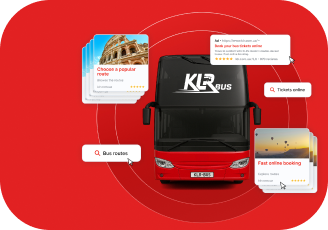
A great example is our case study with KLR, a carrier operating across 16 European countries. The company served 50 routes and each of them was supported by standard search ad groups like “Kyiv – Rome” and “Rome – Kyiv.” Despite this, bus occupancy remained below expectations. After deeper analysis, we uncovered a key insight: users were not only searching for direct routes, but also for dozens of combinations with intermediate cities. In total, there were up to 50,000 possible route variations that were not covered by the existing campaign structure. To scale coverage without losing control, we implemented Promodo’s internal tool G-MOS, which automatically generates, launches, and updates campaigns in Google Ads based on product feed data. The result: a 5x increase in ticket sales, driven by systematic work with low-demand queries that had previously been overlooked.
As seen in previous cases, trying to achieve strong PPC performance without automation is one of the biggest mistakes in PPC advertising. The importance of PPC automation is huge for eCommerce because they usually have large product catalogs and constantly changing data.
At Promodo, we address this challenge with proprietary tools:
By leveraging these tools, we achieved a +318% increase in transactions for the online store EXIST.UA, which manages a catalog of over 1 million products.

Common PPC mistakes doesn’t end once a user lands on your website after clicking an ad. In fact, the most critical stage begins after the click which determines whether conversion will happen. Any issues at this point can completely undermine even perfectly optimized campaigns.
The most common UX/UI reasons that reduce conversions include irrelevant landing pages, slow loading speed, complicated navigation, and more. If the page doesn’t match the expectations set by the ad creative, users will simply leave the site. We recommend regularly analyzing user behavior, testing landing pages, and optimizing them for specific campaigns.
PPC in 2026 requires a systematic approach to data, product assortment, creatives, and non-standard strategies. Most mistakes don’t come from the tools themselves, but from the lack of a well-thought-out strategy. It is the one that includes a proper account structure, a high-quality feed, strong creatives, automation, and continuous optimization.

[[FAQ-START]]
The most common PPC mistakes include poor campaign structure, lack of segmentation, weak keyword strategy, ignoring search intent, low-quality creatives, and the absence of post-click optimization. Many advertisers also overlook automation and fail to align campaigns with real business KPIs, focusing only on surface-level metrics like clicks or traffic.
The biggest mistakes in PPC advertising are usually strategic rather than technical. These include managing all products or audiences within a single campaign, failing to work with large product assortments effectively, neglecting data analysis, and not adapting to algorithm-driven platforms like Google Ads. Another critical issue is the disconnect between ads and landing pages, which leads to lost conversions.
Fixing PPC mistakes starts with a structured approach: audit your campaigns, segment products or services based on performance, and align your strategy with business goals such as profitability. Improve your data quality (including product feeds), test creatives регулярно, and implement automation where possible. Just as importantly, optimize post-click experience — ensure landing pages are relevant, fast, and designed to convert.
[[FAQ-END]]
Team Lead of Content for promodo.com
Experienced in working with data, expert recommendations, and real business cases to create clear and valuable content that delivers real business impact. Passionate about discovering new insights, exploring industry trends, and turning complex topics into practical, easy-to-understand content.
You may also like
Choose quality and trusted services to improve the presence of your company on the Internet, and feel free to contact our UK team if you have any questions.

Blogging is about updating the content on your site with fresh vet care content. This way, you’ll permanently prove your vet expertise and engage with the immed

While companies take competitive analysis reviews individually, there is an urgent need for such review performances in the new normal we are all bound to.

More than 7% of daily searches on Google are healthcare-related, which amounts to over 70,000 searches every minute or more than 1b. a day.
We at Promodo are ready to help you improve your performance across all digital marketing channels.
Get started



.avif)
.avif)
.svg)


