


Content



Marketing Specialist at Promodo
I have been working in marketing since 2012 with an emphasis on market research and analytics. I am experienced in the following niches: food wholesale, insurance, real estate, and software distribution. I have been responsible for Promodo's cases since 2021. Doing marketing research, I focus on causes and effects, as well as measurable results.

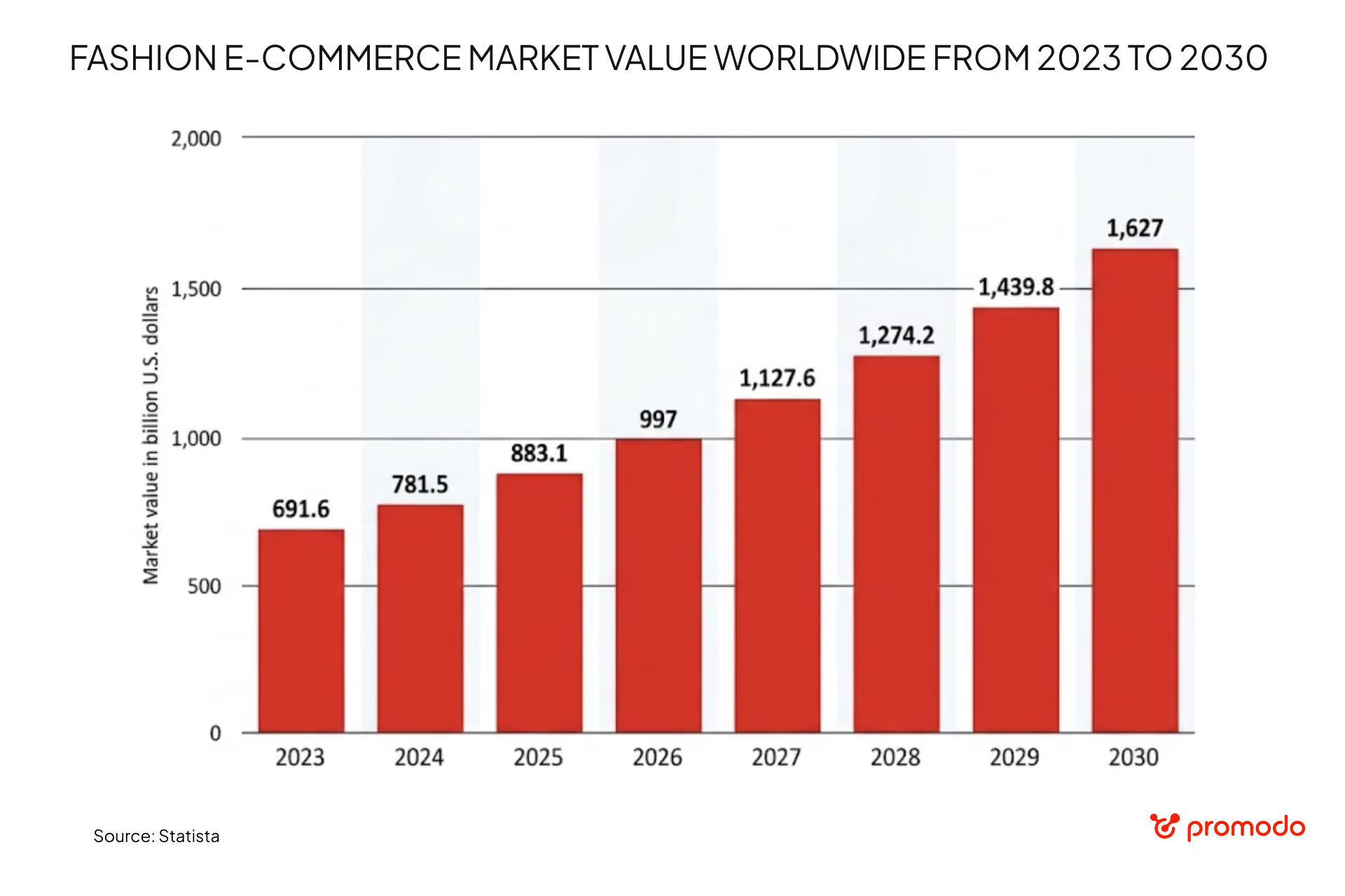
The growth of mobile fashion commerce demonstrates the expansion of the global fashion market itself. In 2026, the global eCommerce fashion industry is valued at approximately $997 billion, and projections indicate the market will surpass $1.6 trillion by 2030. This rapid growth is driven by changing consumer expectations, improved digital shopping experiences, and the increasing adoption of mobile-first retail strategies.
At the same time, mobile applications have become a critical competitive advantage. From fast fashion giants and luxury brands to online marketplaces, retailers are investing heavily in app ecosystems that offer personalized recommendations, loyalty programs, AI-powered shopping assistants, and seamless checkout experiences.
This report by Promodo explores the current state of the mobile fashion application market, analyzes consumer behavior and download trends, and examines the factors shaping the future of fashion commerce through mobile channels.
Despite the rapid expansion of digital commerce, physical retail remains the dominant sales channel for fashion purchases worldwide.
Approximately 74.5% of global fashion revenue was still generated through offline channels, while 25.5% came from online sales.
However, these figures reveal a significant shift in consumer behavior. A quarter of all fashion purchases now occur online, creating substantial opportunities for mobile commerce growth. The transition is particularly visible in developed markets where consumers have become accustomed to digital shopping experiences.
Europe currently leads global fashion eCommerce adoption, with online channels accounting for approximately 32% of total fashion sales. This indicates a higher level of digital maturity compared to other regions and highlights the importance of mobile platforms in influencing purchasing decisions.
Several factors continue to accelerate the migration toward mobile-first fashion shopping:
As consumers increasingly browse, compare, and purchase products on mobile devices, fashion brands face mounting pressure to optimize their app experiences. Mobile applications are evolving beyond transactional platforms into comprehensive ecosystems designed to drive engagement, increase customer lifetime value, and strengthen brand loyalty.
For fashion retailers, the question is no longer whether to invest in mobile applications, but how to create app experiences that differentiate them in an increasingly competitive digital marketplace.
.webp)
One of the most important dynamics shaping the mobile fashion app market is the growing gap between user acquisition scale and revenue generation across mobile operating systems.

According to Singular's Q1 2026 data for the global eCommerce & Shopping category, Android accounts for approximately 85% of all app installs, making it the dominant platform for user acquisition worldwide. However, download volume tells only part of the story.
While Android captures the overwhelming majority of installs, it generates approximately 55% of total category revenue. In contrast, iOS contributes only 15% of installs but accounts for 45% of overall revenue, demonstrating significantly stronger monetization efficiency.
This imbalance highlights a critical reality for fashion retailers: audience size does not necessarily translate into revenue. Although Android provides unparalleled scale, iOS users consistently generate higher economic value.
The difference becomes even more apparent when examining customer lifetime value (LTV).
On average, an Apple user generates roughly three times more revenue than an Android user. Additionally, average purchase values on iOS are typically 30–50% higher, reflecting stronger purchasing power and a greater willingness to complete transactions through mobile applications.
For fashion brands operating in premium, luxury, or high-margin segments, iOS users often represent the most valuable customer cohort despite their smaller overall market share.
Consumer behavior also varies significantly between platforms.
iOS users generally demonstrate:
Android users, meanwhile, tend to:
These behavioral differences have a direct impact on acquisition strategies, retention tactics, and customer lifecycle marketing.
Additional evidence comes from AppsFlyer's Q1 2026 analysis of the Shopping category. The platform reported that paid sessions on iOS are growing faster than on Android, indicating stronger post-install engagement and better traffic quality among Apple users.
For marketers, this trend suggests that paid acquisition campaigns targeting iOS audiences may deliver stronger returns despite higher acquisition costs. The combination of higher spending power, better retention, and increased engagement often results in superior long-term profitability.
While downloads remain an important growth indicator, conversion performance ultimately determines the commercial success of a fashion application. As competition intensifies across app stores, retailers are increasingly focused on turning installs into purchases as efficiently as possible.
Global e-commerce benchmarks reveal that conversion remains one of the industry's biggest challenges. In the first quarter of 2026, the average online shopping conversion rate reached 1.6% for general apparel and 1.3% for active apparel, highlighting the difficulty of converting browsing behavior into completed purchases.
For mobile fashion applications, the opportunity to convert a newly acquired user is often surprisingly short.
Industry data indicates that the majority of first purchases occur within the first few days after app installation. This means that brands have only a limited timeframe to engage users, demonstrate value, and encourage an initial transaction before the likelihood of conversion begins to decline.
As a result, onboarding experiences, personalized recommendations, first-purchase incentives, and timely push notifications play a critical role in maximizing conversion rates.
Not all app users arrive with the same purchase intent.
Users who discover and install a fashion app organically often demonstrate stronger buying signals because they are actively searching for a specific brand, product category, or retailer. This existing intent frequently leads to faster first purchases and stronger long-term engagement.
By contrast, users acquired through paid advertising campaigns may require additional touchpoints before converting. Retargeting campaigns, personalized offers, loyalty incentives, and promotional messaging are often necessary to move these users from discovery to purchase.
This distinction highlights the importance of balancing performance marketing with brand-building and organic acquisition strategies.
As customer acquisition costs continue to rise, fashion retailers are increasingly investing in channels that generate high-intent traffic.
App Store Optimization (ASO), branded search visibility, loyalty programs, email marketing, and social commerce initiatives help create demand before users reach the app store. These channels not only support download growth but also attract consumers who are more likely to convert after installation.
Rather than replacing paid acquisition, organic channels strengthen overall performance by improving conversion efficiency and lowering the effective cost of acquiring customers.
In the global fashion app market, success depends not only on attracting installs but also on maximizing the short conversion window immediately after acquisition. With apparel eСommerce conversion rates remaining relatively low worldwide, brands that optimize onboarding, personalization, and high-intent traffic sources are best positioned to transform downloads into long-term customer relationships.
The user acquisition landscape for mobile fashion applications has evolved significantly in recent years. In 2026, the traditional reliance on a narrow set of channels is no longer sufficient to sustain scalable and cost-efficient growth.
Instead, leading fashion apps are adopting a diversified media mix that balances performance, intent-based acquisition, and broad awareness channels across multiple ecosystems.
The classic UA model, heavily dependent on Meta and Google, has gradually shifted toward a multi-channel framework. While these platforms still play an important role, they are no longer the sole drivers of scalable acquisition due to rising competition and increasing cost-per-install (CPI).
Modern UA strategies prioritize channel diversification, intent capture, and platform-specific optimization.
One of the most notable shifts in Q1 2026 is the rise of TikTok as a foundational performance acquisition channel.
TikTok has become a primary source of high-volume, high-engagement traffic for fashion apps, particularly among younger and mobile-native audiences. Its algorithm-driven discovery model allows brands to reach users at scale while still maintaining strong performance efficiency.
For many fashion retailers, TikTok now functions not only as an awareness platform but also as a direct conversion driver within mobile-first funnels.
Meta platforms (Instagram and Facebook) and Google App Campaigns continue to serve as the backbone of many UA strategies. These channels remain highly effective in capturing existing demand and converting high-intent users.
However, increasing competition across both ecosystems has led to consistently higher acquisition costs. As a result, brands are under pressure to optimize campaign efficiency while simultaneously exploring additional growth channels to maintain profitability.
Apple Search Ads has become a critical performance channel for iOS-focused acquisition strategies.
According to Singular data, Apple Search Ads is one of the most important eCommerce acquisition channels due to its ability to target users with explicit search intent. Unlike interruption-based advertising, this channel captures users actively looking for specific apps, brands, or product categories.
When combined with App Store Optimization (ASO), Apple Search Ads forms a powerful intent-based acquisition loop, significantly improving conversion rates and reducing wasted ad spend.
To optimize overall CPI and diversify risk, leading fashion advertisers are increasingly investing in alternative programmatic and OEM (Original Equipment Manufacturer) advertising ecosystems.
Platforms such as AppLovin, Moloco, and Mintegral enable brands to reach users beyond traditional social media environments. These channels expand reach into in-app advertising networks and device-level placements, helping advertisers access incremental audiences that are not saturated by Meta or Google inventory.
User acquisition efficiency in mobile fashion marketing is increasingly shaped by rising global competition and platform-specific cost inflation. According to Singular Quarterly Trends Report Q1 2026, the global average CPI increased by 8.4% to $1.12, reflecting continued pressure on acquisition costs across mobile ecosystems.
One of the most significant mobile marketing trends is the growing divergence between iOS and Android acquisition costs.
In Q1 2026, iOS CPI surged by 44% to $9.11, while Android maintained relative pricing stability. This widening gap confirms a structural shift: iOS is becoming a premium, high-cost acquisition channel.
However, this cost inflation is directly correlated with value. In key retail and eCommerce verticals, iOS continues to generate 70–90% of total revenue, reinforcing its position as the most profitable but also the most expensive acquisition environment.
For marketers, this creates a clear strategic trade-off: higher upfront acquisition costs on iOS are offset by significantly stronger monetization and lifetime value.
Apple Search Ads remains one of the most important performance channels for intent-driven acquisition, but its efficiency varies significantly by geography.
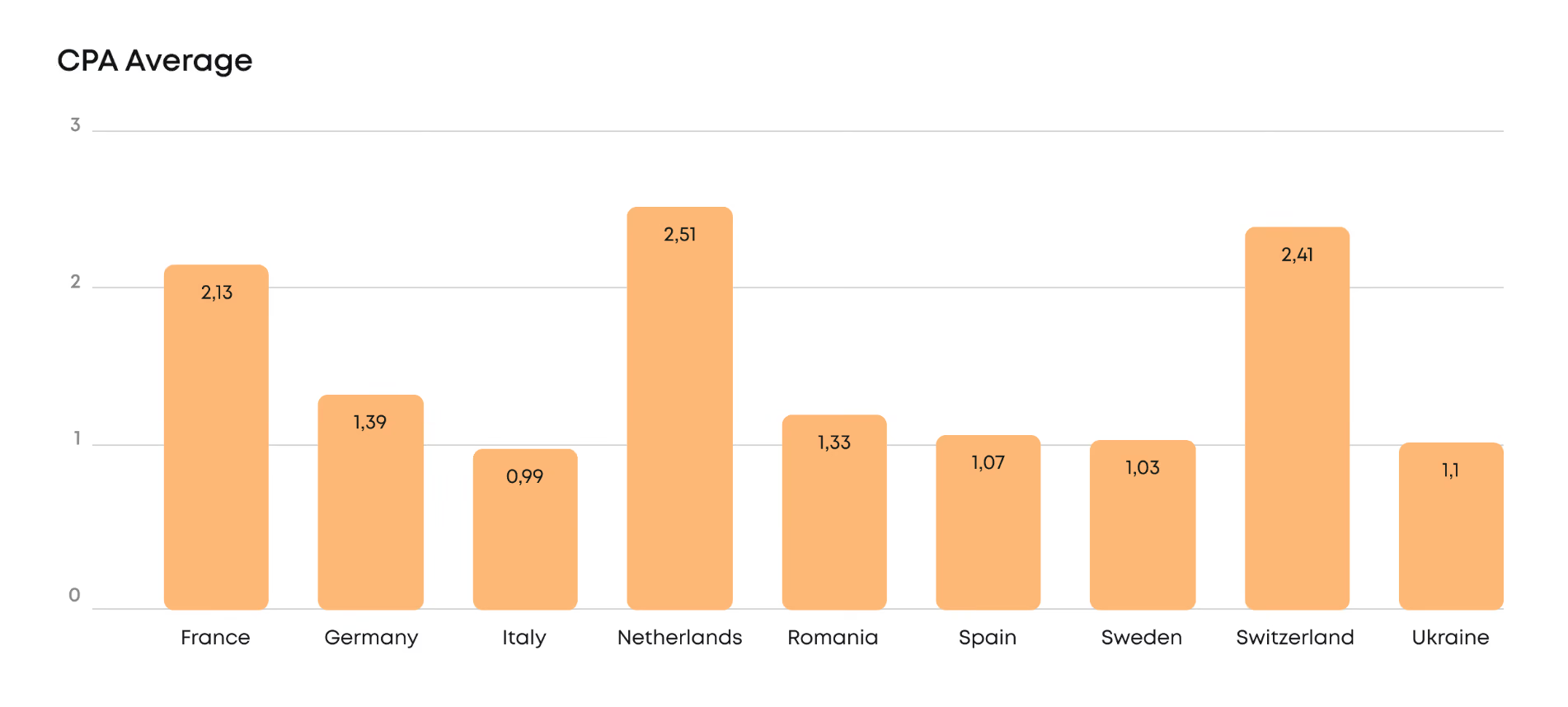
According to SplitMetrics Q1 2026 benchmarks, the most expensive markets for user acquisition include:
In contrast, the lowest acquisition costs are observed in markets such as Italy, Sweden, and Spain, where competition for search inventory remains comparatively lower.
These differences highlight the importance of geo-specific bidding strategies and localized campaign optimization, especially for brands scaling across multiple European markets.
The mobile fashion app ecosystem has entered a new phase of maturity where rapid, low-cost scaling is no longer the dominant growth model. The era of easy installs driven by abundant cheap traffic is effectively over. Instead, sustainable growth now depends on the ability to build strong unit economics and maximize the long-term value of each acquired user.
Recent industry analysis from leading platforms such as Data.ai, Sensor Tower, AppsFlyer, Adjust, and Singular consistently points to a structural shift in mobile marketing. Success is no longer defined by install volume alone, but by profitability, retention, and lifecycle value.
In this environment, brands are forced to rethink their growth logic: scaling is only effective when acquisition costs and monetization are properly balanced.
Several critical factors now define competitive advantage in mobile fashion marketing:
The ability to quickly test, analyze, and adapt advertising creatives has become a core performance driver. Brands that can rapidly iterate campaigns in response to shifting consumer behavior consistently outperform slower competitors.
This includes continuous experimentation with:
Speed is now a direct competitive advantage in user acquisition efficiency.
As CPI and CPA continue to rise globally, precise control over acquisition costs has become essential for maintaining profitability.
Modern UA strategies focus less on maximizing traffic volume and more on optimizing:
Brands that fail to tightly manage these metrics face increasing pressure on margins, especially in highly competitive verticals such as fashion and retail.
Dynamic pricing strategies are becoming a key lever for improving conversion rates in mobile commerce.
Fashion apps increasingly rely on:
These mechanisms help reduce friction at the critical moment of first purchase and significantly improve conversion rates within the short post-install window.
User experience has become one of the strongest determinants of mobile app performance.
A stable, fast, and intuitive application flow directly impacts conversion efficiency. Key elements include:
Even minor UX inefficiencies can significantly reduce conversion rates, making product design a core part of marketing performance.
These combined trends signal a fundamental shift in how fashion retailers approach mobile growth. The focus is moving away from acquiring large volumes of “cold” users toward building structured systems that maximize value from each install.
Retention, engagement, and post-install monetization are now as important as acquisition itself.
The mobile fashion app market in 2026 is defined by a shift from volume-based growth to precision-driven, performance-optimized ecosystems. Leading brands no longer compete solely on acquisition scale — instead, they build integrated systems that balance monetization, retention, and efficient user acquisition across multiple channels.
One of the most consistent strategic patterns among market leaders is a deliberate separation of roles between operating systems.
As global benchmarks show, iOS users generate around 45% of total Shopping revenue while representing only 15% of installs. At the same time, Android dominates acquisition volume and contributes approximately 55% of total revenue through scale.
This creates a clear structural logic for UA strategy:
The key implication is that CPI-based optimization alone is no longer sufficient. iOS users are significantly more expensive to acquire but deliver 3× higher lifetime value and 30–50% higher average order value, making them the primary driver of profitability.
Successful brands in 2026 treat both platforms as separate economic systems rather than a unified acquisition channel.
TikTok has evolved from a brand awareness platform into a full-scale performance acquisition engine for fashion eCommerce.
According to Singular benchmarks for Q1 2026, TikTok ranks among the core UA channels alongside Google, Meta, and Apple Search Ads in the Shopping vertical. In-feed ads demonstrate CTR levels of 0.8–1.5% and CPMs of $5–8, often outperforming Meta by 20–40% in reach-based efficiency.
However, the platform introduces a critical operational challenge: rapid creative fatigue. Ad performance typically declines after 5–7 impressions per user, requiring continuous content production.
Winning brands address this through high-velocity creative pipelines, often producing 3–6 new creatives per week to sustain engagement and stabilize acquisition costs.
The strategic takeaway is clear: performance advantage on TikTok is no longer budget-driven — it is content velocity-driven.
Despite strong download growth across major fashion apps, install volume is increasingly decoupled from revenue performance.
Industry observations show that even large brands may struggle to translate installs into active users and paying customers. Open data on apps like Puma suggests that high install numbers do not always translate into proportional MAU or revenue contribution.
Global mobile marketing benchmarks confirm this structural challenge: install-to-purchase conversion rates remain at only 2–5%, with the critical conversion window concentrated within the first 24–48 hours after install.
Market leaders address this through always-on engagement systems, including:
The key insight: acquisition is only the beginning — the first 48 hours determine long-term value.
As competition intensifies, brands can no longer rely solely on paid acquisition channels.
Organic traffic, driven by App Store Optimization (ASO), has become a critical source of high-intent users. Unlike paid users, organic users typically demonstrate stronger purchase intent and faster conversion cycles, significantly improving blended acquisition efficiency.
Modern leaders combine ASO with paid channels through:
This integrated approach reduces blended CAC while protecting brands from rising dependency on paid traffic ecosystems dominated by Meta, Google, and TikTok.
With increasing CPMs across acquisition channels, retargeting has become a strategic pillar rather than a supplementary tactic.
According to the AppsFlyer Performance Index 2026, retargeting reduces CPA by approximately 38% compared to cold acquisition campaigns, making it one of the most cost-efficient growth levers available.
Unlike prospecting campaigns, retargeting focuses on users who have already installed the app but have not completed a purchase or have become inactive.
This creates a highly efficient re-engagement loop:
In a competitive environment where users can easily switch between apps, timing becomes critical — failing to re-engage users quickly often results in permanent churn to competitors.
The 2026 fashion app ecosystem is defined by precision rather than scale. Winning brands are those that combine:
Together, these five vectors form a unified growth model where acquisition, retention, and monetization operate as a single interconnected system rather than separate marketing functions.
Marketing Specialist at Promodo
I have been working in marketing since 2012 with an emphasis on market research and analytics. I am experienced in the following niches: food wholesale, insurance, real estate, and software distribution. I have been responsible for Promodo's cases since 2021. Doing marketing research, I focus on causes and effects, as well as measurable results.
You may also like
Choose quality and trusted services to improve the presence of your company on the Internet, and feel free to contact our UK team if you have any questions.

87% of patients who discover healthcare providers online proceed to schedule appointments.

With the development of technology and the changing demands of online audiences, content is evolving as well.

If you increase customer retention by 5%, your car dealerships’ profits may eventually grow from 25% to 95%.
We at Promodo are ready to help you improve your performance across all digital marketing channels.
Get started



.avif)
.svg)


