


Content


Head of Retention Marketing Department at Promodo

Design and Copywriting Team Lead at Retention Marketing Department
I have more than 12 years of experience in design, and for the last 7 years I have been a Team Lead of a team of designers and copywriters in the Retention marketing department. My goal is high-quality and engaging content. My team builds creative emails, develops gamification on websites (mechanics, design, and copywriting), creates creative texts for all Retention channels, and develops design and copywriting for html and GDN banners.I'm able to recognize the needs of clients and their projects by looking at brand communication with users, and I teach my team to do the same.The main goal of my team is to create effective content for business development.

Journalist at Promodo
For over 6 years, I have been working as a journalist in the communications and marketing industry. I help brands communicate effectively through written content, engage with market experts, and create professional materials on topics related to business and marketing, sharing insights on working with marketing tools.
Retention marketing is becoming a major trend itself. With the rising cost of acquiring new customers, companies are finally paying more attention to those who are already using their products. Businesses try to meet their needs, keep customers engaged, and bringing back users who have become less active.
Promodo experts share the latest retention marketing trends 2026 and explain how to communicate with customers via email, apps, and messengers to boost engagement in 2026.
Personalization has been a standard in retention marketing for years. In 2026, it moves to the next level which is hyper-personalization using AI. The big shift is from static segments to AI-driven segmentation and predictive models that work in real time. For example:
These segments are built from behavioral data (views, purchases, interaction frequency, responses to messages) and update automatically.
The benefit? Businesses can act before a user loses interest, instead of trying to win them back afterward. Early testing often uses semi-manual flows to validate ideas, but the market trend is clear: full automation and scaling of proven strategies.
Another key email marketing trend is shifting focus from mass campaigns to well-designed automated flows.
Standard flows in 2026 include:
Mass emails don’t disappear but become secondary. They need to support automated flows rather than leading them.
Ideally, users receive relevant updates, discounts, and recommendations exactly when they need them, through triggered messages. These flows drive most repeat purchases.
Email, SMS, push, and messengers can’t work in isolation. In 2026, all channels need to function as one strategy.
Important point: omnichannel doesn’t mean sending the same offer everywhere. Instead, each channel has a role:
Clients don’t get tired if communication is logical, consistent, and not repetitive.
Gamification remains effective but is changing. The focus is shifting from simple mechanics (“collect points → get a discount”) to emotional engagement. Experience and feeling matter more than pure rewards.
Effective formats include:
These approaches boost long-term engagement and repeat interactions, not just one-time activity.
AI chatbots are becoming a core part of retention strategies. The market standard is a hybrid approach:
Humans step in for complex cases, unusual situations, or high-value clients.
The result: faster responses, higher customer satisfaction, and more repeat purchases and LTV growth.
Texts are becoming shorter, gentler, and more aware of the user’s situation. They’re not trying to impress or force attention—they sound like the brand truly understands where the audience is right now.
In practice, this means moving away from one-size-fits-all phrases. The same text no longer works for every scenario. The key question isn’t what we want to say, but what state the user is in.
The logic of communication is changing. Discounts, bonuses, and direct calls to return no longer create lasting connections—they give only a brief spike in attention.
In 2026, retention marketing works with the user’s memory: moments when the product was already useful, relevant, or enjoyable. The text doesn’t sell the product from scratch or explain its value—it continues the conversation that has already begun.
AI is redefining the role of copywriting. Perfectly polished texts can now be generated in seconds, so the real value is shifting toward tone.
Messages that feel human—even a little imperfect—win. A natural, lively tone stands out compared to technically flawless but empty content.
Personalization is no longer just about adding a name to the subject line. In 2026, it’s about context.
Users expect brands to:
In practice, this changes how segmentation works. Products no longer speak to everyone the same way—they adapt language to the user’s experience, not just to marketing goals.
The tone of communication is shifting. Overly emotional messages start to feel pushy. Audiences now trust calm, clear messages that don’t try to convince or force action—they leave space for users to come back on their own.
Texts are becoming shorter and more restrained, but still warm in tone. The focus is on confidence in the product, not on proving its value with words.
Overall, retention copywriting is moving closer to editorial work. Texts no longer add value—they either maintain existing trust or erode it.
For copywriters, this means checking whether a message speaks louder than the service itself or promises more than the user can actually experience.
Another key trend is using pauses strategically. In 2026, not every step needs a message—choosing not to send one can be a deliberate part of retention strategy.
Frequency gives way to timing. For copywriters, this means a new responsibility: not just creating texts, but managing the brand’s presence and deciding when no message is the best choice.
Personalization isn’t just for text—it shapes design too. In 2026, design stops being a generic “pretty background” and increasingly feels tailored for the individual user.
Segmented visuals, real photos instead of stock images, and recognizable brand elements repeated across touchpoints all create a simple feeling: this is for me.
Design now plays the same role as copy—it doesn’t explain the product from scratch but continues an already familiar conversation. It shows the brand in the context the user has already experienced.
Emails or interface designs are built around the user journey, not just visual impact. Clear navigation, mobile optimization, and dark mode support are essential.
Creativity works best as part of a structure that simplifies interaction and encourages users to return, rather than as decoration alone.
Dynamic and interactive elements remain important, but the approach has changed. Animations, microinteractions, and interactive banners are used selectively—to highlight key points, not to fill space.
Minimalism remains relevant. It’s better to perfect one or two key elements than to try to “animate” the whole design at once.
Storytelling in design continues to be a reliable communication tool. It doesn’t just show a product—it tells its story and creates an emotional connection with the audience.
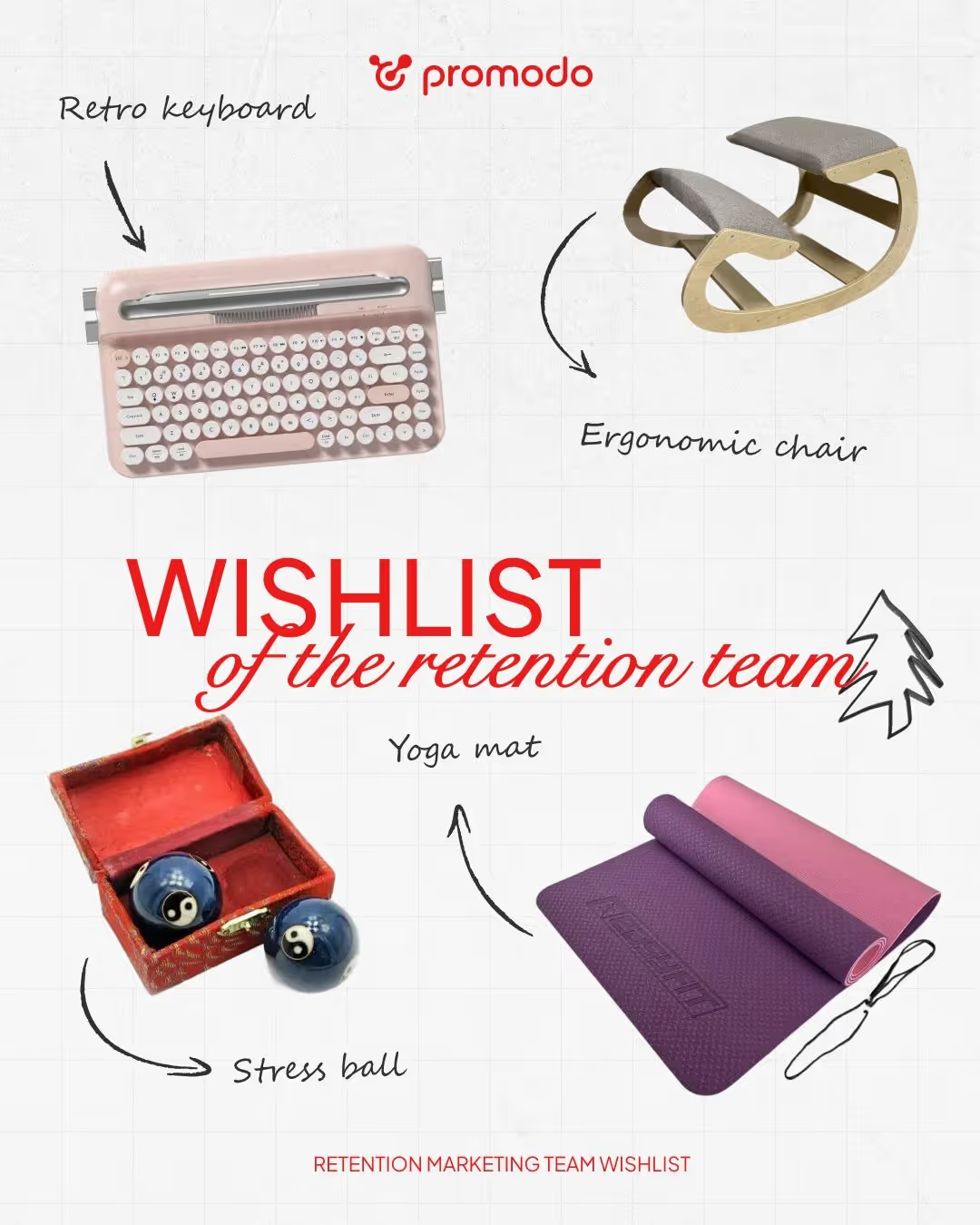
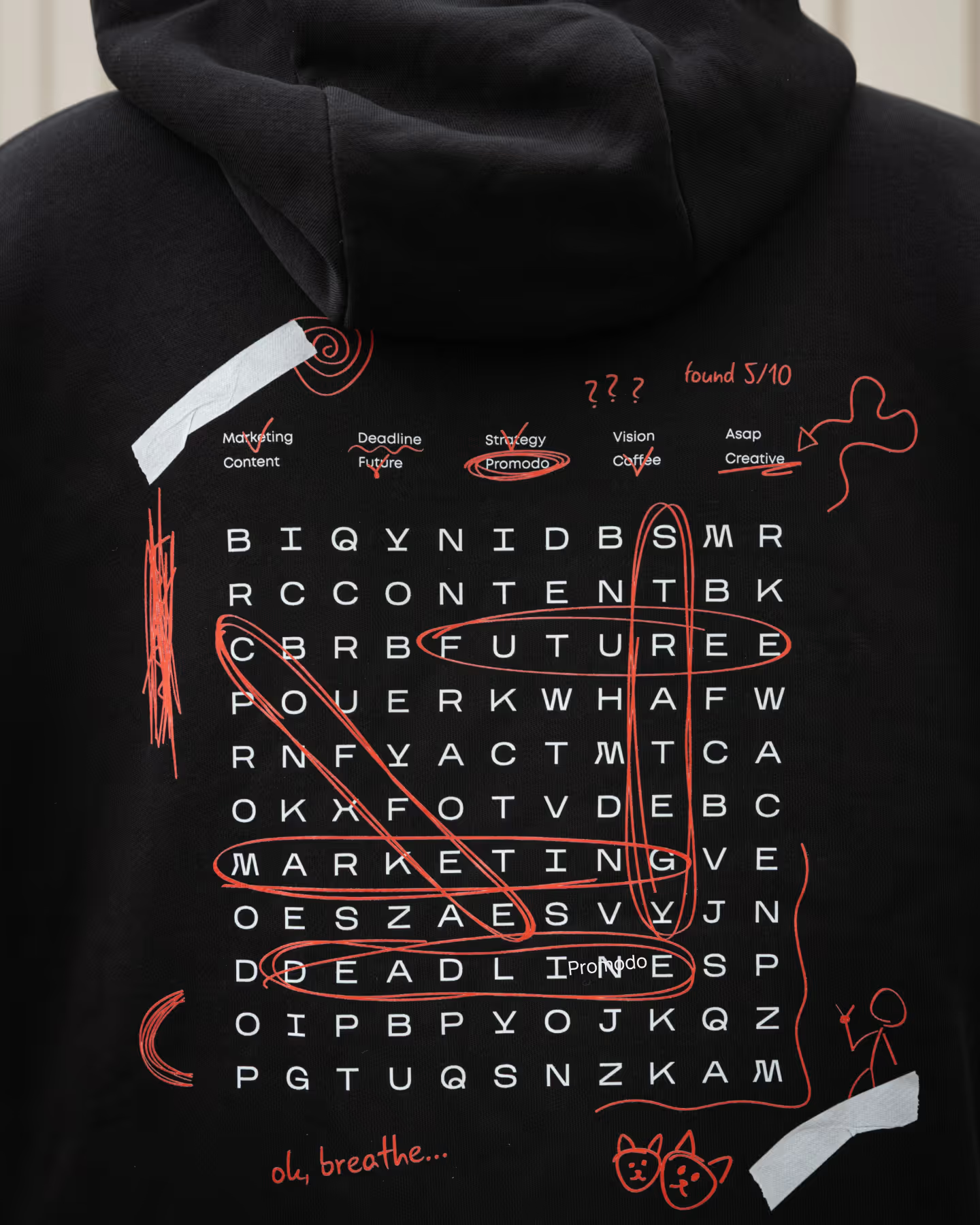
This aligns with the trend toward human design: moving away from perfectly AI-generated visuals toward hand-crafted elements, imperfect lines, naive shapes, and more emotionally engaging compositions.
[[ROW-START]]
[[ROW-END]]
Neo-minimalism evolves in 2026. The cold, distant minimalism gives way to designs with micro-textures, subtle gradients, and a sense of depth and tactility.
Design remains restrained, but not empty—it works through details that users feel, even if they can’t immediately name them.
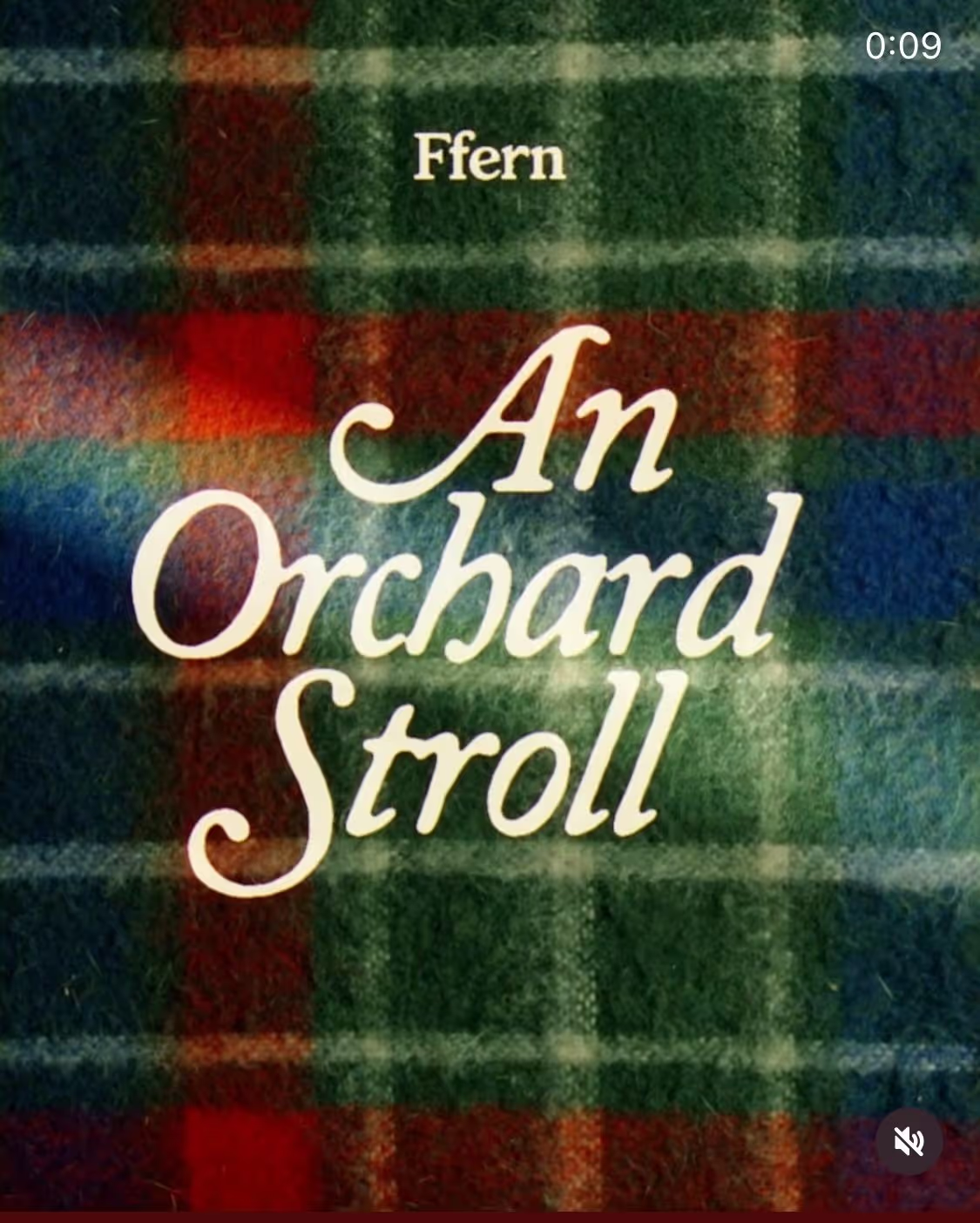
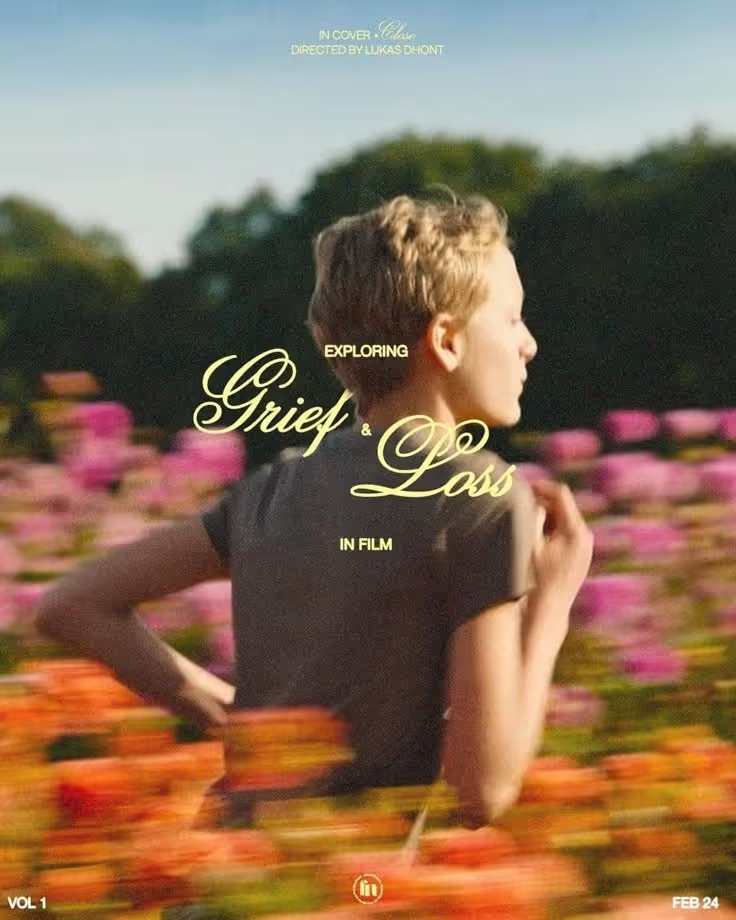
Bold visual choices are still trending. Combining bright accent colors with pastels, experimenting with textures, and using unconventional combinations creates a balance between uniqueness and harmony.
[[ROW-START]]
[[ROW-END]]
At the same time, the trend of nostalgia is gaining strength. Design increasingly draws on the aesthetics of the ’90s and 2000s—but in a refined, modern way: CRT-style gradients, VHS textures, film grain, paper, Polaroids, early web fonts, skeuomorphic elements, retro emojis, and stickers.
In 2026, retention is about timely, relevant interactions with customers—not the number of messages. Mechanics, copy, and design work together so that the brand communicates clearly, calmly, and in a way that reflects the user’s real experience.

Head of Retention Marketing Department at Promodo
Design and Copywriting Team Lead at Retention Marketing Department
I have more than 12 years of experience in design, and for the last 7 years I have been a Team Lead of a team of designers and copywriters in the Retention marketing department. My goal is high-quality and engaging content. My team builds creative emails, develops gamification on websites (mechanics, design, and copywriting), creates creative texts for all Retention channels, and develops design and copywriting for html and GDN banners.I'm able to recognize the needs of clients and their projects by looking at brand communication with users, and I teach my team to do the same.The main goal of my team is to create effective content for business development.
Journalist at Promodo
For over 6 years, I have been working as a journalist in the communications and marketing industry. I help brands communicate effectively through written content, engage with market experts, and create professional materials on topics related to business and marketing, sharing insights on working with marketing tools.
You may also like
Choose quality and trusted services to improve the presence of your company on the Internet, and feel free to contact our UK team if you have any questions.

Want to attract more potential customers to your therapy clinic with online advertising? Promod healthcare marketers are sharing the best strategic approaches.

There's no denying that digital marketing opens a door of opportunity to businesses of all sizes and across various niches. While marketing for vets is not the

Are your emails not being opened, with clients unsubscribing in droves and your offers going unnoticed?
We at Promodo are ready to help you improve your performance across all digital marketing channels.
Get started


.avif)

.svg)


