


.avif)
.avif)
Autodoc
Ahrefs
Google Analytics
SERP Parser
Serpstat
Google API
Autodoc is an online auto parts store with its own warehouses and a partner network of service stations.
Recover website traffic after multiple Google algorithm updates.
We have been working with the client on an ongoing SEO engagement since August 2023 and continue our collaboration at the time of publishing this case study.
The client approached us after experiencing significant traffic losses caused by Google algorithm updates. In March 2023, organic traffic dropped by 27%, and following the autumn updates, the decline deepened to 44%.
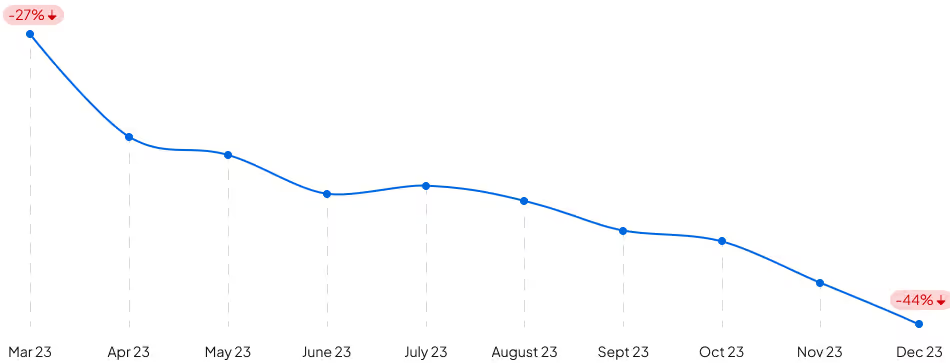
Any website can be affected by Google updates, regardless of its niche or brand recognition. Search engine algorithms are regularly updated to improve the quality of search results and to combat manipulation and low-quality content. As a result, even large and well-established websites may lose rankings if they fail to meet Google’s new requirements.
In addition to the impact of Google updates, technical limitations of the website became a major challenge for the SEO team.
The brand is part of Omega, the largest automotive components distributor in the markety. At the beginning of our cooperation, product data on the website was pulled from Omega’s central database (hereinafter referred to as an external source).
This meant that every time a product category page was loaded, the client had to send a request to the external source, wait for a response, and only then load the products for the user. As a result, page loading took over 10 seconds.
In other words, the version of the website seen by Googlebot did not contain links to the product catalog. As a result, the search crawler was unable to access category pages, which reduced their visibility in search results and negatively affected the distribution of link equity across the website.
There was also no ability to modify product attributes or control which products were displayed within categories (in stock or out of stock).
This led to several critical issues:
To recover the website from Google filters, classic SEO methods alone were not sufficient. Traditional approaches typically involve gradual page optimization, semantic keyword development, and backlink growth. However, these fundamental components were largely unavailable on the client’s website at the time. As a result, the business required a tailored, non-standard SEO approach.
Hypothesis: Following the audit, we formed the hypothesis that technical limitations were the primary cause of the organic traffic decline after the Google algorithm updates.
The first step was to fix technical issues and implement improvements to ensure the website operated more reliably and that its pages met search engine quality requirements.
Given the limitations of the existing functionality, we focused on working within what was available. We prioritized the highest-traffic categories and subcategories ranking in the Top 10 and Top 20 of search results. We built a semantic core, prepared optimized content for category pages, and launched link building for priority categories. In addition, we implemented control over indexing, meta tags, and on-page content.
Initially, we created optimized content for all second- and third-level categories and subcategories where target keywords had a search volume of 50+ queries per month.
For example:

After opening existing category filters for indexing, we prepared optimized content for all remaining filters where target keywords also had a search volume of 50+ queries per month. Additionally, we created content for pages targeting combinations such as “auto part + car brand” and “auto part + car brand + model” wherever relevant semantic data had been collected.
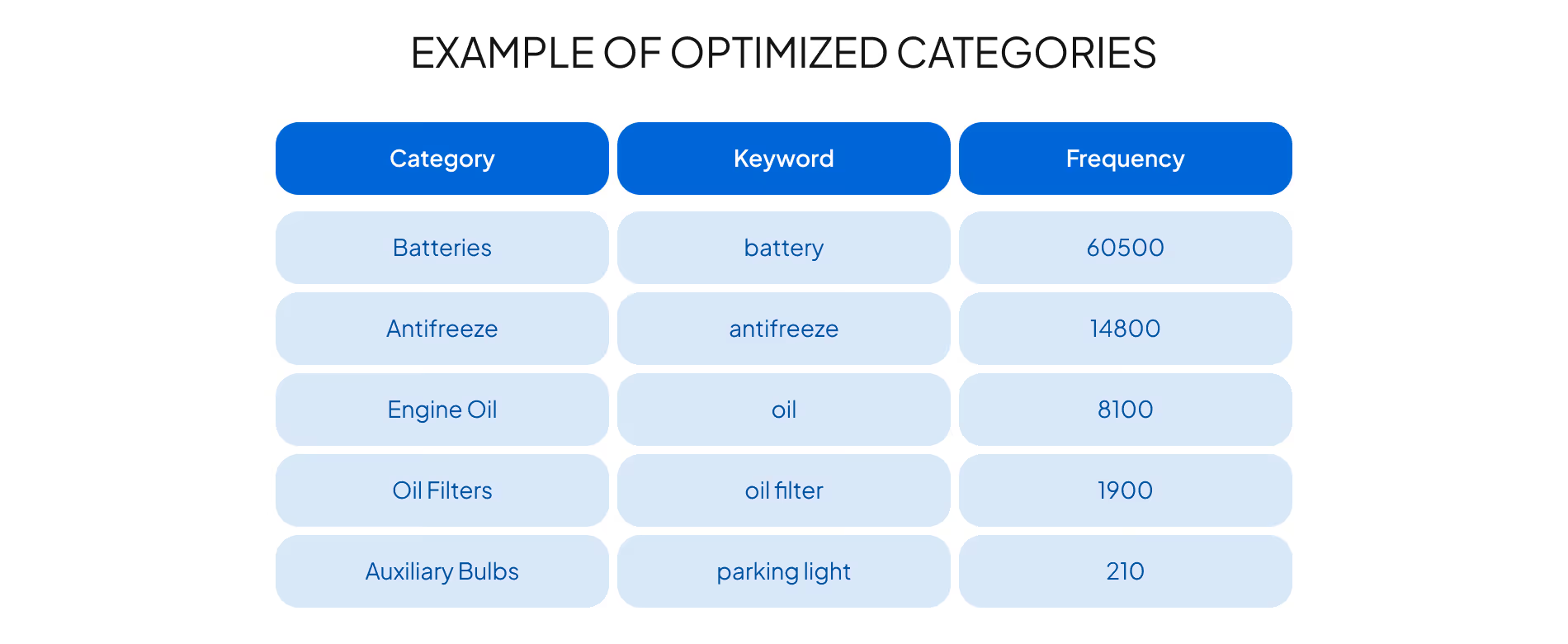
Overall, we optimized 228 categories, subcategories, and filters.
This work laid a solid foundation for further search engine optimization, made the website more understandable for search engines, and prepared it for targeting high-volume keywords.
The next step was to improve page load speed, with a particular focus on the mobile version. Since the website was fully rendered on the client side and pulled data from an external database, pages were loading too slowly.
To address this, we implemented changes in stages. First, we introduced Server-Side Rendering (SSR), allowing search engine bots to receive the fully rendered page content immediately. Next, we optimized server resources. As a result, page load times improved significantly, and overall website performance became more stable.
Server-Side Rendering (SSR) is a technology in which an HTML page is fully generated on the server and then delivered to the user’s browser already rendered. This approach significantly improves page load speed and enhances search engine indexing.
Category Page Load Speed on Mobile


Because the page was rendered on the server rather than in the user’s browser, this solution ensured faster content delivery and improved the site’s indexing by search engines.
As a result, the business not only provided a better user experience on the website but also gained an additional advantage in recovering from Google filters.
The work implemented by our team and the client’s team in the first phase proved effective. At the beginning of 2024, we saw the first positive shifts: in January–February, traffic increased by 15%, and the website moved out of the negative trend.
However, in March, a new Google update again affected performance, causing traffic to drop by 42%.
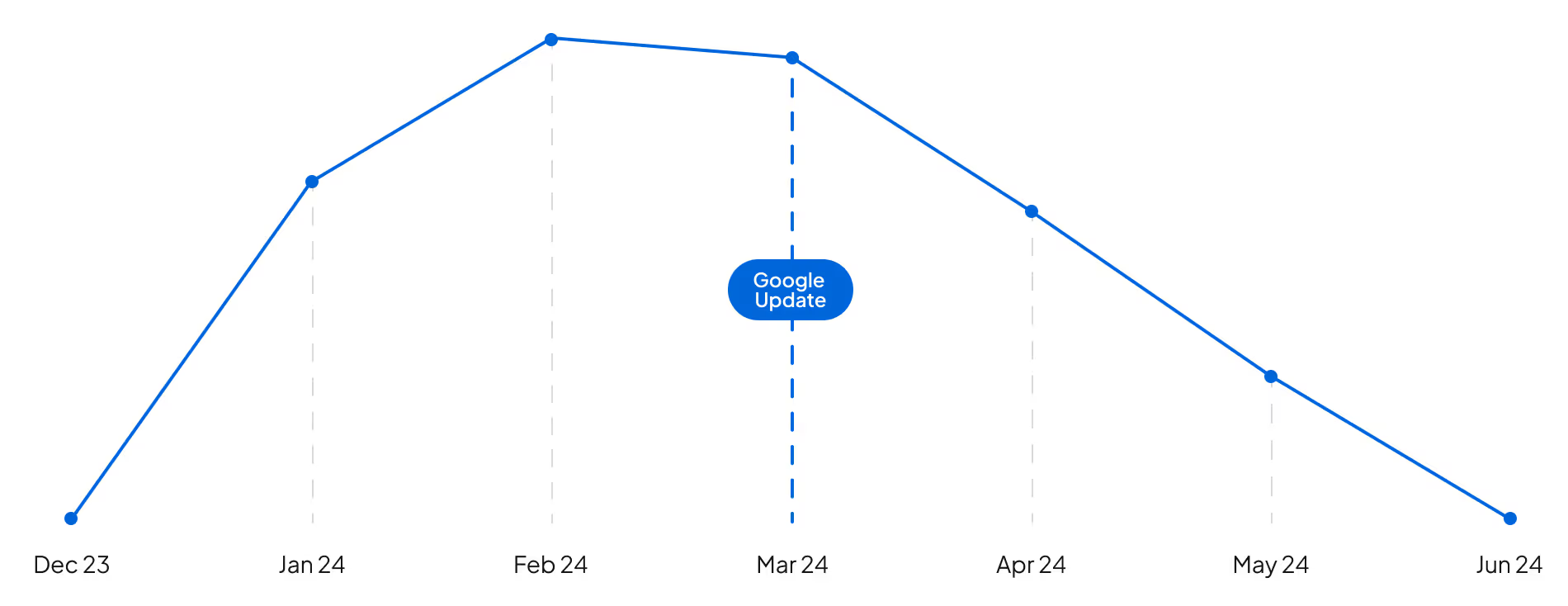
To quickly address the situation and stop the traffic decline, we analyzed the website and identified pages that were still generating traffic and ranking in the Top 20 for key terms. We focused our efforts on optimizing these pages:
An additional factor in our work was seasonality: we prioritized optimizing and promoting categories that would be most relevant to users during specific periods.
This comprehensive approach allowed us not only to stabilize the situation but also to provide the website with a steady, albeit initially modest, flow of organic traffic.
We also worked with the existing filters on the site and prepared the database for the new website structure.
At the same time, the Autodoc team implemented critical functionality:
Next, we moved on to strategic changes. Since the website already had the basic SEO elements in place — filters, an optimized semantic core, and the product catalog migrated to Autodoc’s internal system — we focused on optimizing the site structure.
First, we removed duplicate pages to create a clear and logical website hierarchy, with well-defined categories and subcategories.
For example, the client had a category called “Shock Absorbers”, which included both the shock absorbers themselves and related components. At the same time, there was a subcategory with the same name that contained only shock absorbers. Similar issues existed across other product categories, which we corrected.
We set up 301 redirects from all old categories and subcategories to the corresponding pages in the new structure. This preserved traffic and ensured proper indexing immediately after the new structure went live.
Next, in collaboration with the client’s team, we developed a logical filter structure based on the collected semantic data and key SEO requirements, making product search more efficient and user-friendly.
On their side, the client implemented new API modules to interact with the database, ensuring continuous and accurate information exchange across all elements of the website. Data transfer between the site and the database became faster because everything was optimized specifically for the online store.
An important step was also updating the brand pages interface: these pages are now not only user-friendly but also fully optimized for search engines.
The final stage was the implementation of a new Content Management System (CMS). The client can now efficiently manage the product catalog, marketplace feeds, SEO attributes, and product descriptions. This not only optimized internal processes but also created a solid foundation for business scaling.
The case of the online auto parts store demonstrates that any website can be affected by Google filters, especially if it has technical limitations. In such cases, the only effective solution is a comprehensive SEO approach.
Over two years of collaboration with the client, we not only halted the decline in organic traffic but also turned it into a positive growth trend.
In January 2025, together with the client’s team, we successfully stabilized traffic, removed the site from the negative impact of Google updates, and achieved a +47% increase in organic traffic.
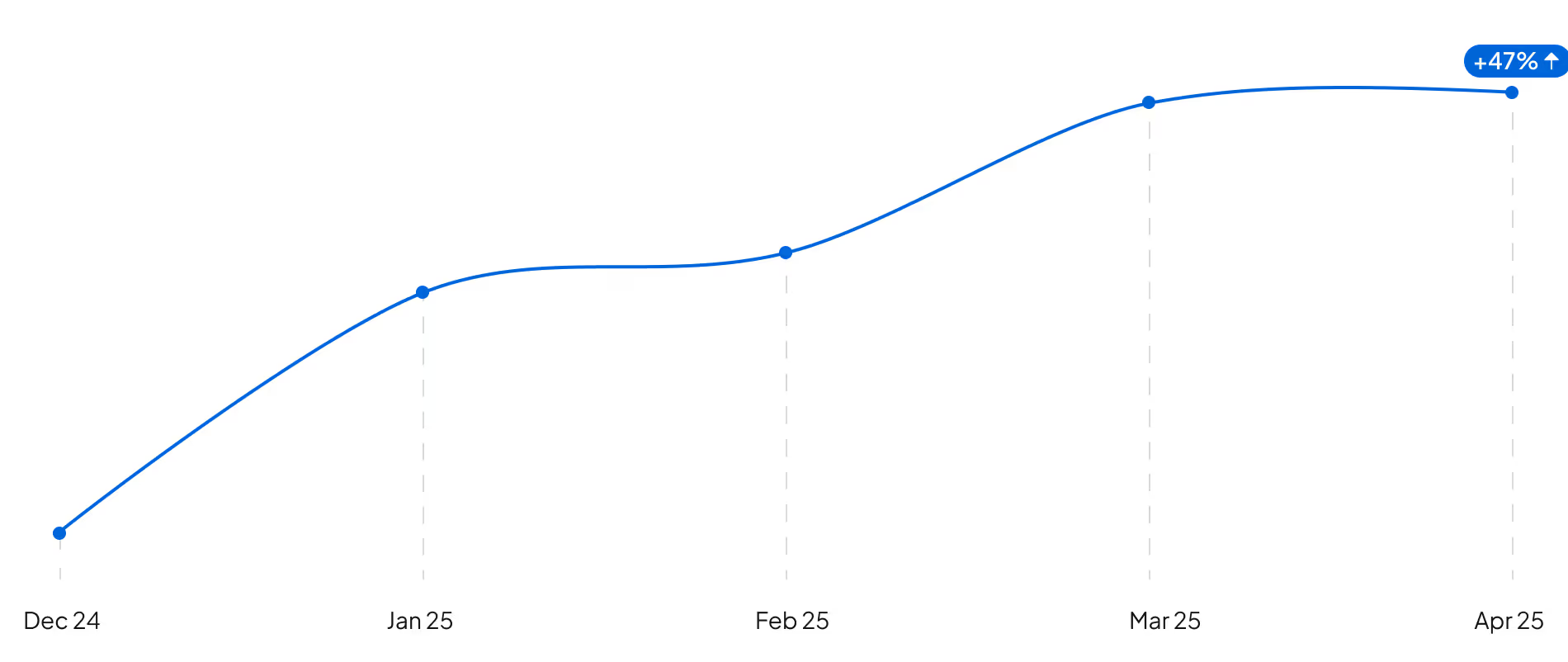
Traffic also increased to product pages, categories, and filters.
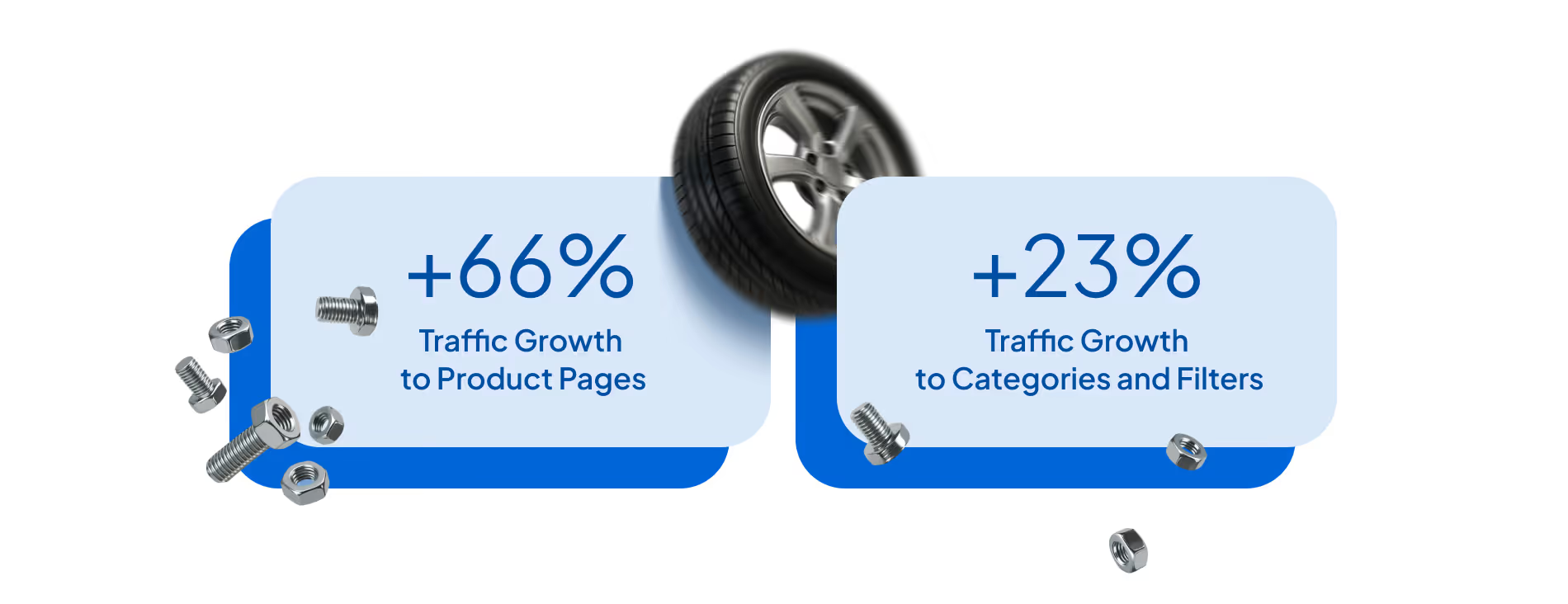
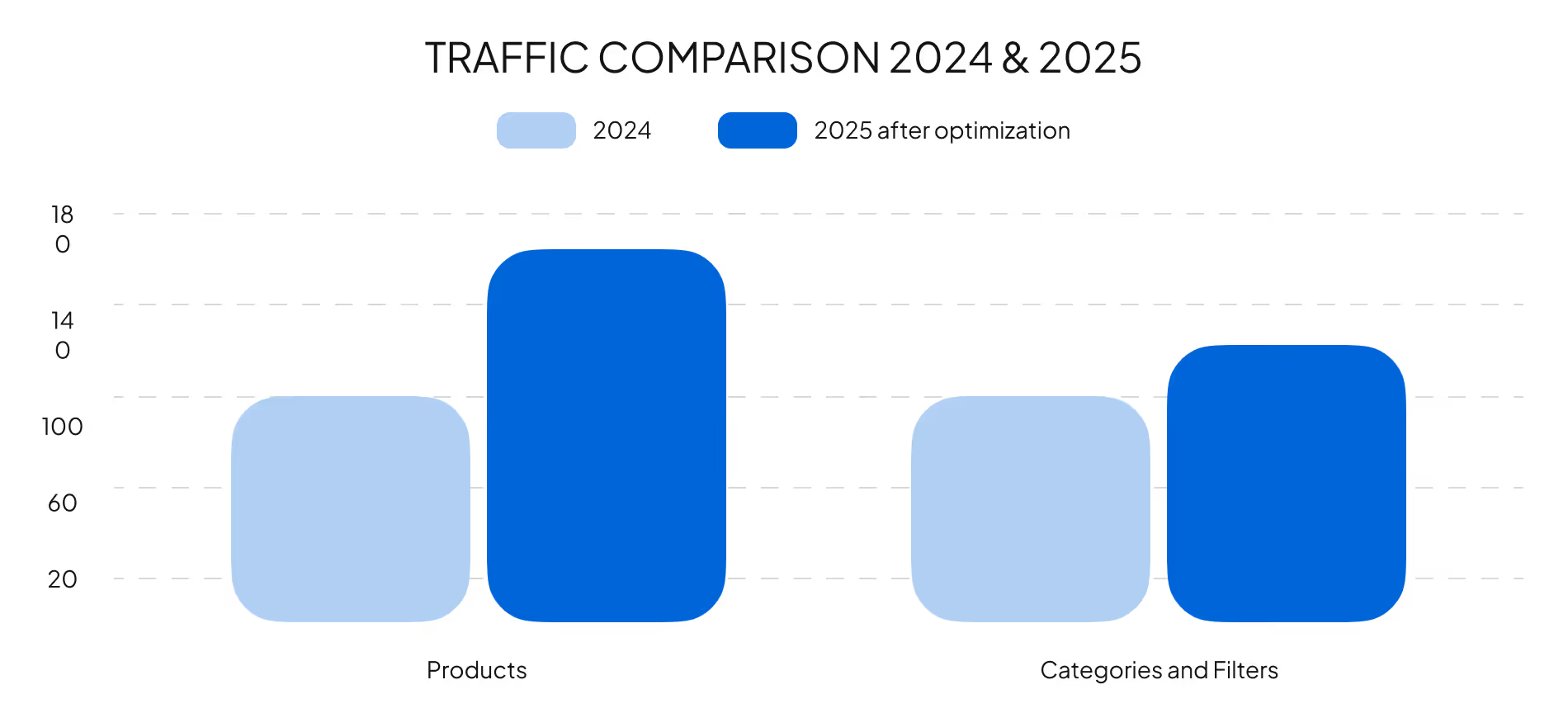
In this case, every stage was crucial, as SEO is all about systematic, long-term planning. Thanks to the implemented changes, the website now meets Google’s updated requirements with a focus on page quality.
The next focus will be on the highest-traffic categories. We have already collected the necessary semantic data and prepared filters, and the plan is to open them for indexing. This will allow the brand to secure better search rankings and gain additional organic traffic.
We are also continuing work on optimizing the site for AI-driven algorithms, ensuring that the website remains among the leaders in search results even under new SEO realities. The next key step is to update the site design based on CRO analysis, making it more user-friendly and improving conversion efficiency.
In July 2025, we presented the client with a new promotion strategy, emphasizing work with filters in high-traffic categories. This strategy will serve as a foundation for further scaling results and strengthening the brand’s position in the market.
Case studies
Check out how we help companies like yours overcome challenges and rise to the next level.
.png)
AI traffic
Revenue from AI traffic
.png)
+196%
+12%



.webp)
.svg)


