


.avif)

IN1
Google Analytics
AppsFlyer
Meta
Unity Ads
Apple Search ADS
IN1 (B2C mobile application) — a comprehensive fintech product designed for managing financial assets, payments, and day-to-day money operations in a single ecosystem.
Project period: December 2024 – March 2025
The client approached us after completing the development of their mobile application IN1 with a request to launch the brand from scratch across EU markets.
The mobile app marketing team at Promodo has extensive experience launching apps in various niches. Therefore, while developing the strategy for IN1, we carefully considered the product’s specifics, target audience characteristics, and competitive landscape.
Since the product was brand new, no prior marketing activity had been executed. We started from a clean slate — with no technical foundation, tracking, or analytics — but with a clear objective: to set up the analytics system, build an effective promotion model from scratch, and prepare the app for scalable growth.
For this client, solving this issue was particularly critical, as iOS users made up 30–55% of the target audience in key markets — the most valuable and engaged segment that significantly influenced the overall strategy’s performance.
SKAdNetwork (SKAN) is a technology that allows measuring campaign performance without tracking users’ personal data.
Several Promodo teams worked on the project: Analytics, Retention Marketing, and Mobile App Marketing.
In this case study, we share the results delivered by the mobile team. Stay tuned for more case studies!
Our task was to build IN1’s marketing ecosystem from the ground up — from creating app store pages and setting up analytics to launching the first advertising campaigns and increasing the number of active users.
To ensure strong app visibility in the App Store, we carried out a full scope of standard ASO activities: conducted an in-depth analysis of target markets and competitors, identified the most relevant search queries, and gave special attention to localized store pages for each region. This allowed us to develop an ASO strategy focused on scalable growth.
In parallel, we implemented a full Retention strategy — from analyzing user behavior to launching personalized engagement and retention flows. As a result, we not only attracted new users but also built a systematic approach to re-engagement, increasing long-term user value.
These steps were essential, but the core of our strategy focused on something else — solving the iOS attribution challenge. In this case study, we will cover this approach in detail.
The absence of any analytics in a newly launched app brings both challenges and advantages. On one hand, the lack of user behavior data makes it harder to understand what truly resonates with the audience and increases the risk of mistakes at the initial stage.
On the other hand, having the opportunity to set up analytics at the moment of market entry allows you to start collecting complete data from day one, plan your budget more efficiently, and adjust your marketing strategy based on accurate insights.
However, we faced another, equally important challenge: ensuring accurate mobile attribution.
Mobile attribution is the process of determining which source (a specific ad campaign, channel, or user action) led a user to install the mobile app and perform further in-app events.
It is critical for effective budget management, but due to Apple’s privacy policy (starting from iOS 14.5), which restricted access to IDFA, traditional attribution models lost much of their accuracy.
In practice, setting up basic analytics was not enough — we needed a solution that would ensure transparent measurement and reveal the full user journey. This became a key requirement when choosing the right strategy for IN1’s launch.
In our search for the most effective solution under the new iOS privacy landscape, we chose the Web-to-App strategy.
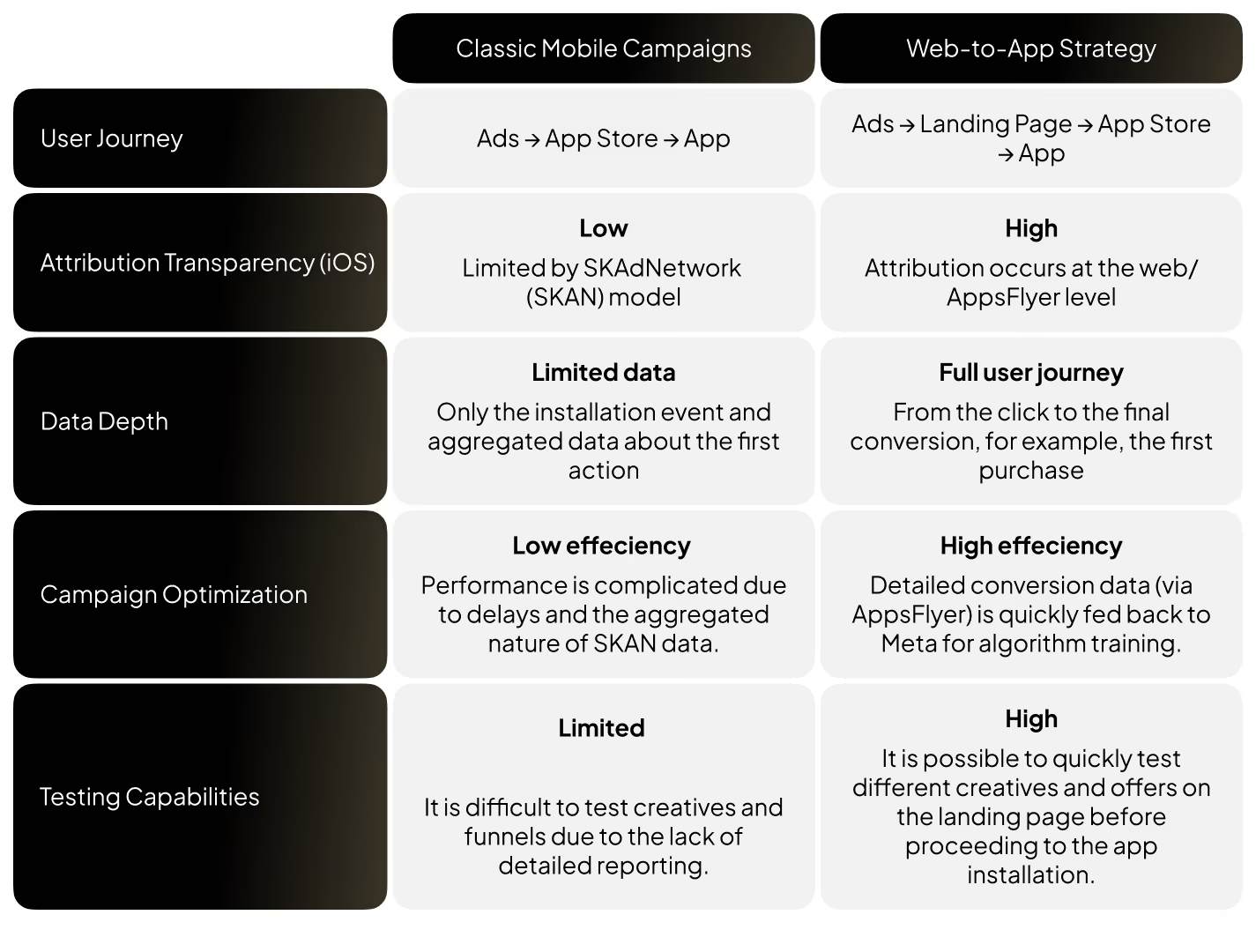
We approached Web-to-App not just as a technical attribution tool, but as a core marketing strategy that enables the client to enter the market quickly, minimize risks while testing different regions, and scale the product in the most promising markets.
We developed and approved the technical requirements for implementing Web-to-App through a direct link to the app’s store page and a landing page, which allows us to build a full conversion funnel with detailed tracking.
We set up the integration of Meta Web Ads with AppsFlyer for data collection and processing. AppsFlyer records exactly which ad led to the app installation.
We configured the integration in the Meta Ads Manager. Since Meta uses conversion data (from the website or the app) to train its algorithms, this helps the system more effectively find users similar to those who have already completed the target action.
Using a Web-to-App–based strategy allowed us to set up mobile attribution under privacy restrictions — which was our key objective. Now, the client is no longer limited by standard tracking constraints and can more easily monitor traffic coming from ads.
It provides full visibility into the user journey: from clicking the ad to in-app events — including KYC, card activation, or opening a deposit.
There are no iOS privacy threshold limitations when it comes to traffic.
Higher audience quality. The landing page helps filter out non-target users even before they go to the store, focusing the budget on “warm” leads.
Flexibility in testing creatives and messages: we gained the ability to adapt messaging for different audience segments before the installation point.
Thus, Web-to-App became not just a tracking solution but a key part of the strategy for attracting high-quality traffic for the fintech product.
Advantages of Web-to-App
To determine whether the strategy would be effective for IN1, we launched both promotion formats: a classic app promotion campaign and a Web-to-App test using a direct link to the app’s page in the App Store.
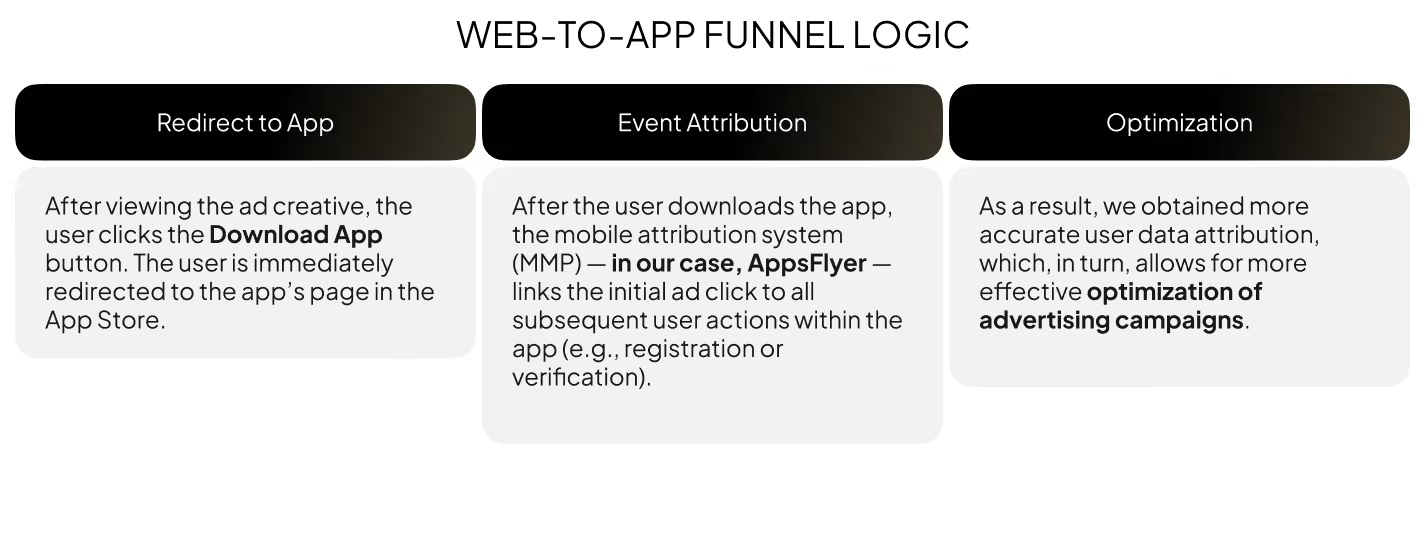
This approach made it possible to build a complete user journey.
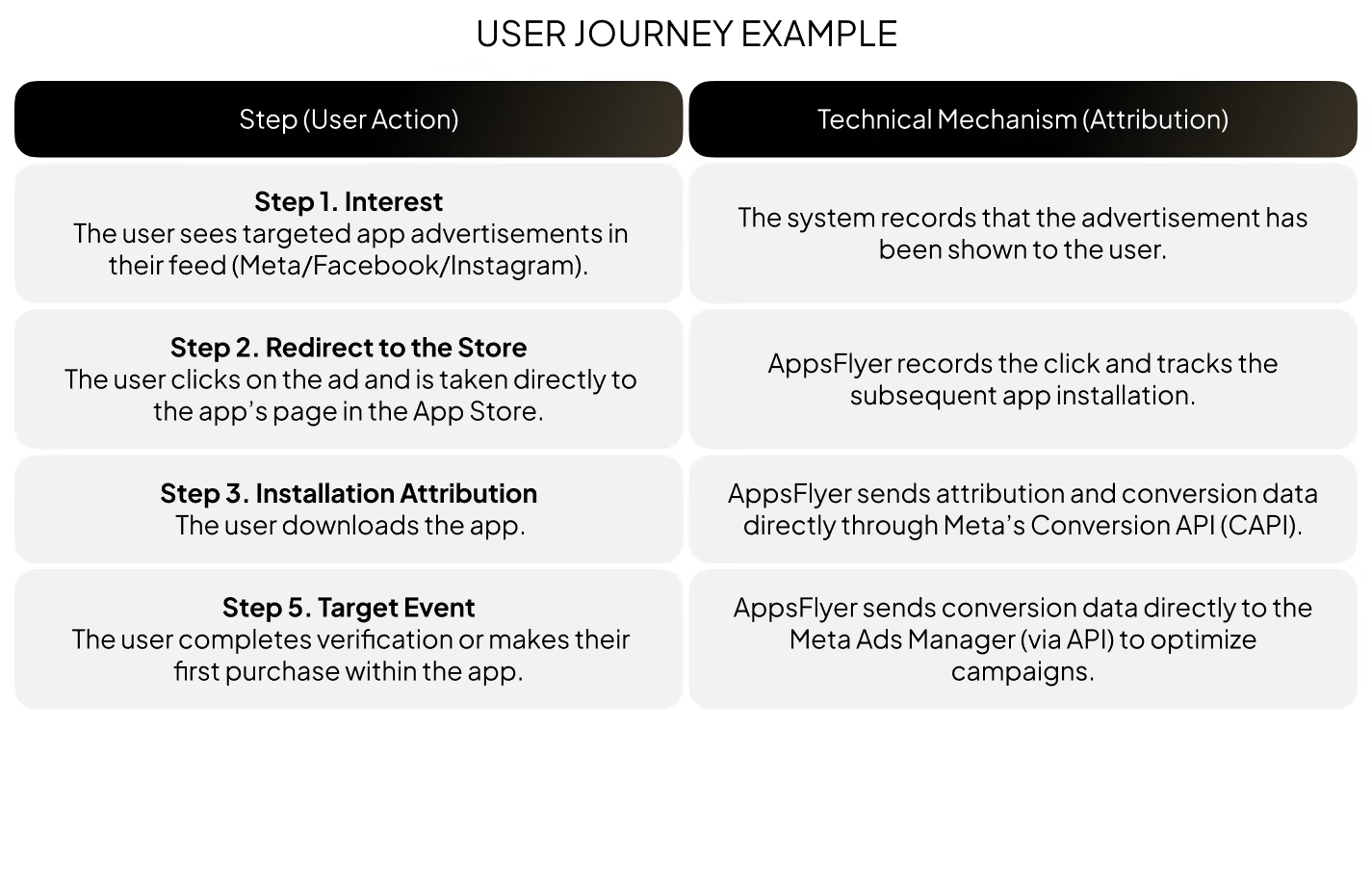
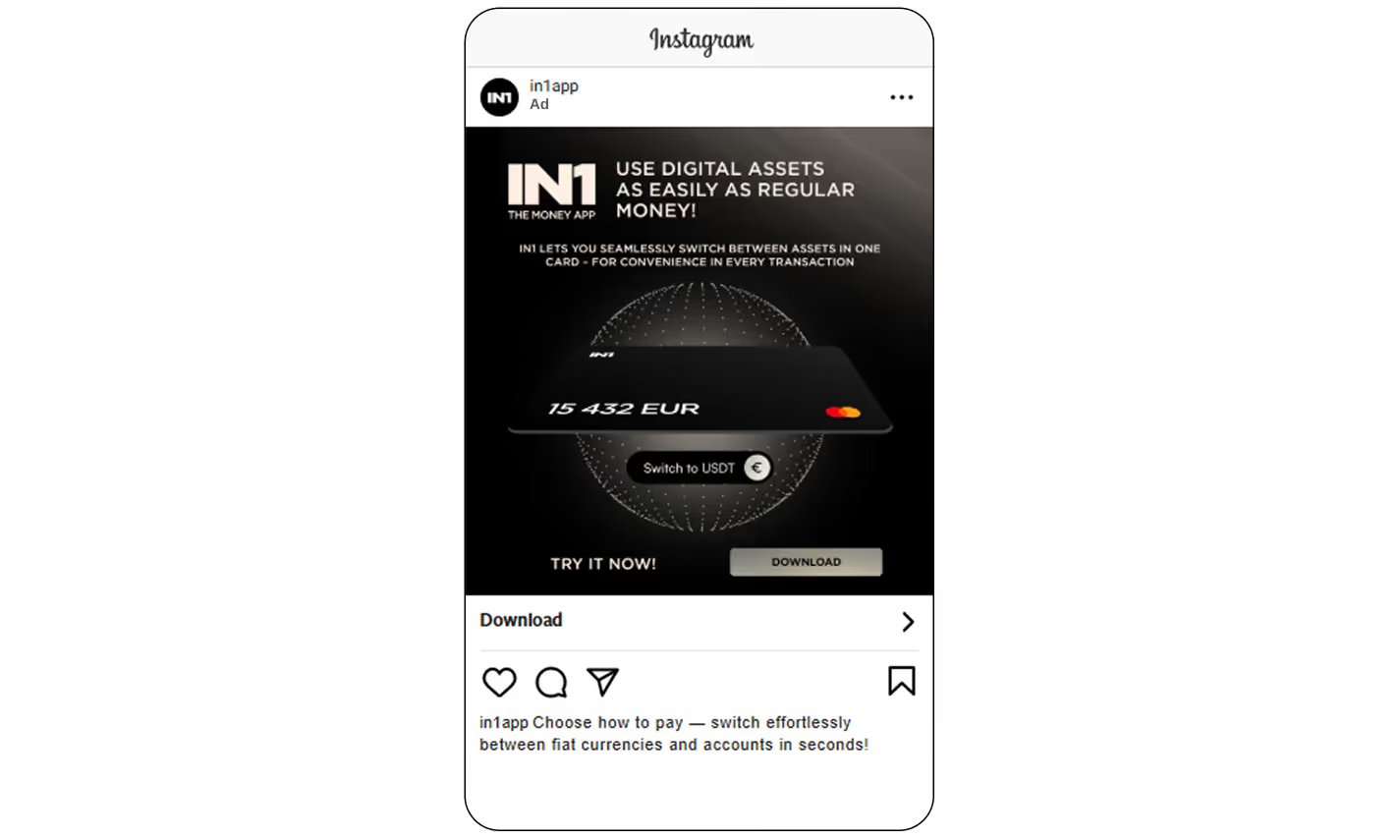
The next step was to set up a full Web-to-App funnel via a landing page, which works similarly to the first version but includes an additional step in the funnel on the initial landing page. After that, users are redirected to the app store page to download the app.
The launch of a new product on the market is not only a key milestone for the brand but also a demonstration of the high level of trust the client places in Promodo, which we greatly value.
At the start, the mobile app marketing team implemented the full set of tasks necessary for the app’s presence in the stores and stable user acquisition. At the same time, we recognized that launching with only basic settings limits the product’s potential for further growth.
We focused on finding additional solutions for high-quality mobile analytics and accurate attribution, which became the foundation for further optimization and scaling. That’s why we went further — testing alternative promotion approaches to identify the most effective solution.
By running classic mobile campaigns in parallel with the Web-to-App model, we were able to evaluate their performance.
Web-to-App campaigns delivered a 20% lower CPA compared to standard mobile app campaigns with SKAN attribution, confirming the effectiveness of the chosen approach for launching a new product.
The strategy enabled faster algorithm learning in Meta and engagement with a relevant audience, significantly improving traffic quality and conversion rates.
Campaigns were immediately optimized for the final funnel event, avoiding budget waste on intermediate steps aimed solely at installs.
iOS user base scaled significantly, and the app climbed the Finance category rankings from #175 to the Top 70.
Organic visibility increased as well, with +31 indexed keywords, showing that paid channels not only acquire users but also strengthen organic performance.
App Store Connect analytics show a sharp rise in traffic from all sources — organic (App Store Search, Browse) and paid (Web Referrer, App Referrer), confirming the success of the chosen strategy.
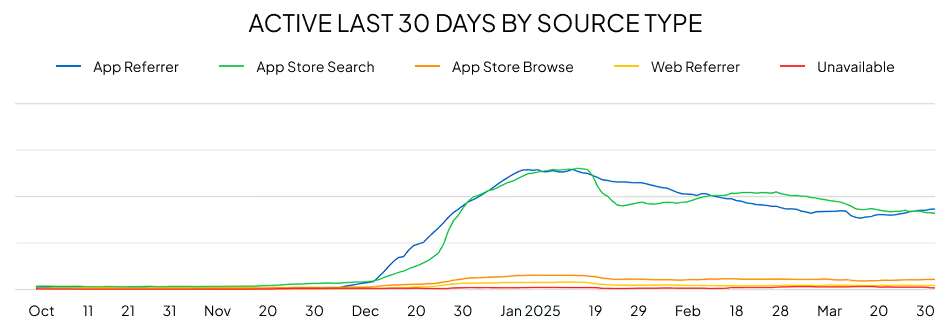
Thanks to a comprehensive approach—from building marketing from scratch to solving iOS attribution challenges—IN1 not only successfully launched on the market but also laid a solid foundation for further scaling and growth of its user base.
In the future, we plan to continue collaborating with the client in paid promotion and ASO optimization. Key areas of focus include full-scale testing of Web-to-App via landing pages, expanding geo-targeting, and exploring new traffic sources.
Our goal is to find the optimal balance between cost, traffic quality, and user engagement depth, while continuing to develop a long-term strategy where Web-to-App is just the first step toward building a complete ecosystem with ASO, retention marketing, organic growth, and entry into new markets.
Case studies
Check out how we help companies like yours overcome challenges and rise to the next level.
.png)
AI traffic
Revenue from AI traffic




.png)


.webp)
.svg)


