



Content


Copywriter at Promodo
Over nearly three years as a copywriter, I’ve written for US and European startups and companies, including SE Ranking. I enjoy working with words—finding the right phrasing, organizing ideas, and turning them into clear and useful content that shows real value and helps businesses grow.

SEO Specialist at Promodo

Multilingual SEO is often seen as a purely technical website extension: add a new language, translate the pages, and scale. In reality, that’s where businesses most often lose traffic, mix search signals, and get results that don’t match the effort.
Multilingual SEO works only when you have a clear strategy, well-planned site architecture, and localized content. Together with Promodo SEO specialists Anastasiia Pasteka and Mariiana Hlodan, we’ll share multilingual SEO best practices and explain how to build a good strategy without losing traffic or control over results.
Multilingual SEO is the optimization of a website for multiple languages and markets to help users in different countries find relevant content. It combines technical implementation, local SEO efforts, and localized content aligned with search demand.
The goal of multilingual SEO is to build stable organic visibility in each target market, avoid competition between language versions of the site, and support organic traffic growth.
Multi-language website SEO is important for businesses that want consistent organic traffic across multiple markets. Below are the key scenarios where it becomes essential.
You need a multilingual SEO strategy when your business expands beyond a single-language market. In different countries, users search for the same products in different ways. Query wording, SERP competition, and content expectations all change. Without market-specific SEO, a website either fails to rank or loses visibility to local competitors.
As eCommerce projects grow, products, categories, and filters are often automatically replicated across language versions.
Without a clear structure and localized keyword strategy, this leads to:
Global brands often lose search visibility to local websites, even with strong domains and large budgets. The reason is that local brands better match market queries through language, terminology, context, and content. Multilingual SEO allows an international brand to operate as a local player without sacrificing scalability or control.
However, if a business wants to be perceived as local in another country, a single language version is not enough. The brand often needs a physical presence, such as an office or legal entity. Without this, even a well-implemented multilingual SEO setup doesn’t guarantee organic growth or fully support local brand trust.
- Anastasiia Pasteka, Middle SEO Specialist at Promodo
Multilingual SEO is critical when entering new markets, scaling eCommerce, and competing with local sites. However, simply translating a website is not enough. You will have some goals to fulfil.
Optimizing a multilingual website requires effort on multiple levels. A solid strategy combines localization, technical SEO, and building trust.
To make content perform well in search, you must adapt it for each market individually. This includes local keyword usage, SERP specifics, and page structure logic. Translations that ignore these differences rarely drive traffic growth.
Search engines need to clearly understand how language versions relate to each other and which audience each page targets. This is a critical part of the strategy, as mistakes in URL structure, hreflang setup, or indexation often lead to page cannibalization.
In every new market, a website starts with no established visibility. Without local signals and relevant backlinks, language versions don’t gain visibility for a long time, even when the content quality is high.

Multilingual SEO focuses on the language of the search query. In other words, the language you use to search for information. If a website has English, German, and Polish versions, this is multilingual SEO. Each language requires its own keywords and content.
International SEO, on the other hand, focuses on the user’s country. English for the U.S. and English for the UK fall under international SEO: the language is the same, but search context, SERPs, and user behavior differ.
In multilingual SEO, you adapt a website to the user’s language. In international SEO, you adapt a website to the user’s country.
These two approaches are closely related but not the same.
Multilingual and international SEO overlap, but they are not identical. For example, a single English-language website can target multiple English-speaking markets using international SEO.
- Anastasiia Pasteka, Middle SEO Specialist at Promodo
In practice, businesses often need both approaches. But it’s important not to confuse them to avoid an incorrect SEO strategy.
Implementing multilingual SEO requires a structured approach that includes market analysis, technical setup, and content localization. Below are the key steps to start with.
Start by understanding how demand is segmented: by language, by country, or by both.
You can check where your organic traffic comes from in Google Search Console. Don’t forget about competitor analysis. Other language versions of competing websites may already rank at the top, so you can research to understand why.
At this stage, answer a few key questions:
Does one language serve multiple markets?
At Promodo, when working with several markets, we start by analyzing real search demand. We check how users search for a product in different countries, which language versions already drive traffic, and where the growth potential is.
For example, when launching a blog for an eSIM service, the Promodo team worked with multiple regions at the same time. We analyzed the market and competitors, identified the two most popular languages for the blog, and defined priority topics. This way, we built a content strategy based on local search demand. As a result, organic-driven sales grew by 25% in less than six months.

In multilingual SEO, each language and market has its own search demand, competition, and SERPs. That’s why keyword research should be done separately for every language version.
Keyword research should start with SERP analysis to understand search intent and the types of pages Google considers relevant in a specific market. Only after that should you collect keywords and group them by intent and not just by topic.
Direct keyword translation often leads to pages that are technically optimized but don’t match search intent. For example, in Spanish, the query “reforma integral” returns architecture-related articles that are mainly informational. A direct English translation — “integral renovation” — shows sponsored results offering services.
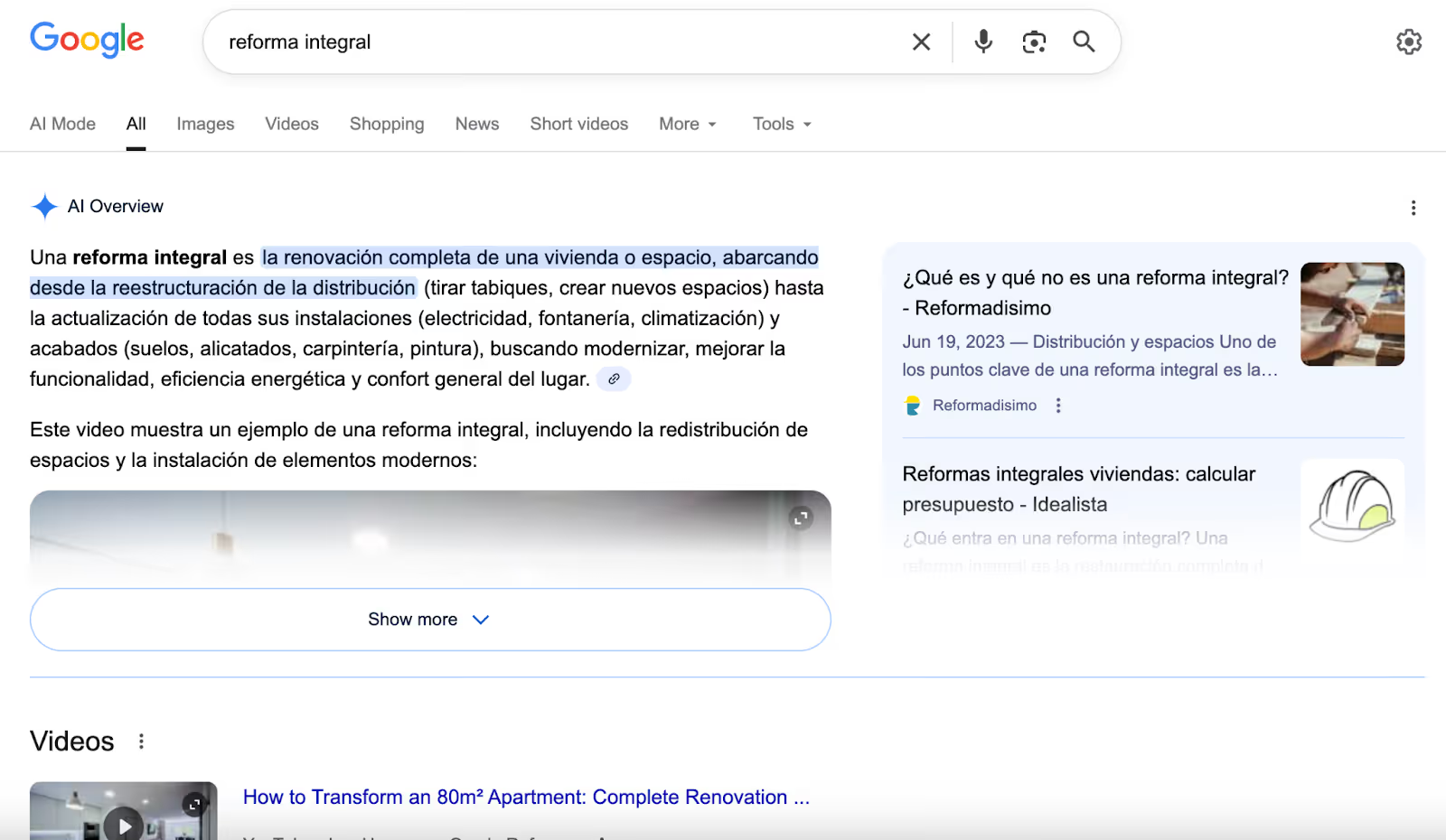

To collect and validate keywords, it’s best to combine multiple data sources, such as real queries from Google Search Console, competitor analysis using Ahrefs or
Semrush, and manual SERP checks. It’s important to consider not only search volume but also SERP features and page types in the top results. In many cases, lower-volume keywords deliver better results because of clearer intent and less competition.
When keyword sets aren’t separated between language versions, pages fail to match local search intent, have lower CTR, and start competing with each other in search results.
Each language version of a page must have its own URL so search engines can correctly recognize it.
The choice between subdirectories, subdomains, or separate domains directly affects indexing speed, domain authority distribution, and the complexity of scaling a multilingual project.
Examples: example.us, example.fr, example.de
A ccTLD is a top-level domain tied to a specific country. It sends the strongest signal of geographic relevance.
From an SEO perspective, each ccTLD is treated as a separate website with its own history, authority, and backlink profile. This means content, link building, and PR efforts must be built independently for each country. This approach is the most expensive and resource-intensive to maintain. However, it provides the highest level of local relevance.
Examples: us.example.com, fr.example.com
Subdomains allow you to separate a website by language or country while keeping the same brand and infrastructure.
In most cases, subdomains require separate optimization: their own metadata, content, internal linking, and backlinks. They clearly separate markets, but make scaling and SEO signal management more complex.
Google treats a subdomain as a separate entity. In practice, promoting a subdomain is similar to promoting a new website from scratch, including building authority and waiting for indexing.
- Anastasiia Pasteka, Middle SEO Specialist at Promodo
Examples: example.com/en/, example.com/fr/
Subdirectories are language or regional versions hosted within the same domain. They are part of a single website, and all content contributes to one shared domain authority.
Subdirectories make it easier to launch new language versions, manage SEO, and avoid spreading domain authority too thin. This setup works well for businesses targeting multiple languages without needing strict country-level separation. You can scale a multilingual website without adding unnecessary complexity to the SEO architecture.
Content localization is the process of adapting content for a specific language or market based on search intent, keyword semantics, and local SERP requirements. Once the page is localized, it matches real search demand in that market.
Localization starts with the SERP. Before creating or adapting content, analyze:
Across different markets, the same query may require different page formats: a commercial listing, a guide, or a mixed format.
Localization also involves adapting:
In some markets, users expect quick access to pricing and delivery details. In others, they look for detailed explanations, benefits, or comparisons.
Titles and meta descriptions should reflect local demand and SERP competition and drive clicks. This often requires a different headline logic than in the primary language version.
Apart from the text, localization includes CTAs, value propositions, examples, case studies, units of measurement, currency, delivery options, and local trust signals.
What happens if you launch a language version without adapting content and structure? Pages fail to rank, traffic remains unstable, and organic growth doesn’t scale.
An hreflang tag is an HTML element that indicates a page has multiple language or regional versions.
Example for a website with English and French versions:
<link rel="alternate" hreflang="en" href="https://example.com/en/" />
<link rel="alternate" hreflang="fr" href="https://example.com/fr/" />
Hreflang does not define the language of a page. Instead, it tells Google that there are localized versions of the same content under different URLs. This helps search engines show the correct page version to users based on the language of their search query.
Hreflang works on a mutual setup: every localized page needs to link to all other language versions and also include a link to itself.
Hreflang applies only to fully equivalent pages. It does not replace canonical tags and does not fix structural site issues. Hreflang implementation requires a lot of care; many mistakes can happen at this stage.
Setting up hreflang tags requires precision and close attention, especially for websites with 10 or more language versions.
- Anastasiia Pasteka, Middle SEO Specialist at Promodo
Backlinks are external links from other websites pointing to your site. We know backlinks need to be high quality, but what does “quality” mean in multilingual SEO?
Search engines evaluate links in the context of language, region, and topic. For multilingual websites, this means the same backlink can have different value for different language versions.
Key factors that affect backlink value:
the language of the referring website’s content;
In multilingual SEO, links from local sources often have a stronger impact than generic or global links. They help Google understand which market a page is relevant for.
Expanding into new markets is rarely effective without brand mentions and backlinks from trusted local publications and listings. We have the case where a client’s website reached top search positions in India, South Korea, and Germany a month after placing just a few local backlinks to new pages.
- Anastasiia Pasteka, Middle SEO Specialist at Promodo

Working with Techtoro.io, we launched a blog in English, French, and German. Recently, we’ve added Spanish. Today, the French and German versions attract as much traffic as the main language version.

This result proves the effectiveness of our approach, so here are some practical tips for multilingual search engine optimization.
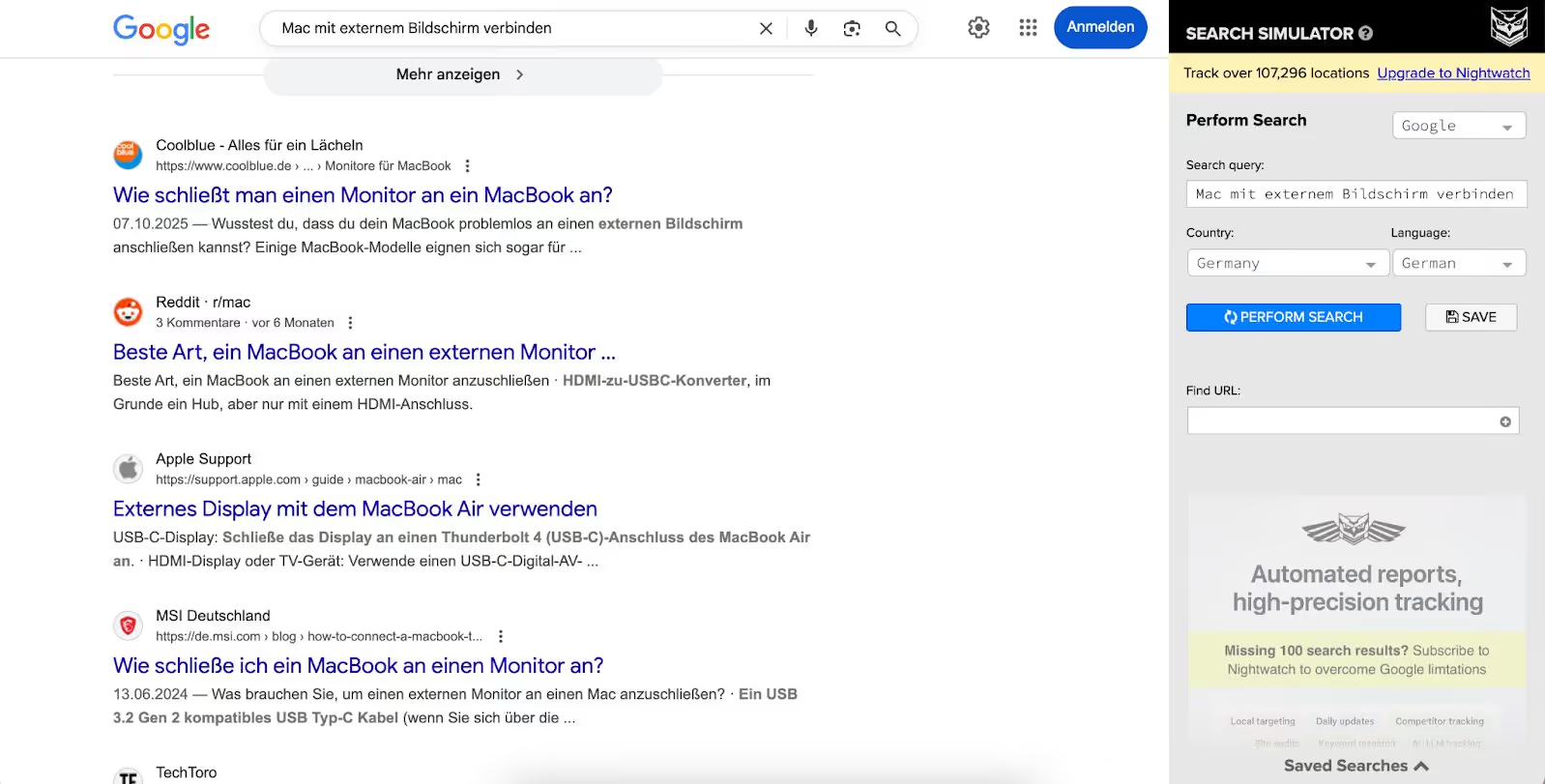

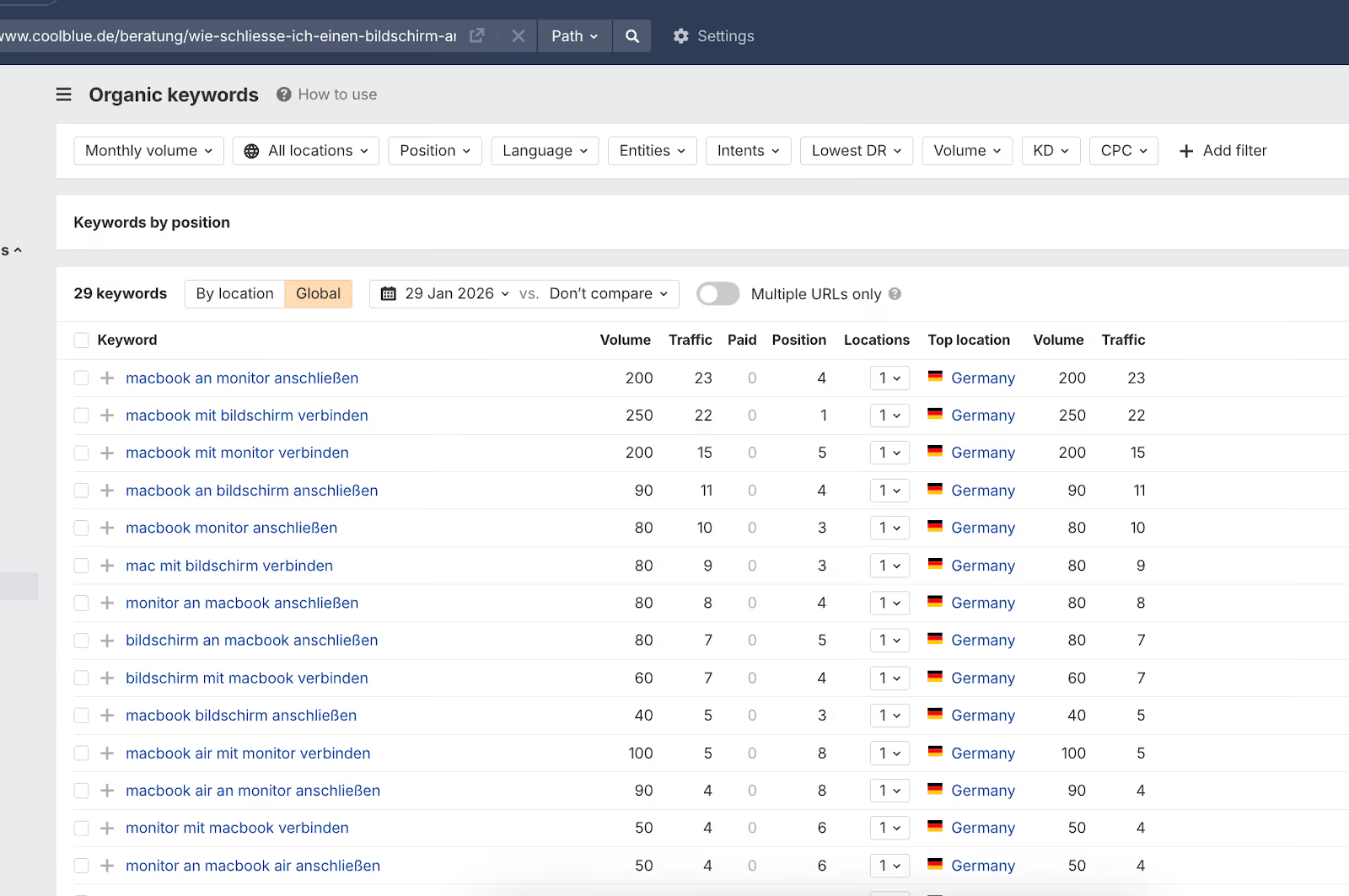
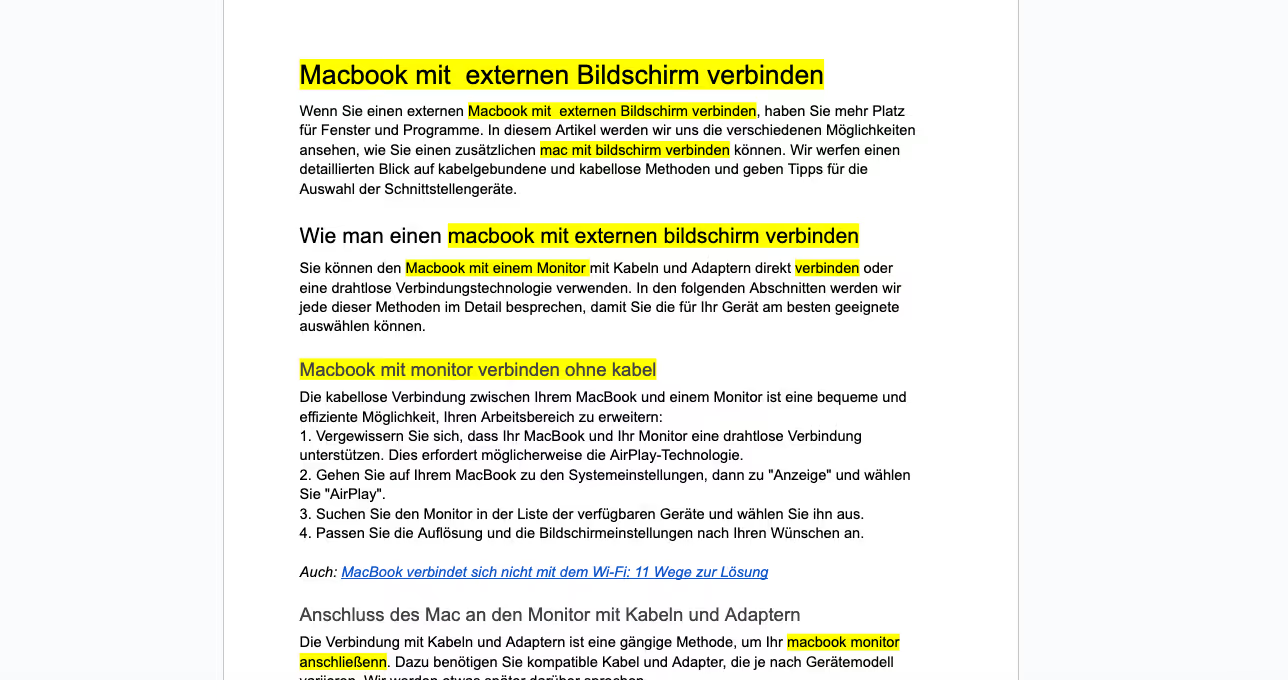
Important: Sometimes translations are too literal. In these cases, SERPs may show mostly auto-translated pages rather than real competitors. When this happens, it’s better to translate phrases or complete sentences that contain the keyword to capture context better. We recommend DeepL, as it often provides the most relevant and natural language options.
Why This Approach Works
In multilingual SEO, you can face a challenge: search engines may treat different language versions as duplicate content. This leads to cannibalization, lower rankings, and backlinks working less effectively than they could. How can you avoid this?
The key components remain the same: hreflang tags, a clear URLs, localized content, and SEO settings for each language version.
In addition, you need to use canonical tags.
A canonical tag is an HTML element that tells search engines which version of a page to index as the primary one when there are multiple similar URLs.
To avoid duplication, set canonical tags in each language version, pointing to the main URL for that page. This helps search engines index content correctly and prevents mixed SEO signals across languages.
Example: <link rel="canonical" href="https://example.com/ua/blog/bahatomovne-seo/" />
Avoid automatic redirects based on browser language or IP. These redirects can block search bots from accessing other language versions. It can cause pages to be indexed inconsistently or not indexed at all.
Users often get answers through Google AI Overviews or responses generated by ChatGPT, Gemini, and similar tools. You should understand how AI systems work with different language versions of content. Localization, or the lack of it, directly affects the visibility of AI-generated answers.
Today, SEO needs to consider how content is ranked and surfaced in LLM systems. First, appearing in AI-generated results signals that a website is trustworthy and high quality. Second, users often perceive LLM answers as less biased than traditional search results. While English-language sources still have a strong advantage in LLMs, localized content significantly improves visibility for searches in specific languages.
- Anastasiia Pasteka, Middle SEO Specialist at Promodo
In June 2025, Ahrefs published research showing that Google increasingly uses automatic page translations directly in search, without sending users to the original website. As a result, users receive answers or translated content directly in search. It means that if your content isn’t localized, you miss out on relevant local traffic.
Another study, based on 1.3 million mentions in Google AI Overviews and ChatGPT, found that translated websites receive 327% more mentions in AI Overviews for non-available language queries.
In practice, this means that the absence of a language version can make a website invisible to AI systems. Localized content, on the other hand, increases the likelihood that an LLM will use your pages as the source of an answer rather than machine-translated content.
For businesses, this makes multilingual SEO not just a traffic-acquisition tool but also a way to maintain visibility and control over how their brand is represented in AI-driven search results.
Multilingual SEO is a systematic effort that combines search demand analysis, site structure, content, and search signals for each market individually. That’s why machine translation or simple technical duplication of pages won’t deliver sustainable results.
When languages and markets are treated separately (each with its own keyword set, SERP logic, localization, and support from technical SEO and backlinks), organic traffic starts to scale predictably. There’s no cannibalization, visibility remains stable, and sudden traffic drops become far less common.
At Promodo, we know how to approach multilingual projects the right way. Our SEO team will analyze markets and search demand, localize content, and set up technical SEO. If you need an external perspective or support at any stage, our specialists can help you build a multilingual SEO strategy for consistent and measurable growth.

Copywriter at Promodo
Over nearly three years as a copywriter, I’ve written for US and European startups and companies, including SE Ranking. I enjoy working with words—finding the right phrasing, organizing ideas, and turning them into clear and useful content that shows real value and helps businesses grow.
SEO Specialist at Promodo
You may also like
Choose quality and trusted services to improve the presence of your company on the Internet, and feel free to contact our UK team if you have any questions.

The core challenge faced by the overwhelming majority of addiction treatment centers is a lack of marketing effort.

61% of users already use AI search to compare specific products and services.

Promoting pharmaceutical websites is quite challenging because they are in the YMYL* (Your Money or Your Life) category, closely related to health and life.
We at Promodo are ready to help you improve your performance across all digital marketing channels.
Get started



.avif)
.svg)


