


Content


Content Marketing Manager
Maria Kashina is a copywriter with a background in digital marketing and performance marketing content. She has experience creating a wide range of content formats, including blog articles, web pages, and expert interviews. With a foundation in journalism, Maria applies a structured and research-driven approach to content creation, focusing on clarity, accuracy, and value for the reader. Her expertise includes web content writing, content management, and storytelling, enabling her to translate complex marketing topics into accessible and engaging content. She has collaborated with marketing teams to develop content that supports brand communication and improves overall content performance.
Maria previously contributed to content projects at Promodo, where she worked on materials related to digital marketing and performance strategies.
.png)
Consumers often spend days or even weeks researching products online. They compare specifications, read reviews, check expert recommendations, and search for the best deals. But when it's finally time to make a purchase, many still choose to visit a physical store.
This behavior is especially common in industries like consumer electronics, where shoppers want to see a laptop, smartphone, or TV in person before making a high-value purchase. The same applies to tire retailers: customers frequently compare tire models, prices, and seasonal offers online, yet prefer to have their tires installed at a local shop, making the final purchase offline.
Does that mean your digital marketing failed? Quite the opposite. Your online campaigns may have been the very reason the customer walked into your store. This phenomenon is known as the ROPO effect — Research Online, Purchase Offline.
The challenge is that if a business measures marketing performance using only online sales, this contribution remains invisible. As a result, companies often pause or cut campaigns that appear unprofitable in standard analytics, even though those campaigns may be responsible for driving a significant share of offline revenue.
In this article, together with Pavlo Fortelnyi, Team Lead of Web Analytics at Promodo, we'll explore how ROPO analysis works, why it matters, and how it helps businesses make more accurate marketing decisions.
The term ROPO (Research Online, Purchase Offline) was first introduced in 2009, but it has become increasingly relevant as today's customer journey spans multiple channels. Modern shoppers rarely complete the entire buying process in one place. Instead, they might discover a product through Google, compare features on several websites, read customer reviews, and then visit a physical store to make the final purchase.
This behavior is known as the ROPO effect.

There are many reasons why customers choose to complete their purchase in a physical store:

For businesses that operate both online and offline, the ROPO effect provides a more accurate picture of marketing performance and return on advertising spend.
Without ROPO analysis, companies risk making decisions based on incomplete data. For example, they may pause a campaign that generates relatively few online purchases, even though it consistently drives customers to their physical stores.
Let's look at a simple example.
Imagine a retailer advertising two product categories: TVs and sneakers.
If you only analyze online sales, TVs appear to perform much better. Sneakers, on the other hand, generate relatively few online orders, making it seem reasonable to reduce the advertising budget for that category.
However, ROPO analysis reveals a different picture. It shows that only 20% of TV sales are completed offline, while 80% of sneaker purchases take place in physical stores after customers have researched the products online.
In other words, what appears to be an underperforming campaign in digital analytics may actually be driving significant offline revenue. Without ROPO insights, businesses risk cutting marketing investments that have a substantial impact on total sales.
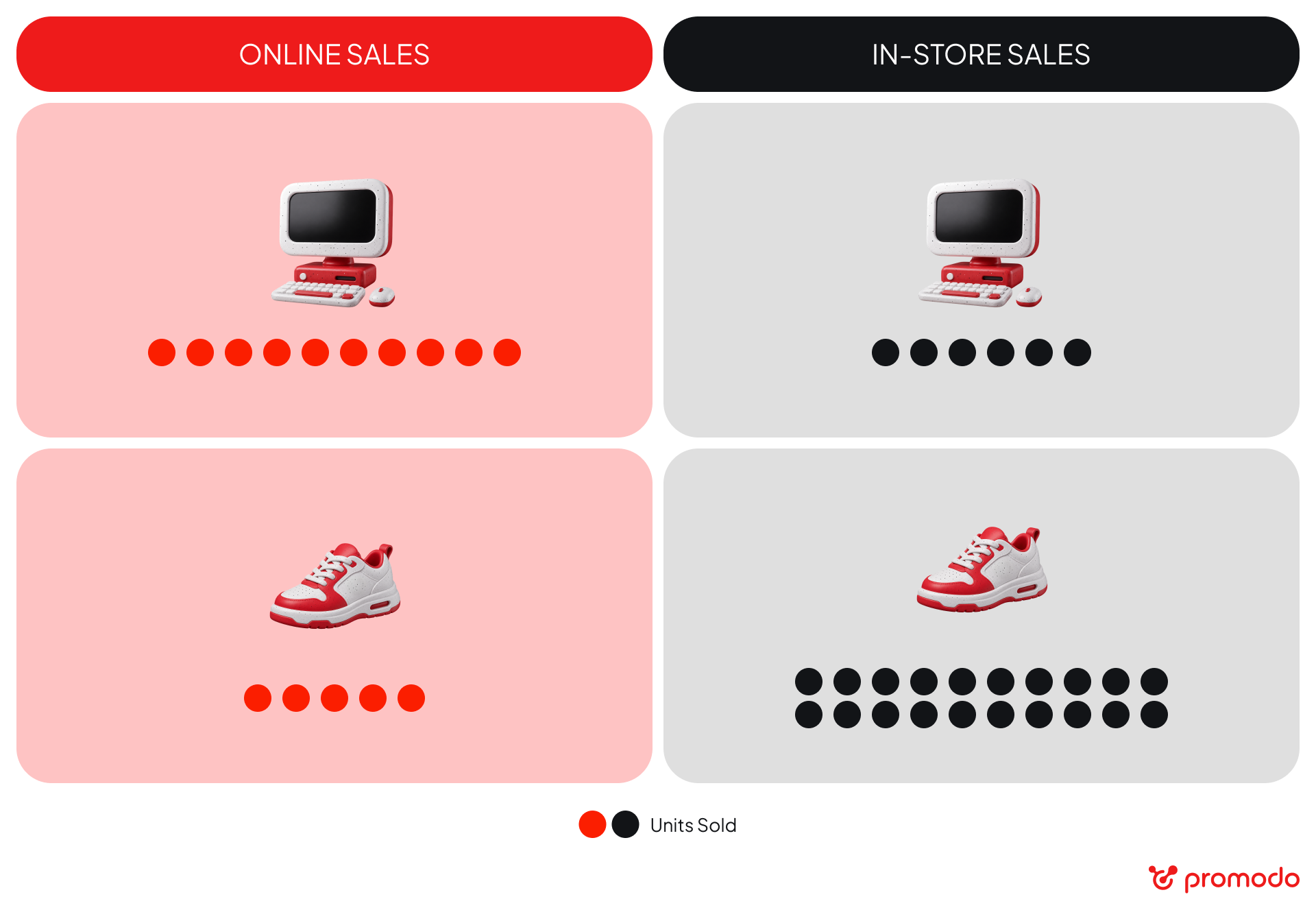
It turns out that most sneaker shoppers begin their journey online. They browse available models, compare options, and narrow down their choices before visiting a physical store to try on the shoes. As a result, this category generates far more total revenue than web analytics alone would suggest.
"In our experience, only about 5–10% of businesses fully recognize the importance of ROPO analysis. If your company operates both online and offline, it's not optional—it's essential. Otherwise, you're only seeing part of the customer journey and making marketing decisions with an incomplete picture."
Pavlo Fortelnyi, Team Lead, Web Analytics Department at Promodo
Companies that account for the ROPO effect gain a much more complete understanding of their marketing performance. Instead of measuring success solely through online conversions, they can see how digital channels influence total revenue across both online and offline sales.
For retailers in industries like consumer electronics or automotive, where customers often research online before purchasing in-store, this visibility is especially valuable. A paid search campaign promoting laptops or seasonal tire offers may appear to underperform in web analytics, while in reality it drives a significant number of in-store purchases.
ROPO analysis helps businesses:
Ultimately, ROPO analysis helps answer one of the most important questions for any omnichannel business: How much revenue does digital marketing actually generate for the company, regardless of whether the final purchase happens online or in a physical store?
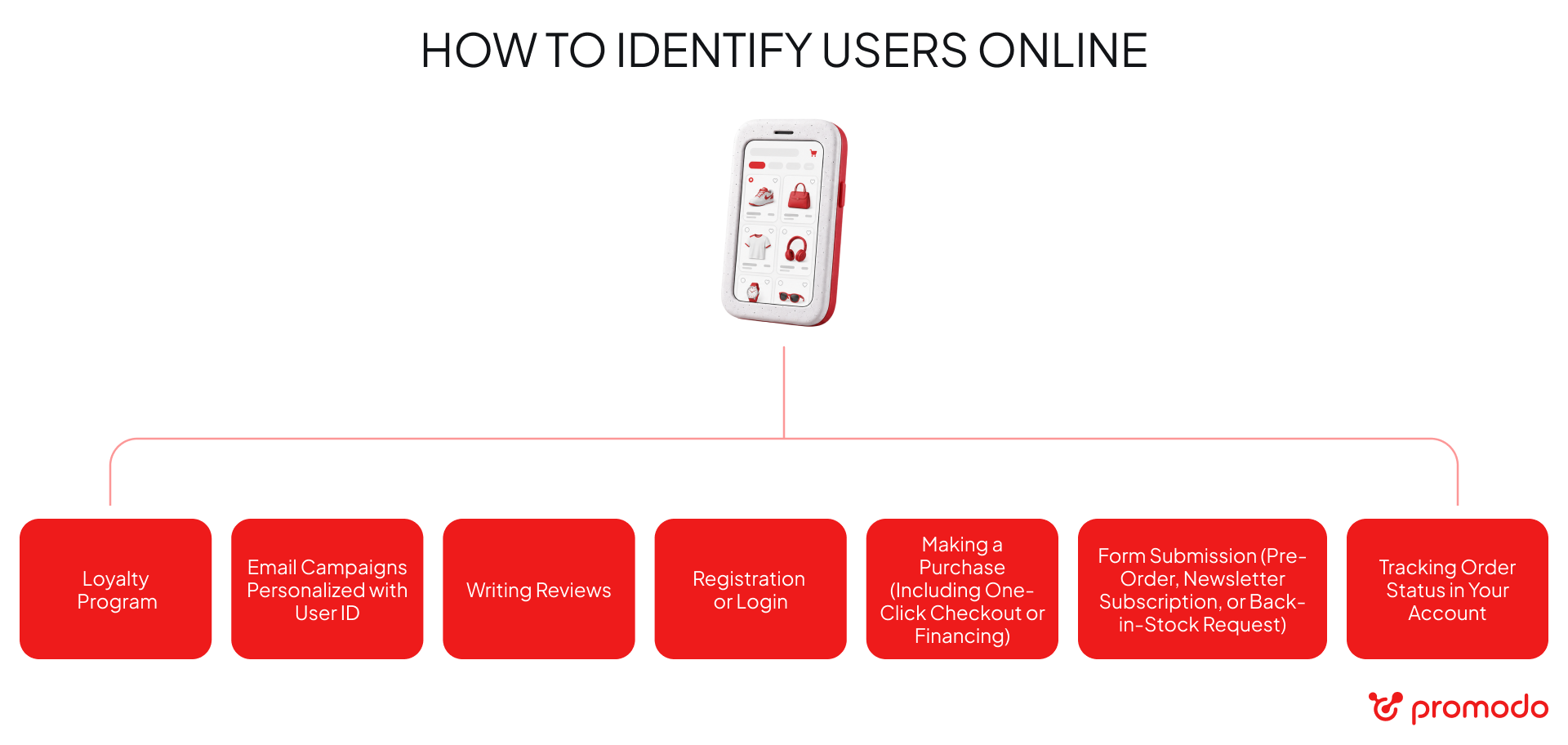
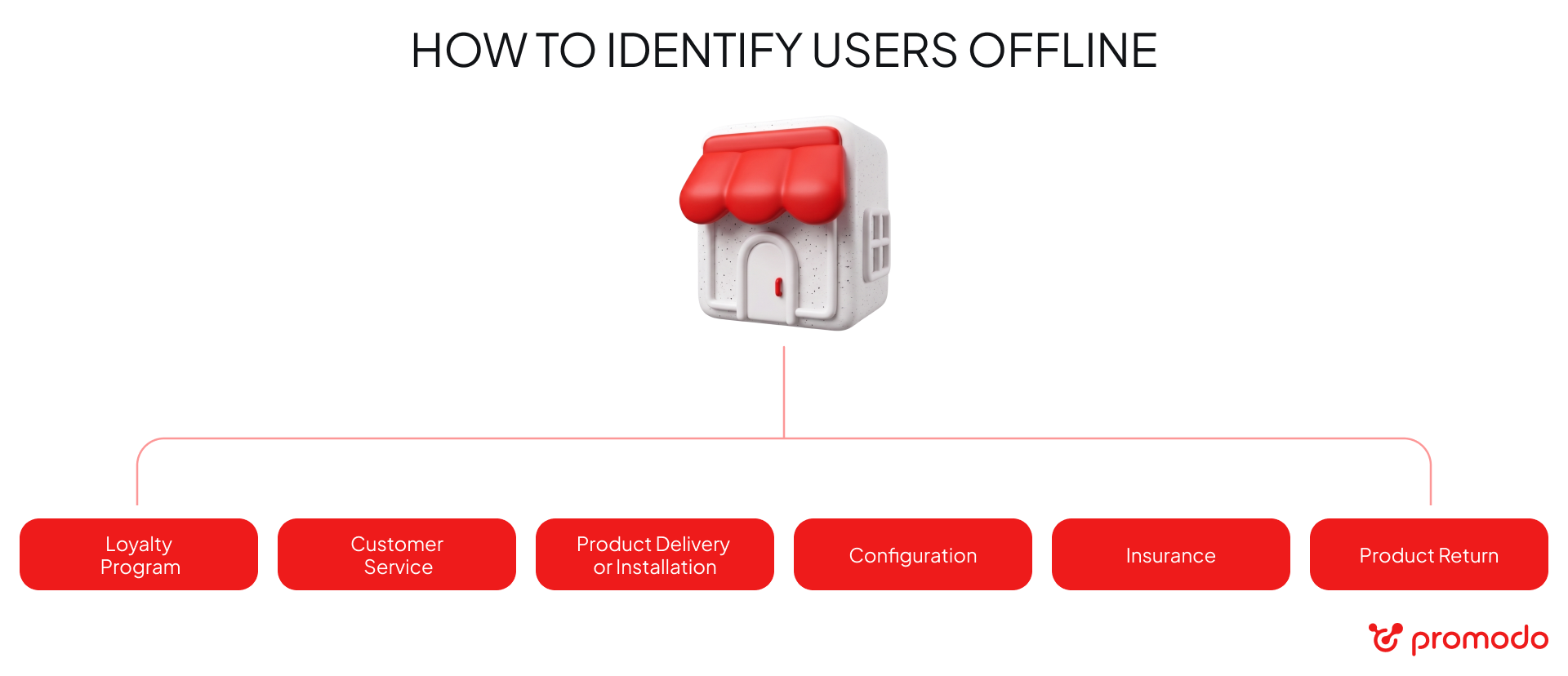
ROPO analysis is all about connecting a customer's online interactions with their offline purchases to understand the complete buying journey. To make this possible, businesses need a reliable way to identify the same customer across both channels.
At a minimum, you should have:
When these systems work together, retailers can accurately attribute offline sales to the digital marketing campaigns that influenced them, revealing the true impact of their online marketing efforts.
[[SLIDER-START]]
[[SLIDER-END]]
You need to consolidate data from several sources:

It's neither possible nor necessary to identify 100% of ROPO customers.
Instead, the goal is to capture a statistically representative sample of customer journeys. In most cases, identifying just 10–15% of users is enough to make reliable, data-driven business decisions. As your tracking and data infrastructure improve, this share can gradually increase to 30–40%.
The primary matching key is User ID. In most cases, businesses use a loyalty program ID, phone number, email address, or another customer identifier to link website visits with purchases made in physical stores.
Once your data is consolidated, you can measure:
ROPO analysis shows the relationship between online interactions and offline purchases, helping you understand how many customers research products online before buying in-store.
However, end-to-end (closed-loop) analytics provides a much more complete picture by also measuring:
A ROPO report reveals how online and offline sales are connected. But to understand whether each marketing channel is truly profitable and whether your advertising budget is justified, you need end-to-end analytics. That's why we rarely build ROPO reports as standalone analyses.
"A ROPO report helps you understand the relationship between online and offline sales. But if you want to evaluate the real performance of each marketing channel and make smarter investment decisions, ROPO should be part of a broader end-to-end analytics framework—not a standalone report."
Pavlo Fortelnyi, Team Lead, Web Analytics at Promodo
[[SLIDER-START]]
[[SLIDER-END]]
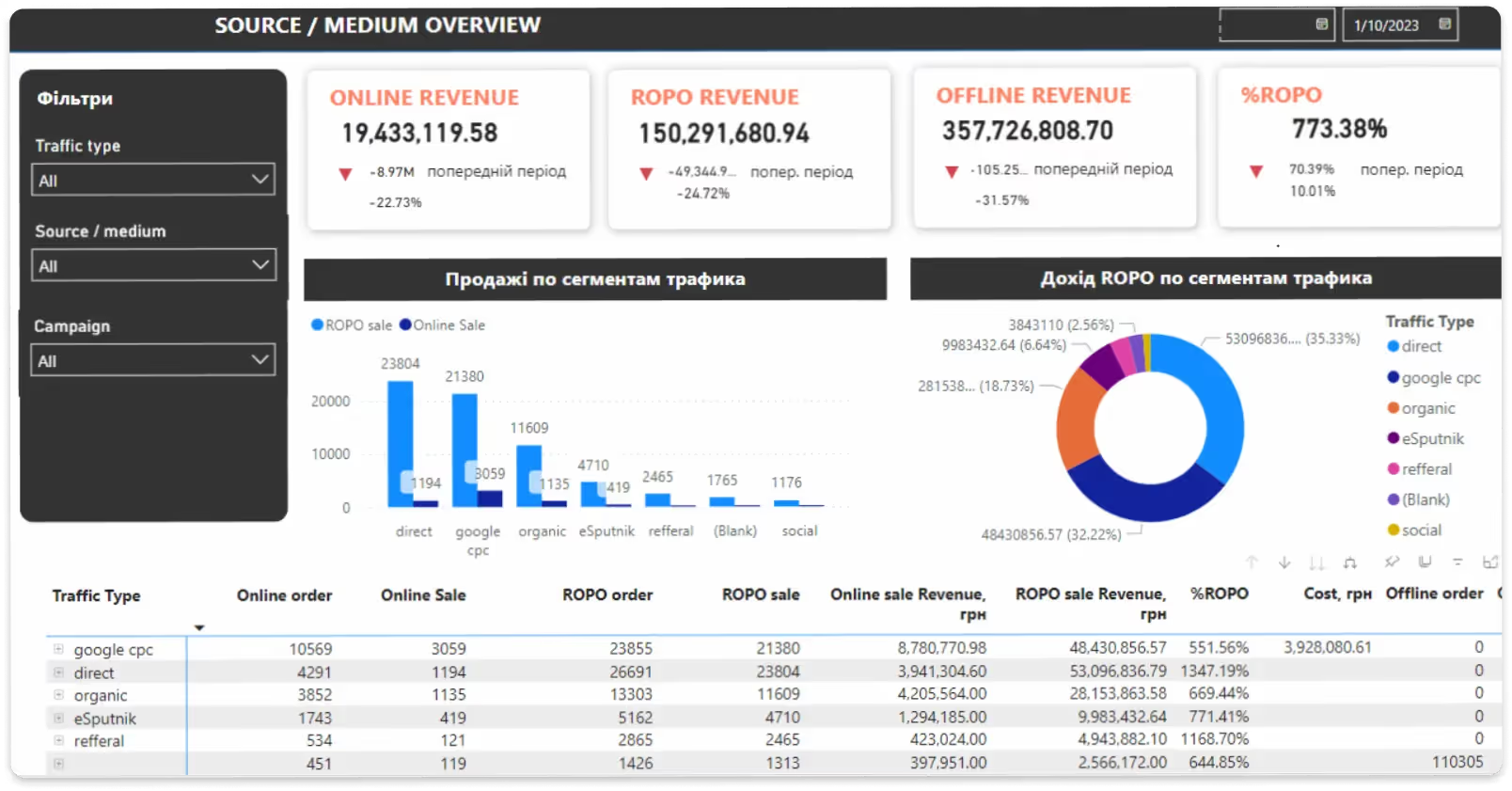
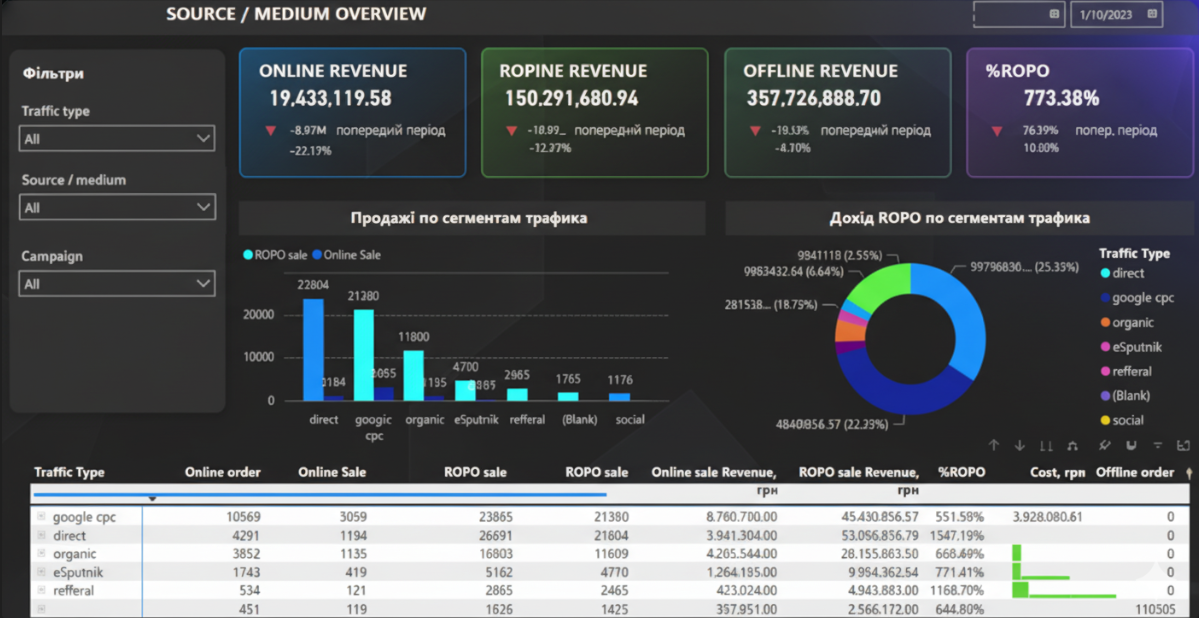
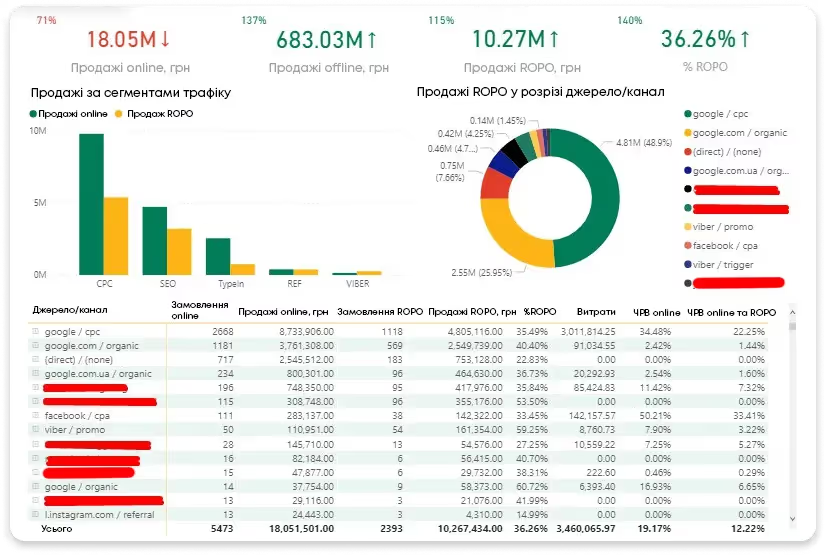
That's nearly a 7× increase, demonstrating how much online marketing can influence offline purchases that traditional web analytics fail to capture.
[[SLIDER-START]]
[[SLIDER-END]]
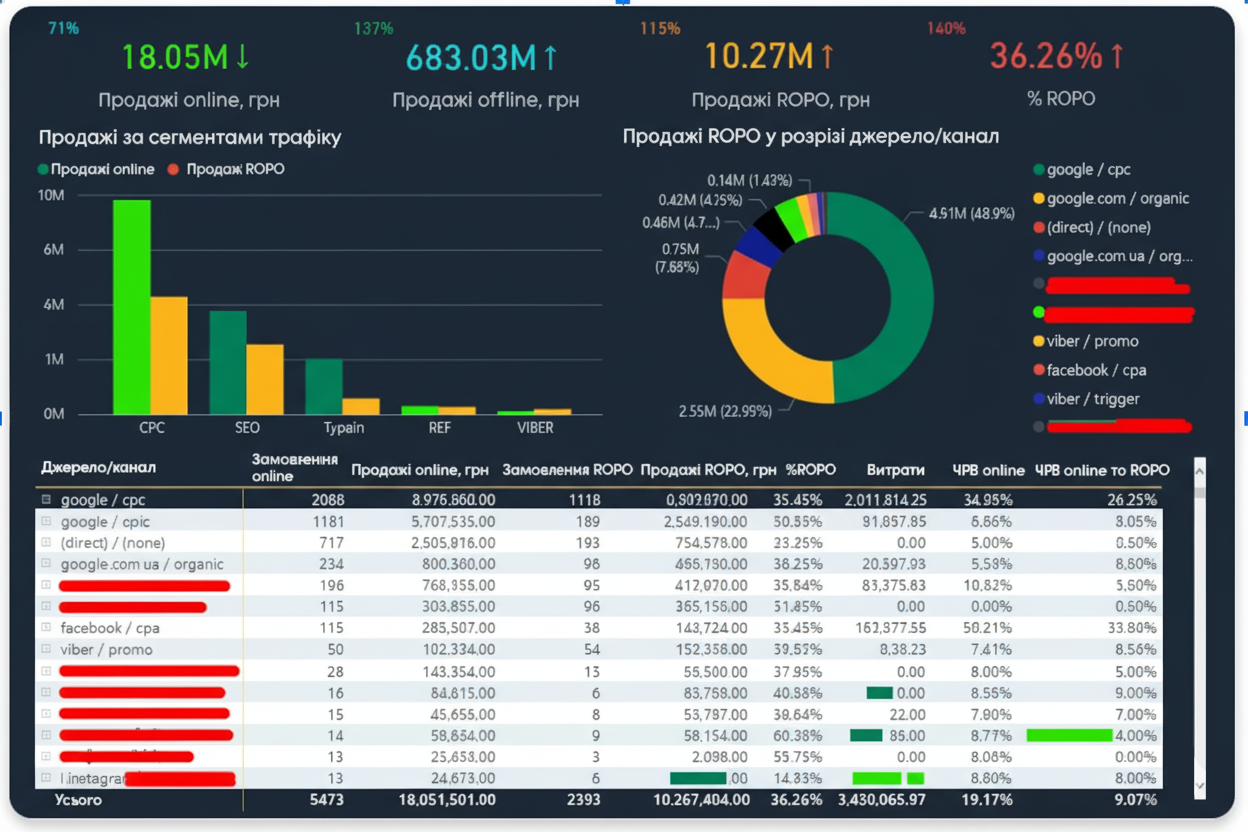
Google CPC Advertising Cost of Sales (ACOS) – Online Only: 34.49%
Google CPC ACOS – Including ROPO Sales: 22%
The channel was profitable all along—the majority of customers simply completed their purchases in physical stores.
ROPO analysis enables you to:
Here's a simple example.
If an investment of $10,000 generates 40 online leads and another 60 customers who visit a physical store after researching your website, traditional web analytics will only show 40% of the actual outcome. Without ROPO analysis, the remaining 60% of marketing impact remains invisible, leading to incomplete performance measurement and potentially poor budget decisions.
Content Marketing Manager
Maria Kashina is a copywriter with a background in digital marketing and performance marketing content. She has experience creating a wide range of content formats, including blog articles, web pages, and expert interviews. With a foundation in journalism, Maria applies a structured and research-driven approach to content creation, focusing on clarity, accuracy, and value for the reader. Her expertise includes web content writing, content management, and storytelling, enabling her to translate complex marketing topics into accessible and engaging content. She has collaborated with marketing teams to develop content that supports brand communication and improves overall content performance.
Maria previously contributed to content projects at Promodo, where she worked on materials related to digital marketing and performance strategies.
You may also like
Choose quality and trusted services to improve the presence of your company on the Internet, and feel free to contact our UK team if you have any questions.

More than 80% of customers leave their online shopping carts abandoned, and 87% of them are ready to finish their order later.
.avif)
If you need a convenient, insightful, and quick-to-implement BI dashboard that covers the key needs of advertising performance analysis, Essential by Promodo is

When preparing your digital marketing strategy for 2024, you need profound industry analysis, meaningful statistics, and credible forecasts for future trends.
We at Promodo are ready to help you improve your performance across all digital marketing channels.
Get started



.svg)


