




Calzedonia
Promodo Feed Optimizer
Meta
Calzedonia is an international fashion brand.
We've been working with Calzedonia for over three years. During this time, Promodo's PPC team has built a high-performing Meta Ads strategy that combines creative campaigns, remarketing, and catalog campaigns.
As with every long-term partnership, we continuously look for new growth opportunities and test hypotheses that can increase channel revenue. At this stage, we identified untapped potential not in audience targeting or higher budgets, but in the visual presentation of product ads.
Given Calzedonia's strong brand recognition and the critical role visuals play in the fashion industry, we proposed testing a new approach to product card design in Meta catalog campaigns.
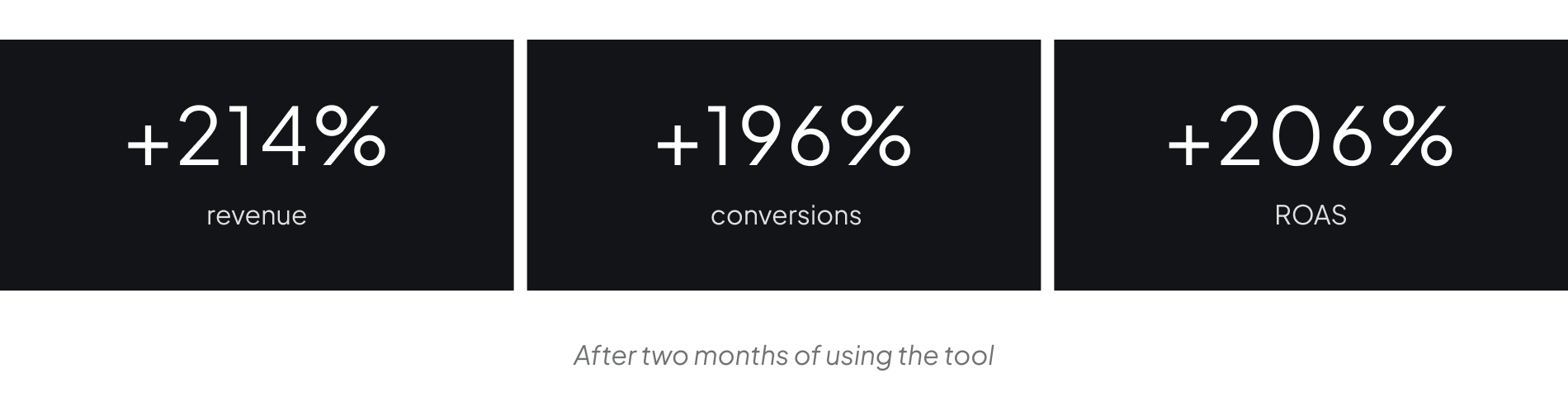
After implementing Feed Optimizer, the performance of Meta catalog campaigns improved significantly.
Our hypothesis was that more informative product cards would communicate the value of each offer more effectively and attract users with stronger purchase intent.
To test this approach, we implemented Feed Optimizer, allowing us to scale the new creative format across the entire product catalog and take the next step in evolving the client's Meta advertising strategy. This solution was particularly well suited to Calzedonia, given its strong brand recognition and the importance of visual presentation in the fashion industry.
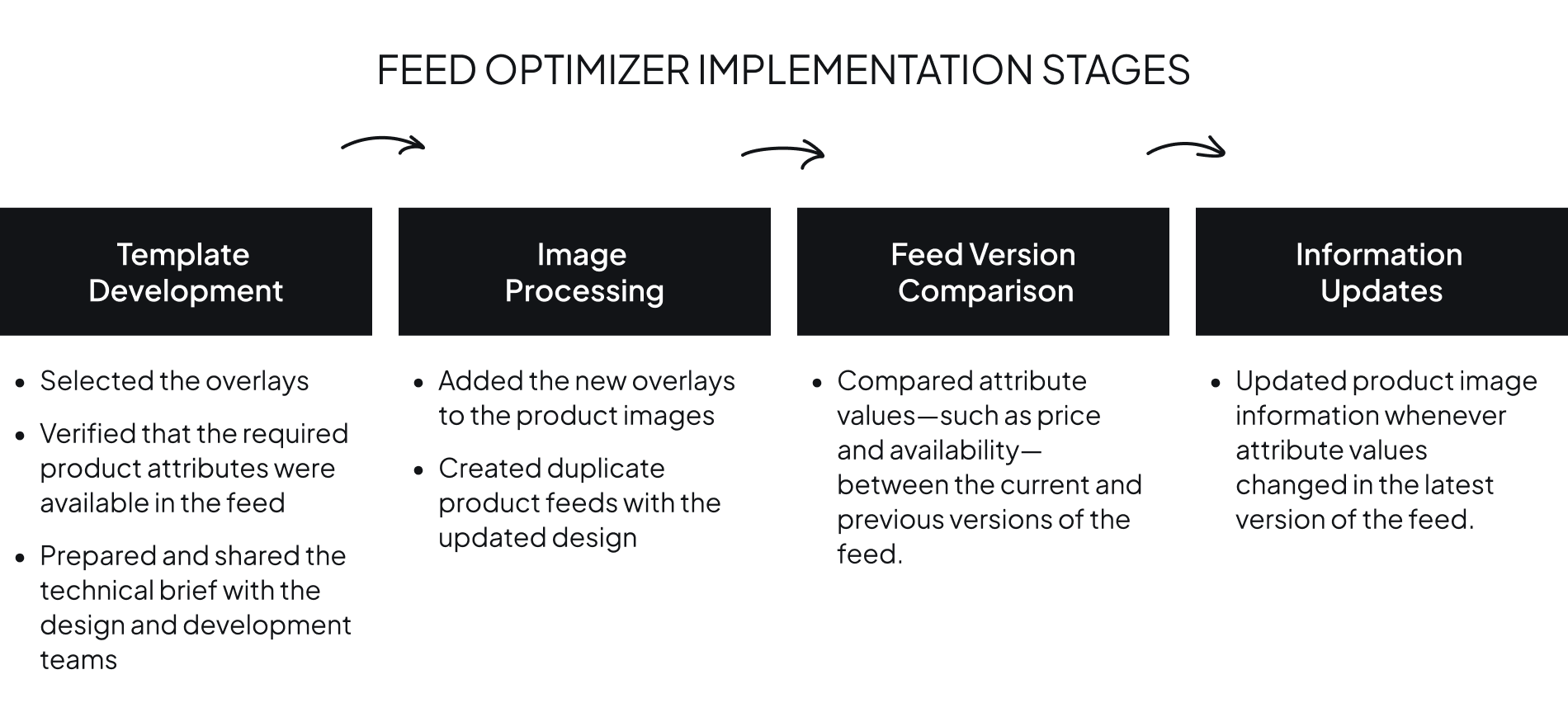
Feed Optimizer is Promodo's proprietary solution for enhancing product catalog creatives in Meta Ads. It automatically overlays selected product information—such as price, discount, or product name—directly onto product images. All updates happen automatically, so if a product's price changes in the feed, the information displayed on the creative is updated as well.
For fashion brands, capturing a user's attention within the first few seconds of seeing an ad is critical.
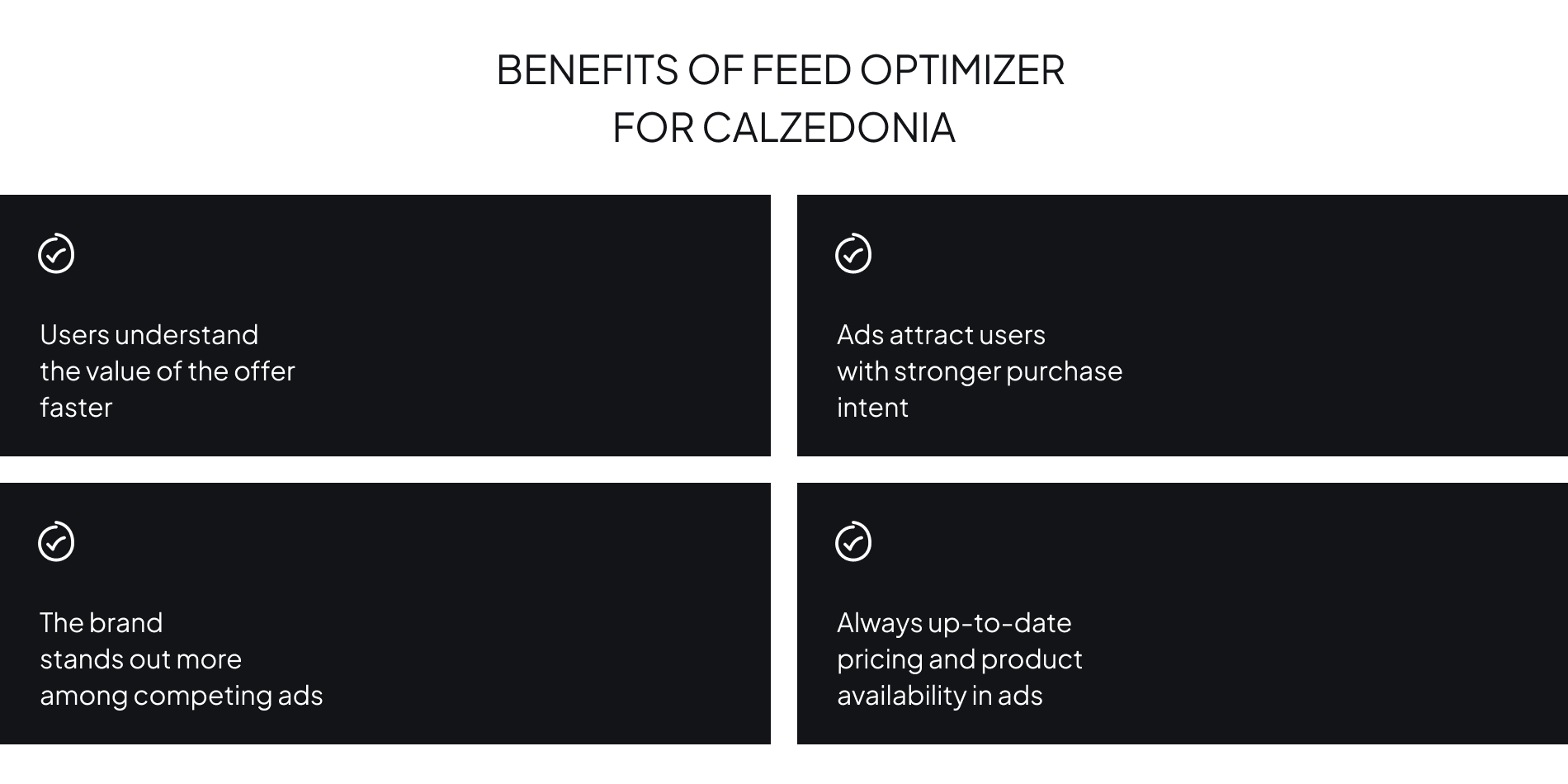
As a well-established and recognizable fashion brand, Calzedonia benefits from strong brand equity. Highlighting the brand directly in product creatives was a key part of our strategy, helping users instantly recognize the brand in their feeds and attracting more qualified traffic before they even visited the website.
To achieve this, we enhanced product images with dynamic overlays that included:
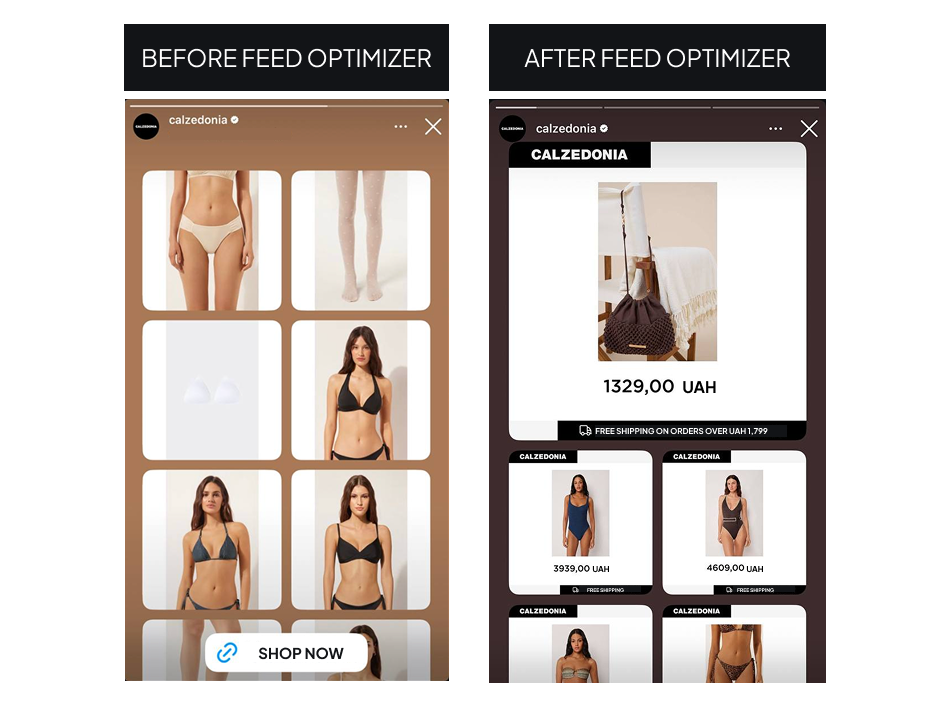
As a result, the product cards became more informative and instantly recognizable. Users could immediately see the brand, the product price, and an additional purchase incentive, making the ads easier to identify and more compelling at first glance.
Users make decisions in their social media feeds within seconds. Our goal was not only to capture their attention but also to provide key information upfront, helping them evaluate the offer faster and decide whether to visit the website. This approach also helped attract users with stronger purchase intent.
The ads reached users who were already interested in the products and could immediately understand the purchasing conditions.
To support this, we implemented adaptive delivery messaging that automatically adjusted the delivery information displayed on each product card based on the product's price.
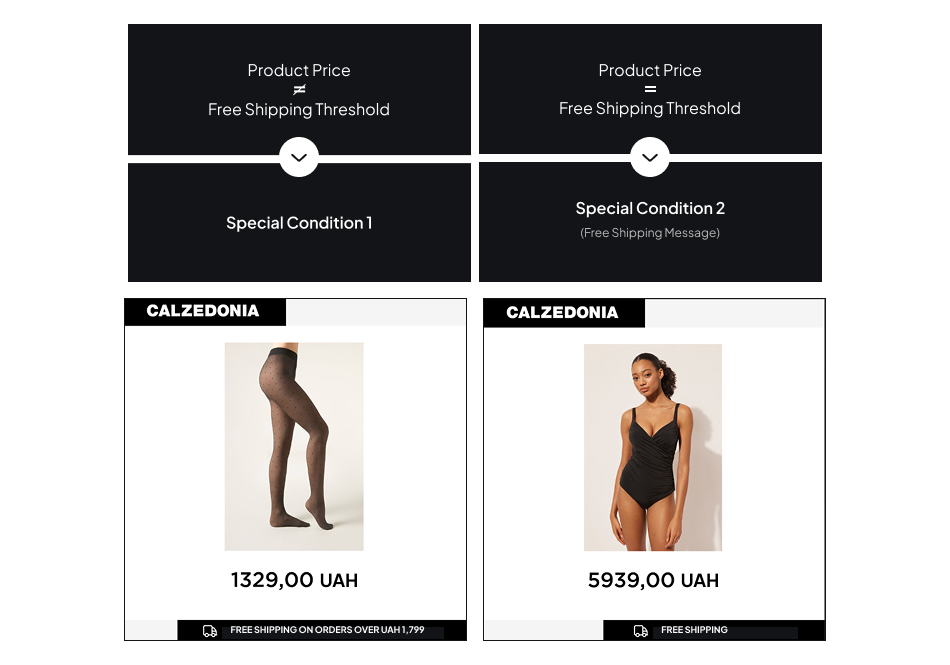
This approach ensured that each product displayed the most relevant delivery information. By tailoring the overlays to the offer, we reinforced the value proposition before users even clicked on the ad.
In Meta catalog campaigns, ads can display both primary and secondary product images. For Calzedonia, many of the secondary images featured close-up details or alternative angles that were less effective as the first point of contact with potential customers.
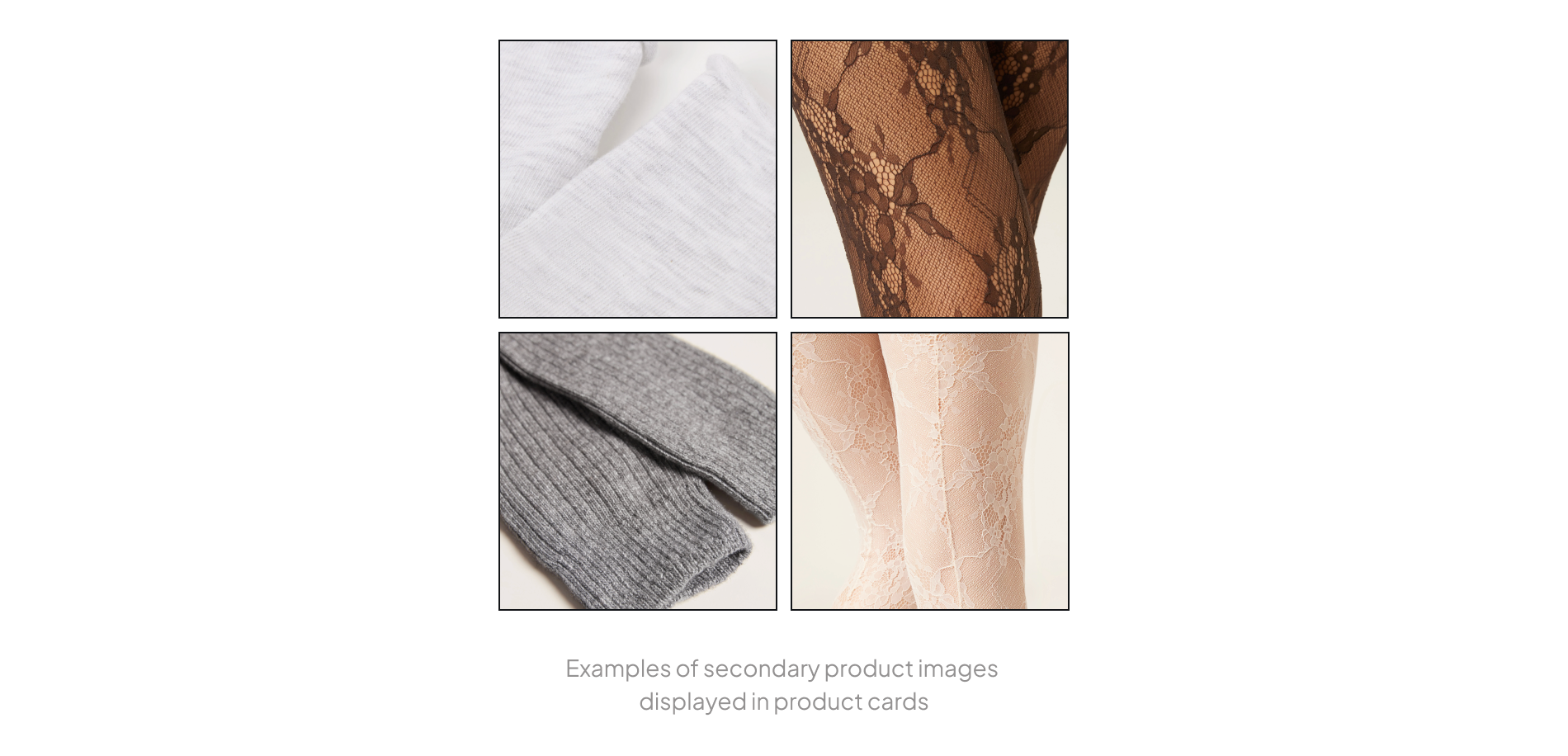
For fashion advertising, this was a critical issue. The first image is often what shapes a user's perception of the product and influences whether they engage with the ad.
Using Feed Optimizer, we configured the catalog to display only primary product images enhanced with the required overlays. This ensured a more consistent visual experience and gave every product the strongest possible first impression.
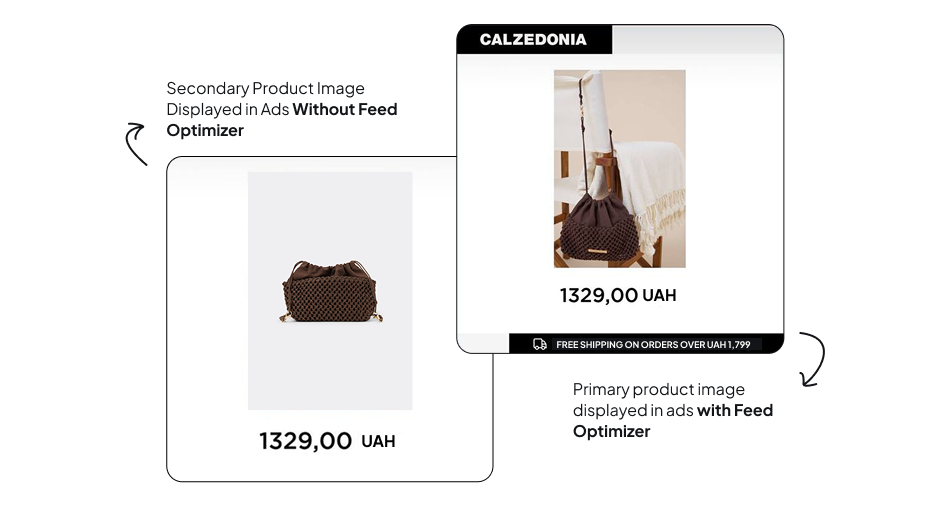
This approach ensured a consistent visual presentation across the entire catalog and allowed us to showcase the images that represented each product in the most effective way.

Once Feed Optimizer was fully implemented and performing consistently, we expanded the catalog campaign structure to evaluate how the new creative approach performed across different audience segments.
In addition to the existing audience built around fashion-related interests, we tested:
This allowed us to measure how the enhanced product cards performed among users with different levels of brand awareness and purchase intent.
Despite these experiments, the audience based on fashion interests—which had been part of the strategy even before Feed Optimizer was introduced—continued to deliver the strongest results.
This confirmed that the performance uplift was driven not only by audience expansion but also by the improved product card design and the enhanced visual presentation made possible by Feed Optimizer.
In the fashion industry, success isn't determined by the number of impressions alone. What often matters most is how quickly users understand the value of the offer and decide to engage with the ad.
To evaluate the impact accurately, we accounted for the strong seasonality of the fashion category, which significantly affects both demand and user behavior throughout the year. Therefore, we compared the performance of April–May 2026 with the same period in 2025.
During this period, ad spend increased by just 2%, while the campaigns delivered substantial improvements across key business metrics.
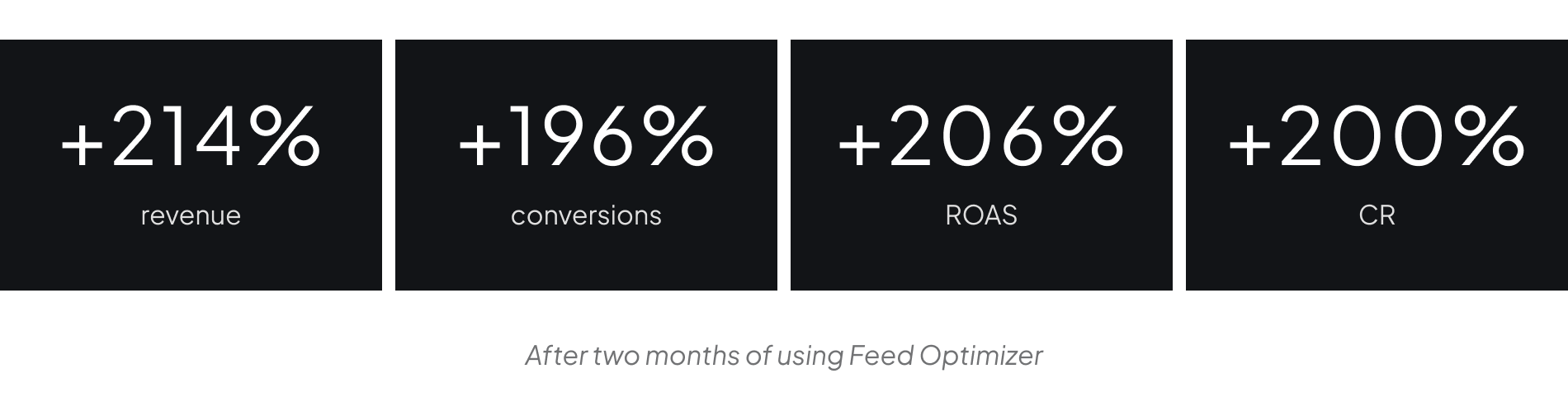
The audience also converted more effectively. Despite generating a similar volume of traffic, the campaigns delivered significantly more purchases. Feed Optimizer helped users evaluate the offer more quickly, allowing the brand to attract shoppers with stronger purchase intent.
The next phase is to test new creative variations tailored to different seasonal product categories. This will help Calzedonia adapt its messaging to changing demand and showcase different product types more effectively throughout the year.
The success of this initiative has also created new opportunities to expand the approach. One of the next steps under consideration is rolling out Feed Optimizer across other brands within the group, including Intimissimi and Tezenis.
Considering the rapid evolution of the digital landscape, every business needs to remain flexible and open to new approaches and tools. At the same time, banner blindness has become an increasingly significant challenge, as users are paying less attention to conventional creatives and familiar ad formats.
When the Promodo team proposed testing Feed Optimizer, we decided to evaluate its effectiveness in practice. The results fully met both our expectations and those of the Promodo team. The test validated our hypothesis: the new approach attracted more user attention, improved campaign performance, and proved its effectiveness. Another key advantage is the flexibility to easily adapt the creative design to different brand needs and audience segments.
Following these positive results, we plan to scale this approach and test it across our other brands as well.
Anna Demchenko, Marketing Manager, Calzedonia
.webp)
Case studies
Check out how we help companies like yours overcome challenges and rise to the next level.
.png)
AI traffic
Revenue from AI traffic




.png)


.webp)
.svg)


