



.avif)
UDRIVE is a platform for selecting and purchasing new cars.
Increase the volume of qualified leads and scale the effectiveness of paid acquisition channels.
Before the start of our cooperation in December 2025, the client was already using paid search advertising. Meta Ads was the main conversion driver, but the overall number of leads was insufficient, and scaling opportunities were limited by algorithm constraints.
According to Automotive Benchmarks 2026, the average cost per click (CPC) in the automotive industry increased by nearly 13%, the average click-through rate dropped from 11.67% to 8.29% year over year, and the cost per lead (CPL) for car purchases reached an average of $70.11.
Our task was to find an approach that would allow advertising system algorithms to consistently deliver qualified leads for UDRIVE at an acceptable cost in conditions of an overheated auction and high CPL.
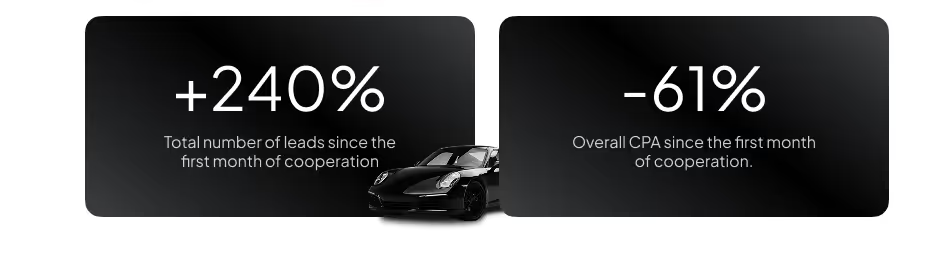
We divided the work into several stages.
We started by structuring campaigns in Meta and Google Ads to cover the full funnel. We covered all areas:
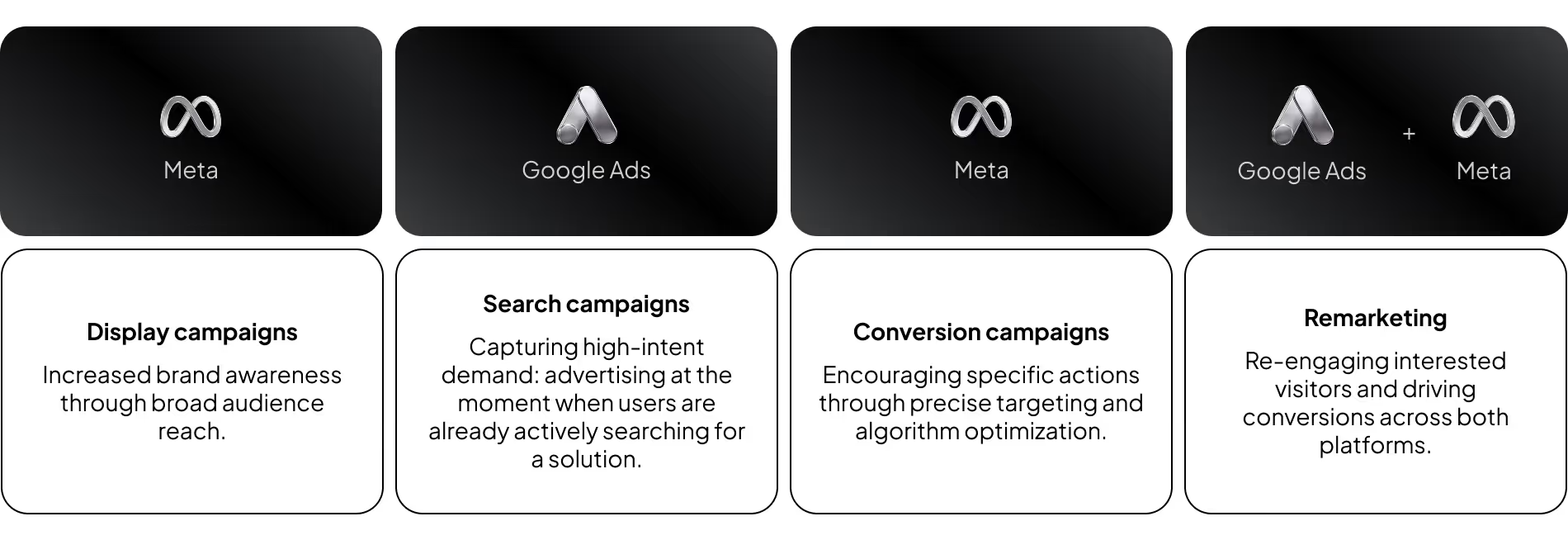
We expected the highest efficiency from Google Search Ads. However, at the initial stage, we encountered a challenge: there were too few leads for proper algorithm learning. As a result, the campaigns remained in a constant learning phase. Scaling under these conditions was not possible, as it would have led to increased costs without a corresponding growth in the number of leads.
To address the issue, we decided to run an experiment: adding a secondary conversion event — add-to-cart — to the list of primary conversions in Google Ads.
The UDRIVE marketplace differs from traditional eCommerce platforms, so user actions are classified differently:
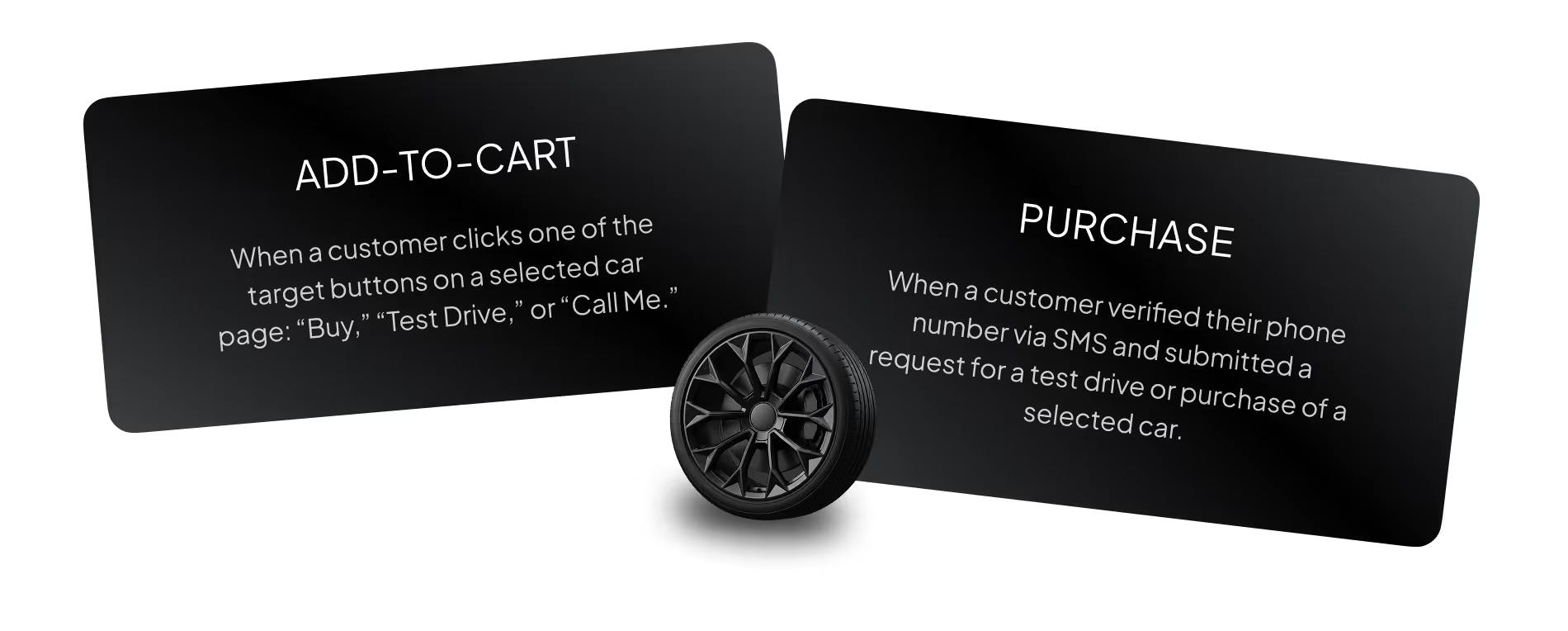
The idea was to provide the algorithm with more signals for learning, as the add-to-cart action occurs significantly more often than a completed lead. This way, the campaigns would receive a sufficient volume of data to operate and optimize more consistently.
Over a 30-day observation period, the hypothesis was confirmed: campaigns began generating a more stable number of purchase conversions. As a result, we applied the same approach to Meta Ads, shifting the primary optimization goal from purchase to add-to-cart, which produced a similar outcome.
After gathering sufficient data, we encountered an unexpected insight: despite our initial hypothesis, the main conversion drivers turned out to be Performance Max campaigns rather than Search campaigns.
The most effective format was PMax with the following approach:
Structured asset groups: separate ad sets for each car brand with relevant signals and popular models (plus remarketing signals).
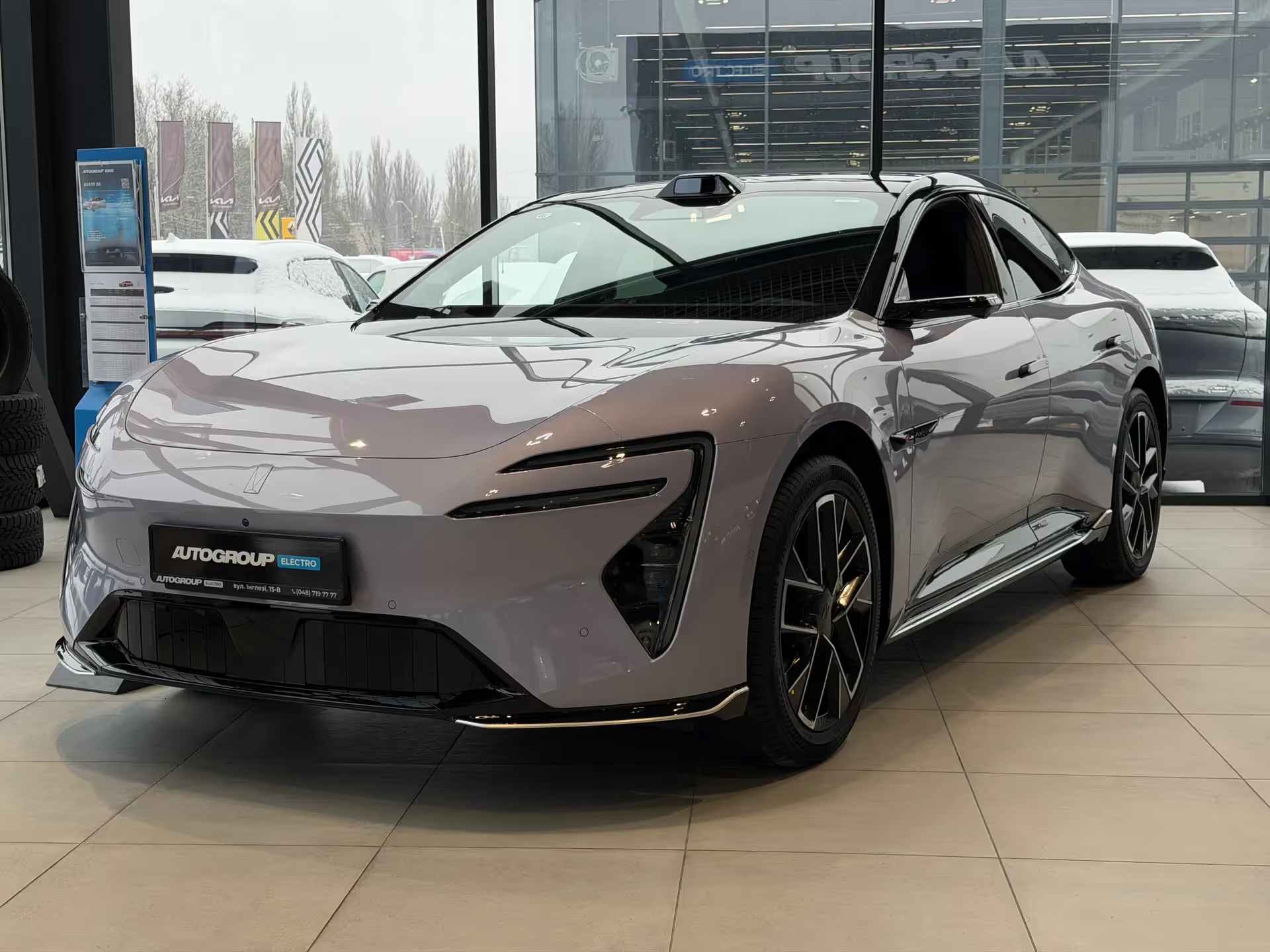
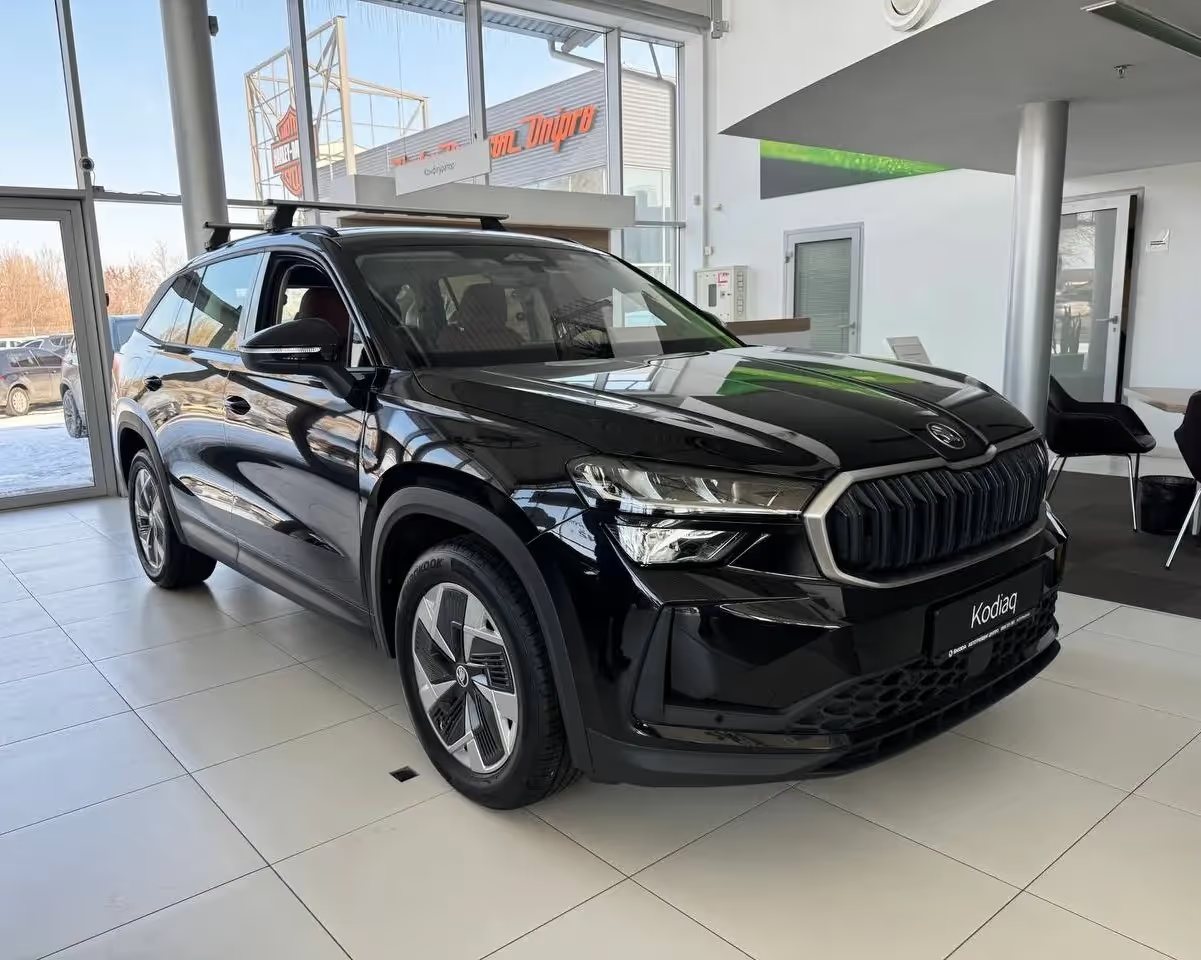
Live content: real photos of cars from dealerships instead of “perfect” studio images. Such visuals increase trust by clearly demonstrating actual vehicle availability and better breaking through banner blindness in an environment saturated with AI-generated imagery.
[[SLIDER-START]]
[[SLIDER-END]]
An effective approach was a Performance Max campaign targeting broader queries: an audience looking for new cars without being tied to a specific brand.
After this stage, we decided to scale the successful PMax campaigns and gradually reduce Search campaigns.
During the scaling of PMax, we encountered the issue we had anticipated from the beginning: campaigns started to significantly increase the number of micro-conversions (add-to-cart), but actual purchases (leads) did not grow proportionally. The algorithm simply found the cheapest way to meet its click/conversion targets.
We needed a non-standard solution: how do we maintain enough conversion volume for algorithm learning while also forcing it to prioritize the final lead instead of an intermediate action?
The answer was a Maximum Value strategy in Google Ads, assigning a static value to the add-to-cart event using the formula:
Average purchase value × CR from add-to-cart to purchase = real value of add-to-cart
(purchase value is automatically identified via the vehicle price tag on the website)
For example: if an average lead is worth $20, and out of every 10 add-to-carts, 2 convert into a lead, then the real value of one add-to-cart is $4. This is the value we assigned as a static conversion value.
The new experiment ran for 30 days and confirmed the validity of the approach:
As a result, the algorithm continued to receive enough data for optimization, but with a clear priority toward achieving the primary conversion goal.
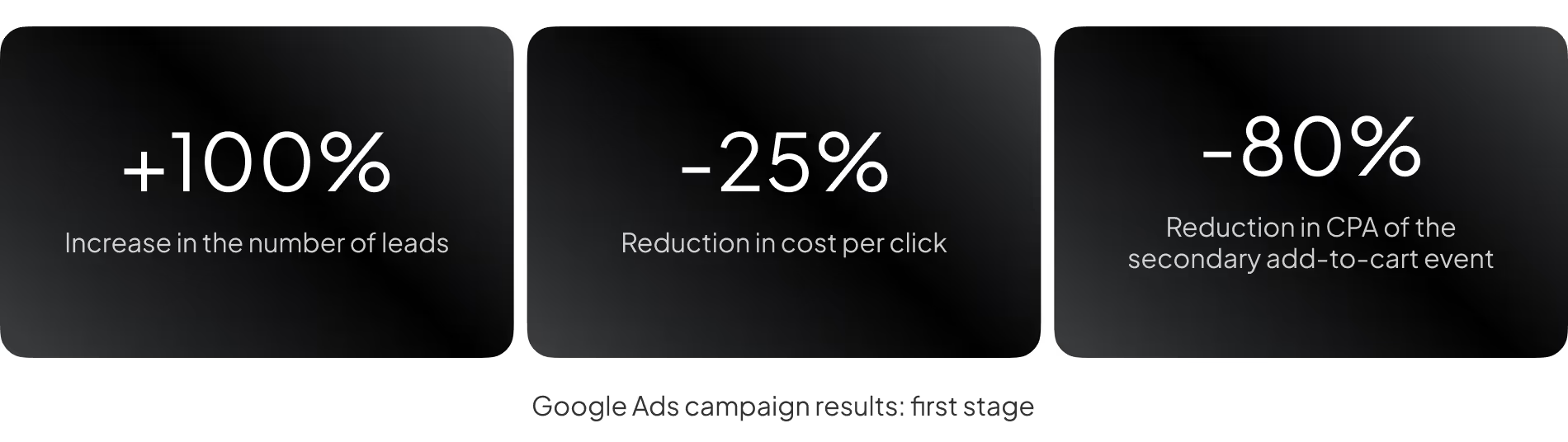
A comprehensive approach to algorithm training and value-based bidding allowed us to reduce lead acquisition costs and increase the number of inquiries. As a result, we achieved a 100% increase in the number of leads, a 25% decrease in cost per click (CPC), and an 80% reduction in the CPA of the secondary add-to-cart event.
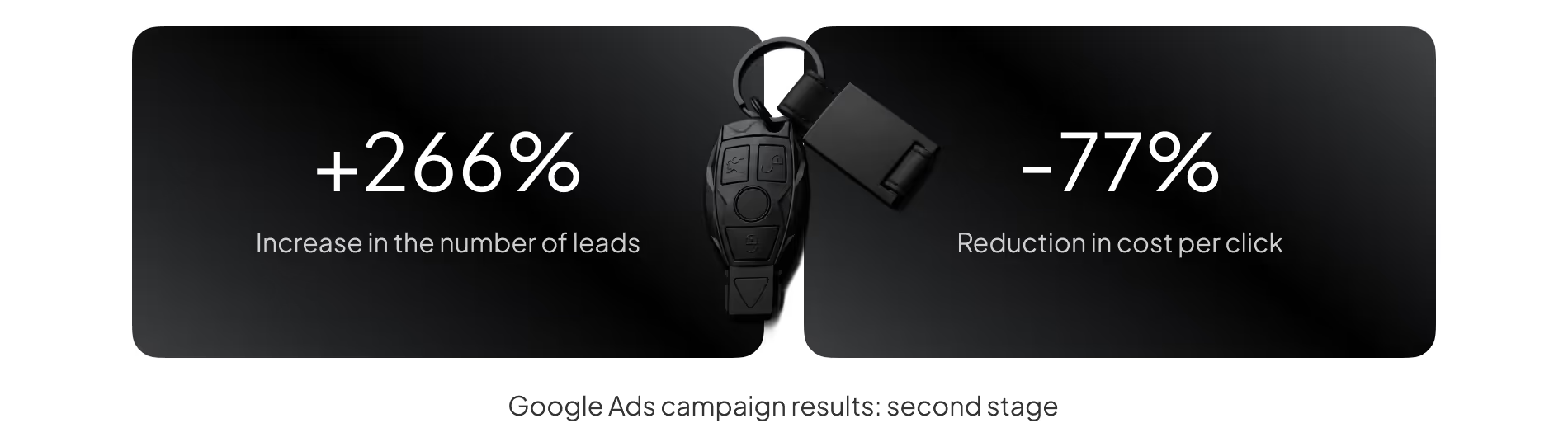
A similar result was achieved in Meta Ads as well, with a 266% increase in the number of leads and a 77% decrease in cost per click (CPC).
We are focused on scaling results in Meta Ads. We continue to test new formats and creative types, different audience approaches, and Meta Automotive Ads with a specialized catalog setup. At the same time, we are continuing exponential scaling in Google Ads.
“This is a team that is truly comfortable to work with. They helped us improve advertising performance by reducing cost per click and bringing in more qualified leads.
I appreciate that the team continuously analyzes performance metrics, suggests improvements, and does not stop at the results already achieved. They are focused not just on launching ads, but on their real effectiveness.
I value our collaboration for its open, friendly communication, strong involvement in the process, and shared focus on results”.
Iryna Fedotova, CMO, UDRIVE
.webp)
Case studies
Check out how we help companies like yours overcome challenges and rise to the next level.
.png)
AI traffic
Revenue from AI traffic




.png)


.webp)
.svg)


