




Customs Support Group
GA4
Google Ads
Power BI
SalesForce
AdsHub
Looker Studio
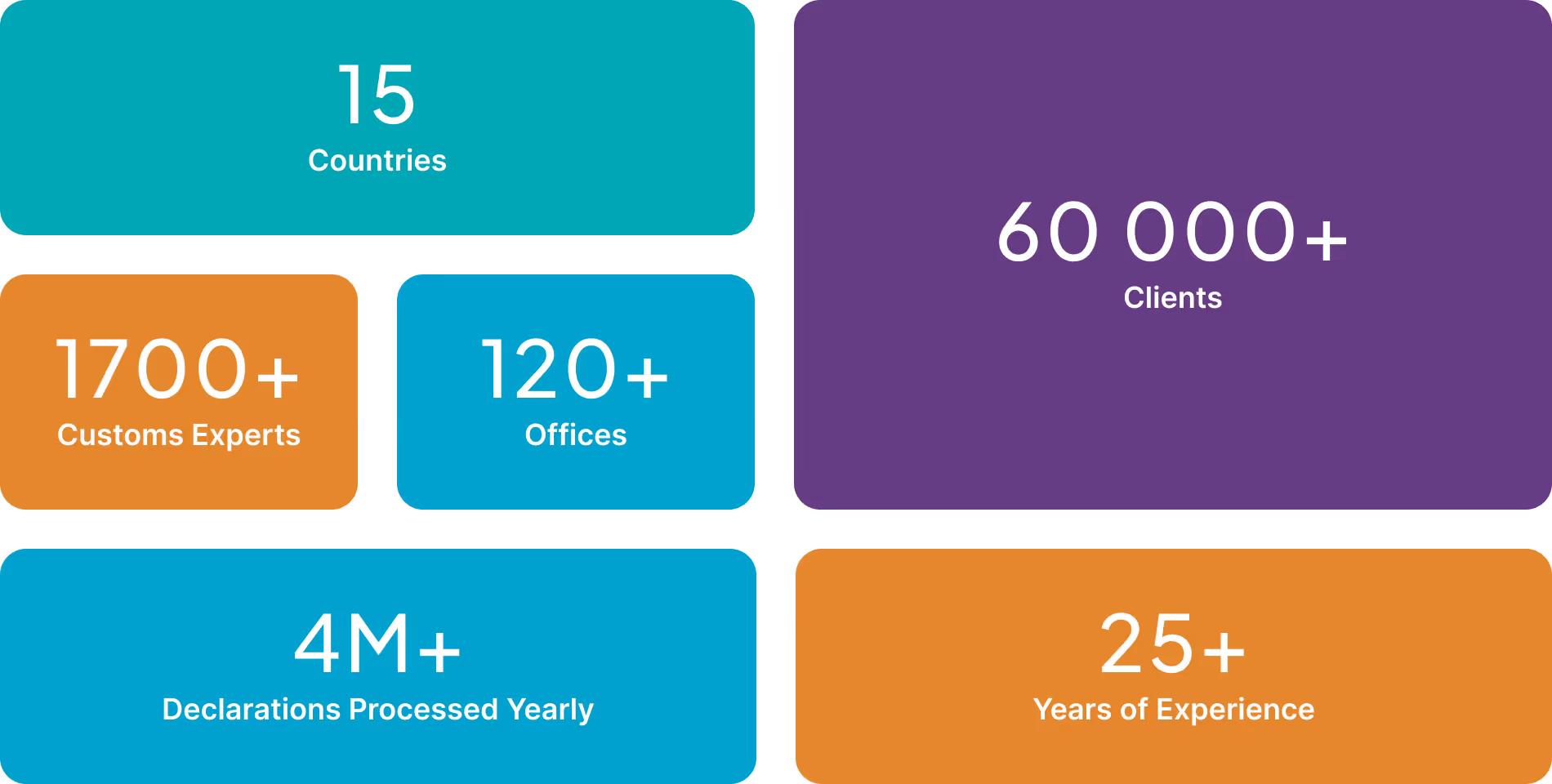
Customs Support Group is the leading European provider of customs and trade solutions for more than 60,000 clients across 15 countries. It facilitates seamless cross-border operations through cutting-edge digital innovations and outstanding industry expertise.
The client’s goal wasn’t simply to generate more leads. We faced a challenge to attract companies that were genuinely interested in customs and trade services. That’s why the strategy focused on improving the quality of traffic coming to the website.
The objective was to attract larger, high-value clients who were more likely to move through the sales pipeline and eventually become Closed Won deals — meaning signed contracts and real revenue for the business.
The client had already been running advertising campaigns for a considerable time. Several analytics and marketing tools were in place, including Google Analytics, Power BI, and Google Ads. However, despite the established setup and ongoing campaigns, the overall advertising performance did not meet the client’s expectations.
The Promodo team applies a coherent approach. We know that thorough analysis is essential before launching any new marketing strategy, so we started with a full audit of the client’s analytics systems, and only after that moved to the PPC strategy optimization.
First, we noticed that the client had inconsistent conversion tracking across multiple platforms. To ensure data alignment with Power BI, we worked closely with the client’s team to unify tracking logic and data sources.
That’s why we started by setting up accurate conversion tracking in Google Analytics.
Since Customs Support Group operates in the European market, its website must comply with Consent Mode.
Consent Mode V2 is Google’s updated system for managing user consent for data collection in the EU. It ensures GDPR compliance by controlling how Google tags (GA4, Google Ads, etc.) collect and use personal data.
This means that for tracking, ad personalization, and remarketing, consent must be obtained from end users located within the European Economic Area before their personal data can be used.
Because many users don’t opt in to Consent Mode, a large portion of leads were classified as unassigned or direct. What’s more, many unidentified leads resulted from incomplete form tracking and misaligned event configurations.
Promodo’s analytics experts resolved these issues. We made lead source attribution fully transparent. Marketing and sales teams could confidently identify which campaigns were driving MQLs, SQLs, and revenue. This improvement provided a solid foundation for future data-driven PPC decisions and more efficient budget allocation.
Once we had settled the correct conversion tracking, we moved on to developing a new PPC strategy.
Defined the primary business goal: consistent generation of high-quality leads (MQLs and SQLs). Early in the collaboration, the client also refined their internal lead qualification process, focusing only on higher-value leads.
Agreed on priorities by country, language, and key services—specifically focusing on promoting customs brokerage, customs consulting, and Customs-as-a-Service
Mapped conversion actions: identified which website actions counted as main conversions versus micro-conversions, providing clarity for campaign tracking and optimization.
A conversion was defined as a fully completed contact form submitted by a target user. This means not just any form submission, but specifically inquiries from the relevant B2B audience. Individual requests are not considered conversions for this client and are excluded from the sales funnel. Additionally, all other types of forms were separated from the main conversion event and classified as secondary actions (micro-conversions).
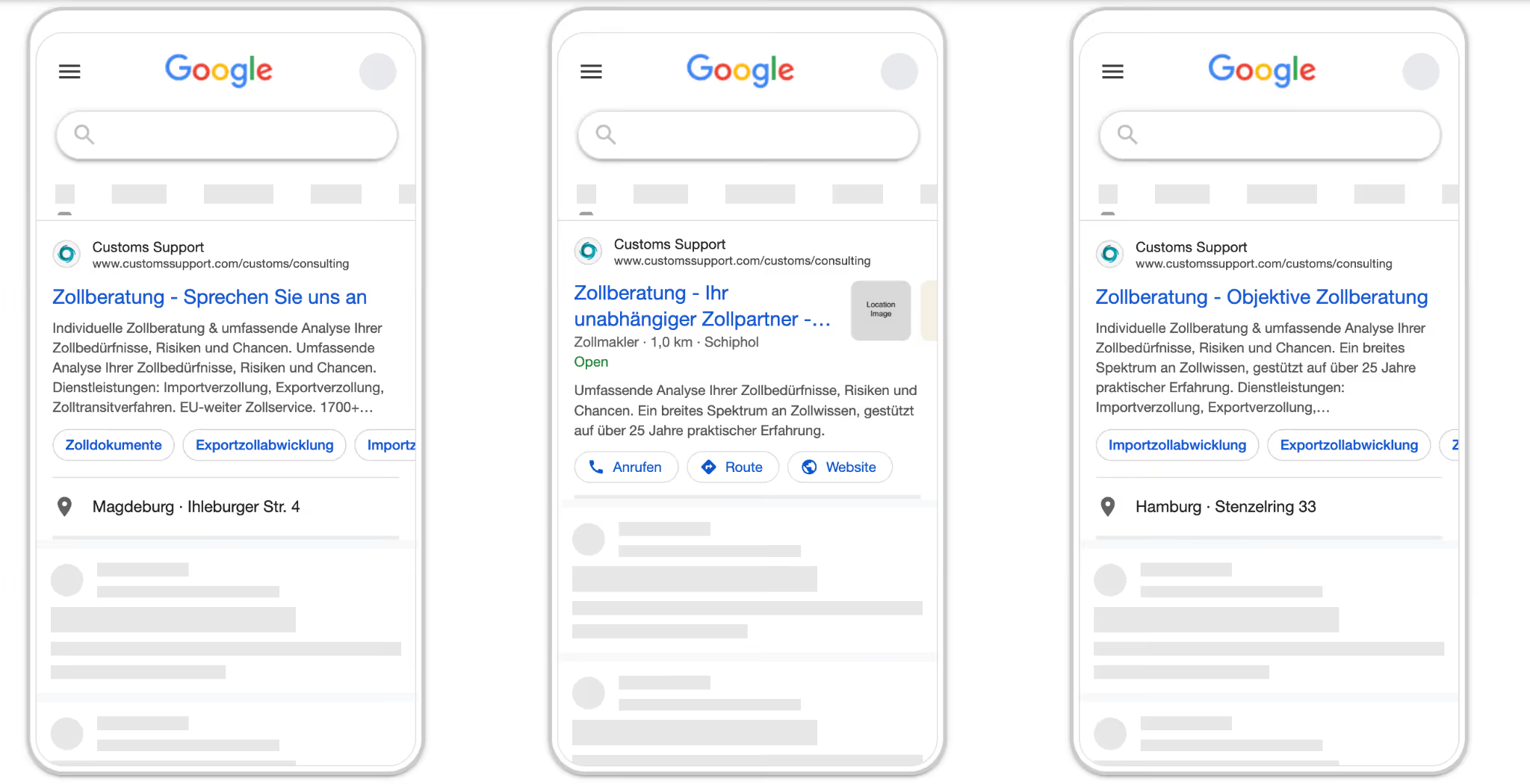
The customs and trade solutions niche has a very limited number of relevant search queries, which is another challenge for the paid promotion. That’s why we built the advertising account using a highly segmented structure by addressing key differences across:
For each country, we launched separate campaigns in two languages:
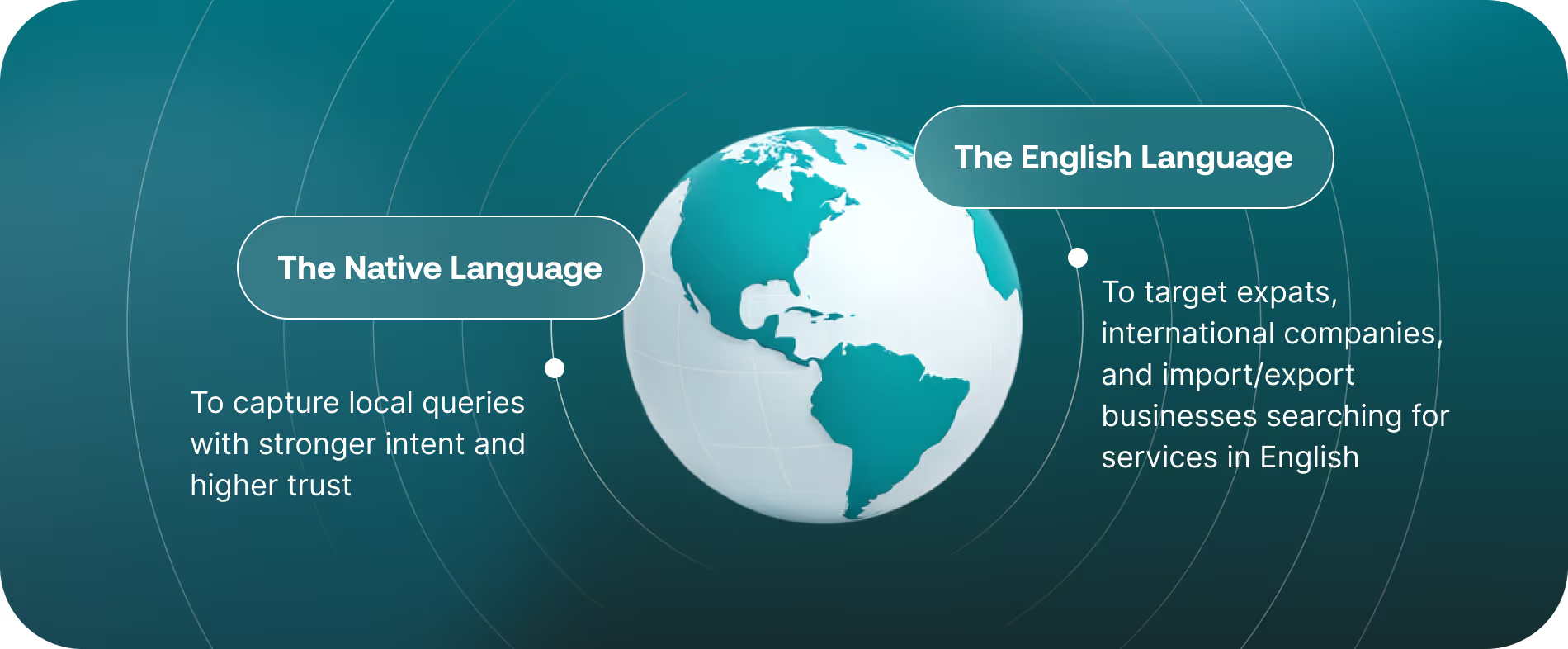
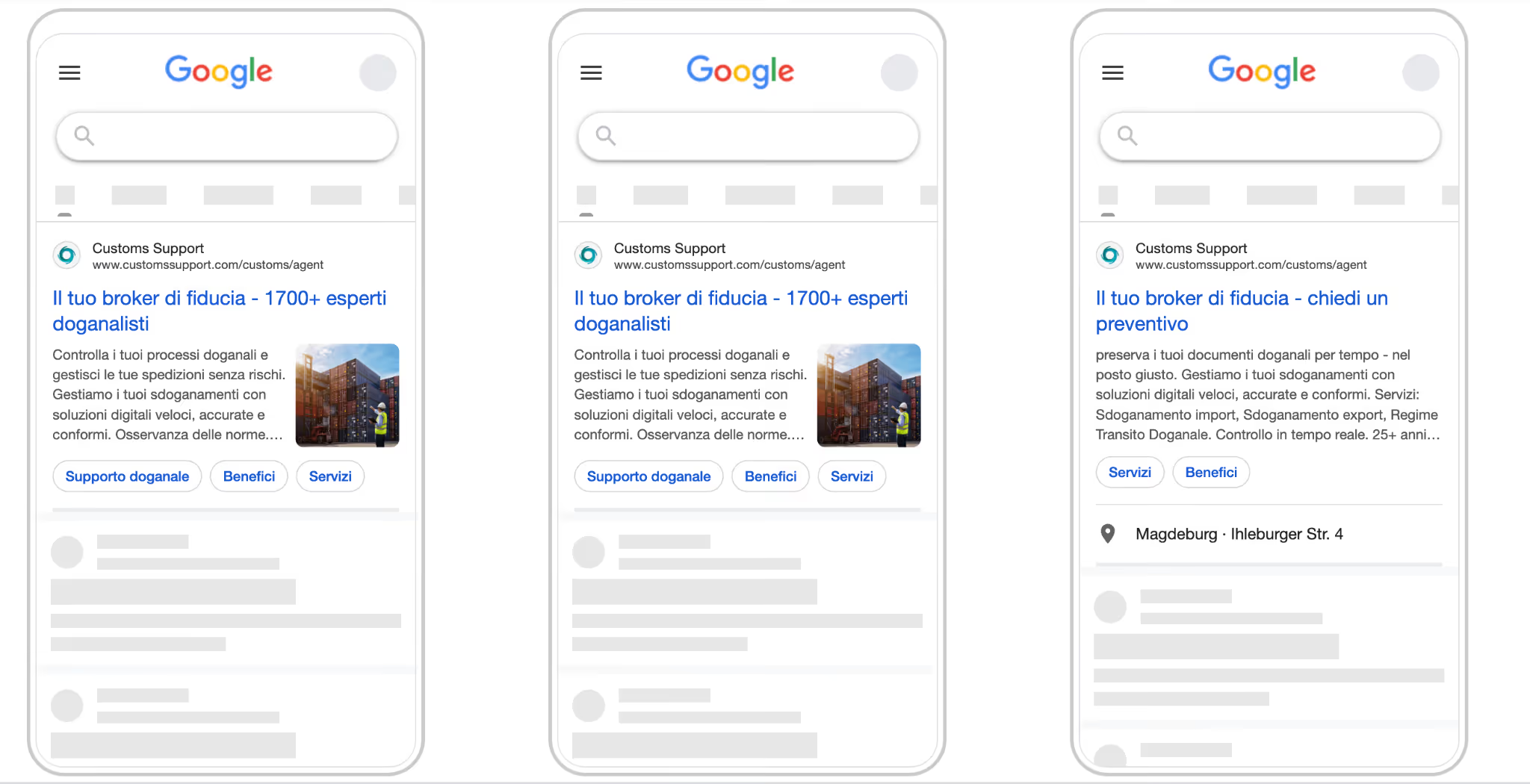
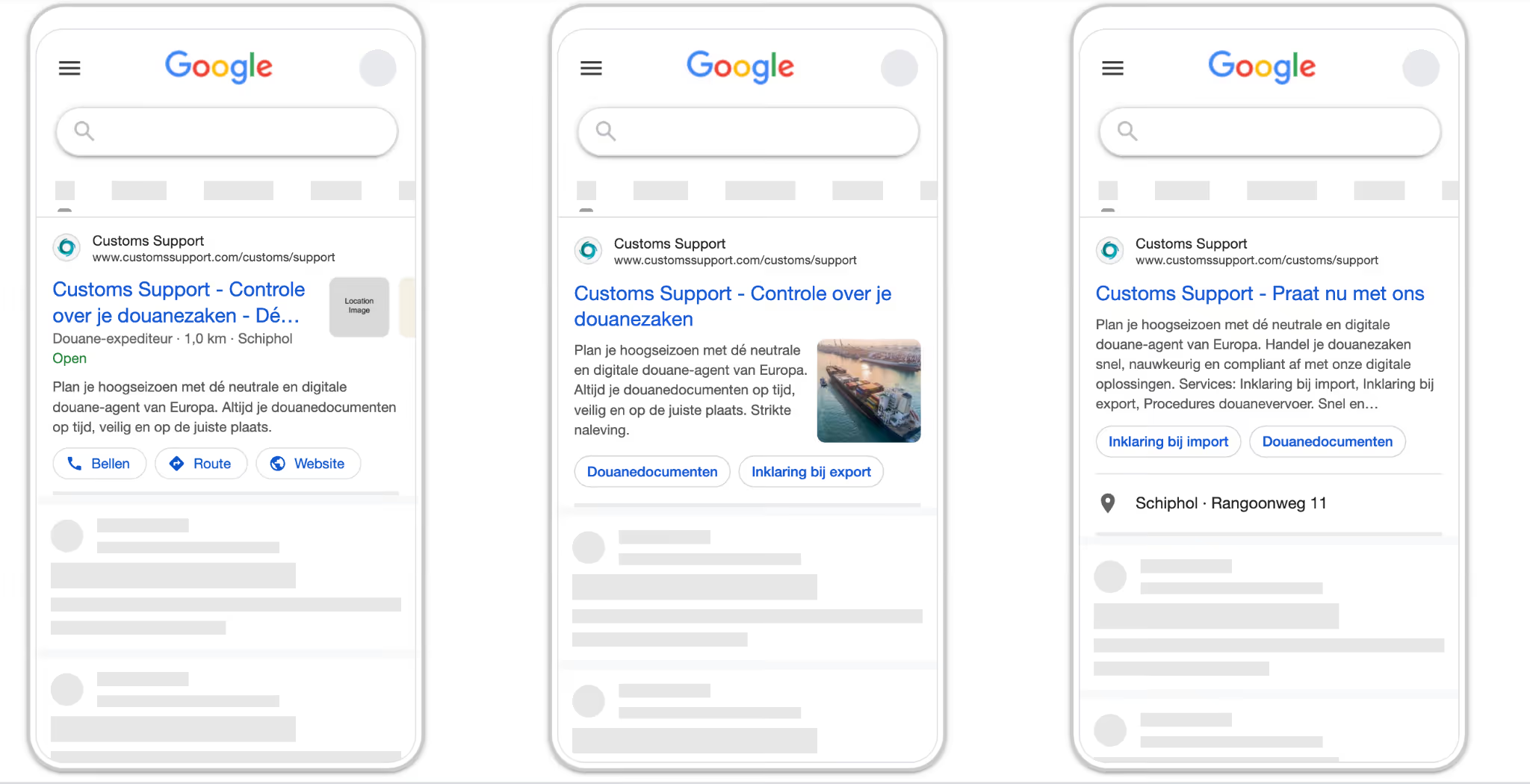
We created the keyword lists separately for each language to reflect local search phrasing, business terminology, and actual demand in each market. As a result, we run campaigns covering 11 European geographic locations for precise targeting and better control over performance across markets.
[[SLIDER-START]]
[[SLIDER-END]]
Promodo’s PPC team constantly worked on the paid ads optimization to increase the amount and quality of leads.
For this matter, we implemented continuous performance analysis across several layers. We regularly evaluated campaigns by geography with additional breakdowns by search language (native vs. English) and search intent (commercial vs. informational). This approach allowed us to better understand how different audiences searched for customs and trade services.
We keep emphasizing that the comprehensive work is a key to success. In summer 2025, the client launched a website UX/UI and landing pages update. It became an important step in improving the effectiveness of paid traffic. The updated pages provided clearer messaging and a better user experience. It positively influenced conversion performance.
During our ongoing collaboration, we maintained close communication with the client for a better understanding of the industry specifics and audience behavior.
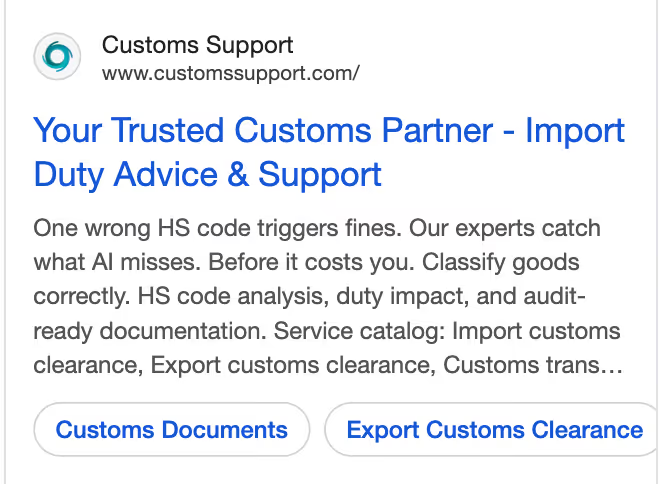
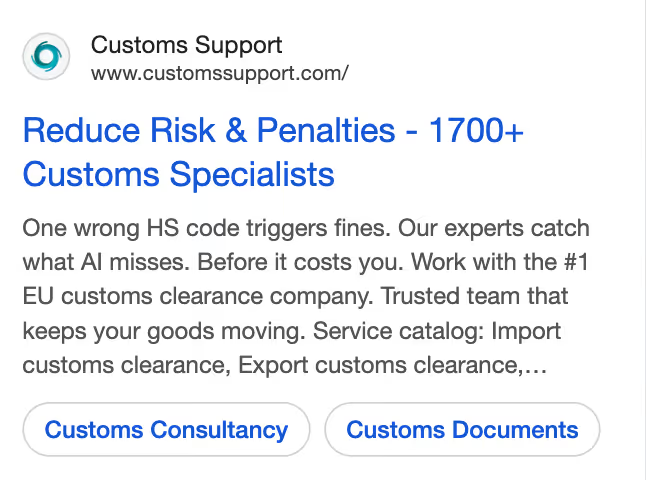
One important insight emerged: more and more users were trying to find custom solutions using AI tools.
Based on this insight, we developed campaigns that highlighted a key message: while AI can make mistakes, the client’s specialists rely on real expertise and experience to deliver precise, tailored solutions.
[[ROW-START]]
[[ROW-END]]
We also closely monitored external market changes that could impact demand. For example, increased tariffs introduced by the United States on European goods created new trends in search behavior. By quickly identifying these emerging keywords and integrating them into our campaigns, we managed to capture additional relevant demand and keep the strategy aligned with current market conditions.
The client’s main business objective was not simply to increase the number of leads, but to attract larger deals with higher potential contract value. That’s why campaign optimization focused primarily on lead quality and user intent.
First, we reviewed the keyword semantics across each geography and language segment. Informational queries and overly broad search terms that rarely resulted in high-value deals were minimized.
To increase the number of high-value opportunities, we:
As a result, campaign decisions were no longer based on the lowest cost per lead, but on the potential value of each deal.
The updated analytics logic and PPC strategy helped the client attract more qualified opportunities and improve the overall business impact of paid traffic.
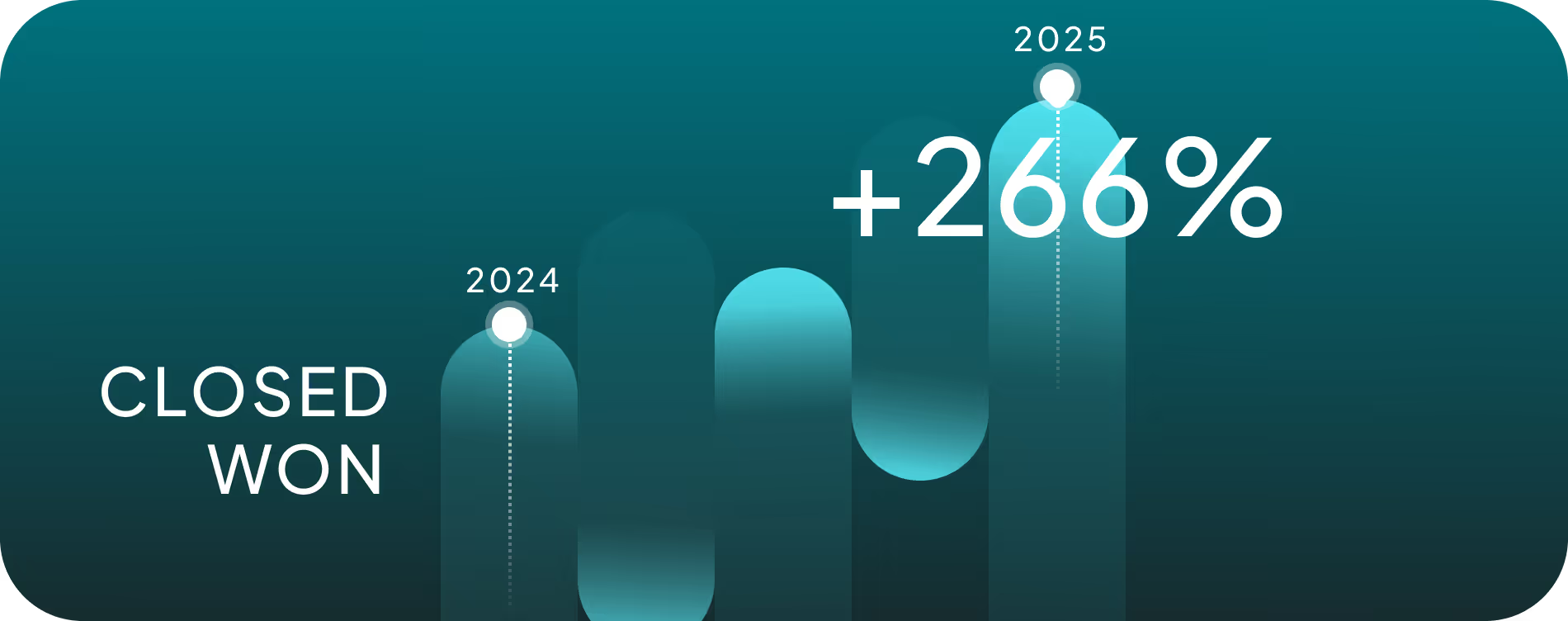
In addition, the PPC campaigns managed by Promodo helped secure several large contracts, which significantly increased the Total Opportunity Amount and strengthened the overall business impact of paid acquisition.

Case studies
Check out how we help companies like yours overcome challenges and rise to the next level.
.png)
AI traffic
Revenue from AI traffic




.png)


.webp)
.svg)


