


Content



Team Lead of Content for promodo.com
Experienced in working with data, expert recommendations, and real business cases to create clear and valuable content that delivers real business impact. Passionate about discovering new insights, exploring industry trends, and turning complex topics into practical, easy-to-understand content.

Working with eCommerce brands for over 20 years, Promodo experts know for sure that a purchase is rarely the result of a single click or a single ad impression. In fact, over 60% of users interact with a brand six or more times before making a decision. This means that relying on a single campaign or short-term tactics is no longer enough. To drive consistent sales, brands need to build a system that supports the entire customer journey.
At Promodo, we go beyond the traditional marketing funnel. While awareness, consideration, and conversion still matter, they don’t fully reflect how modern users behave. Instead, we incorporate behavioral frameworks like the 4S model and influence maps to better understand and guide decision-making across multiple touchpoints.

The 4S marketing model is a behavior-driven framework that reflects how users actually interact with brands in a digital environment. Instead of categorizing users by abstract stages, it focuses on real actions that happen before a purchase. The model includes four key phases: Stream, Scroll, Search, and Shop. Each element represents a distinct type of user behavior.
For eCommerce businesses, 4s in marketing makes it easier to match marketing channels, creatives, and messaging with what users are doing in the moment.
At this stage, users consume content—watching videos, streaming media, or browsing entertainment platforms—without any clear purchase intent. This is where the customer journey begins. The goal here is to build awareness and spark interest. Channels like YouTube and connected TV ads are especially effective for introducing your brand and creating initial demand.
Users are passively browsing social media feeds or short-form video platforms. They’re not actively searching for a product, but they’re open to discovery. This is a critical opportunity for eCommerce brands to capture attention with strong creatives, communicate value quickly, and move users closer to consideration.
Here, intent becomes explicit. Users actively look for products or information via search engines. This is a high-intent stage where visibility is crucial. Tools like Google Search and Performance Max campaigns help brands capture existing demand and guide users directly to relevant product pages.
At this point, users are already engaging with products. They are browsing listings, comparing prices, evaluating delivery options, and reading reviews. The role of marketing shifts to conversion. Retargeting, personalized offers, dynamic product ads, and optimized product pages are essential to turn interest into a completed purchase.
The key difference between the 4S model and traditional frameworks like See–Think–Do–Care lies in perspective. While classic models focus on identifying where the user is in the funnel, 4S focuses on what the user is actually doing right now.
For eCommerce brands, this shift is very important. It allows for more precise targeting, more relevant messaging, and ultimately, more efficient ad spend because your strategy aligns with real user behavior, not assumptions.
By structuring your marketing around Stream, Scroll, Search, and Shop, you create a system that supports the entire journey. And, as a result, increases your chances of converting users at every stage due to 4s of marketing.
When building an effective PPC strategy for eCommerce, it’s not enough to understand what users do; you also need to measure how much each interaction actually contributes to conversion. This is the case, when influence maps become very helpful for marketers.
An influence map is a model that visualizes how different touchpoints and user actions (stream, scroll, search, and shop) impact decision-making across the entire path to purchase.
Unlike traditional approaches, influence maps don’t rigidly assign marketing channels to specific funnel stages. Instead, they treat every interaction as a potential point of influence that can play multiple roles simultaneously.

The model is built on two key dimensions:
This structure allows marketers to move beyond linear thinking and see the real impact of each interaction in context. When you combine the 4S marketing model with influence maps, you get a holistic view of the customer journey. It demonstrates how users actually behave and what truly drives them to convert.
“There is no single path to purchase. Different types of buyers require different points of influence,” says Anna Tarasova, PPC Specialist.
Your eCommerce marketing strategy shouldn’t rely on a fixed funnel. Instead, it should adapt to real user behavior. Influence maps help you do exactly that by showing which touchpoints matter most for different types of customers and when.
Let’s look at two different examples of customer journeys that your customers may pass through.
Example 1: Digitally Savvy User
This type of user actively navigates the digital space, consumes content across platforms, and makes informed decisions before purchasing. Their journey typically spans all four stages of the 4S model.
The journey often starts with a stream. For example, a user discovers a product through video ads on YouTube or social media. At this stage, your goal is to capture attention and build initial interest. To do that effectively, eCommerce brands should invest in YouTube Ads and Paid social campaigns (Meta, TikTok, etc.) These channels shape the first impression and can significantly influence whether a user continues engaging with your brand.
Next comes scroll, where users explore the brand more deeply, namely by browsing social media, reading reviews, and interacting with content. In fact, up to 75% of users do this before making a purchase.
It’s essential to reinforce trust and stay visible. Key tactics include:
At this stage, influence maps often show multiple touchpoints working together, namely paid ads, organic content, and reviews, all contributing to the decision.
At the search stage, the user already has a clear intent. They actively look for product details, compare offers, and evaluate different retailers. Around 60% of users compare options before buying, making visibility here crucial.
To capture this demand, eCommerce brands should combine:
Influence maps typically highlight this stage as one of the most impactful—but not necessarily the only one that drives conversion.
Finally, in the shop stage, the user returns to complete the purchase. At this point, even small friction points can lead to drop-offs. Your task is to remove barriers and drive conversion through:
A well-structured return strategy ensures that users who showed interest don’t get lost before completing the purchase.

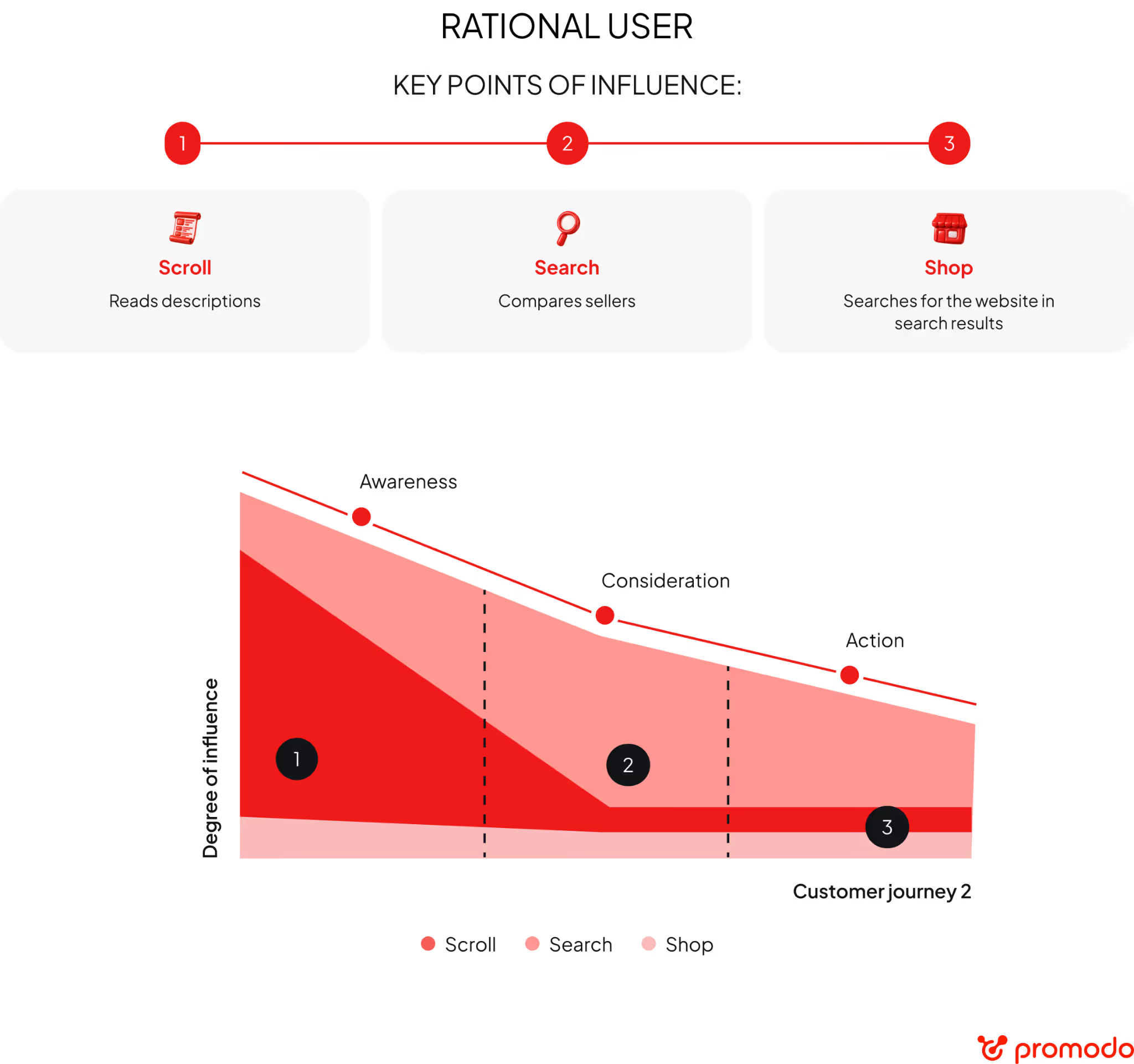
Not all customers are driven by emotions or impulsive discovery. In eCommerce, a significant share of users are rational buyers. They prioritize value, compare options, and make decisions based on logic, price, and trust signals.
For this type of user, the journey typically starts with scrolling and is more focused on evaluation than discovery.
Scroll: Research and Validation
Unlike more exploratory users, the rational buyer often begins at the scroll stage. They review recommendations, read feedback, and analyze options across platforms. At this point, your goal is to build credibility and provide clear value. To stay competitive, eCommerce brands should invest in:
Paid tools like Google Demand Gen campaigns can further strengthen brand awareness and keep your product visible during this research phase.
The next stage is search, where the user moves into high-intent mode. They are actively comparing brands, prices, and purchase conditions.
Here, being visible is non-negotiable. Your strategy should ensure that users can easily find your offer when they’re ready to evaluate options. Key tools include:
At this stage, influence maps often show search as a critical conversion driver, especially for price-sensitive users.
The journey ends at the shop stage, where the user selects the best offer and completes the purchase.
For rational buyers, even small inefficiencies can break the deal. That’s why it’s essential to:
A well-timed reminder or a better deal can be the final push that converts hesitation into action.
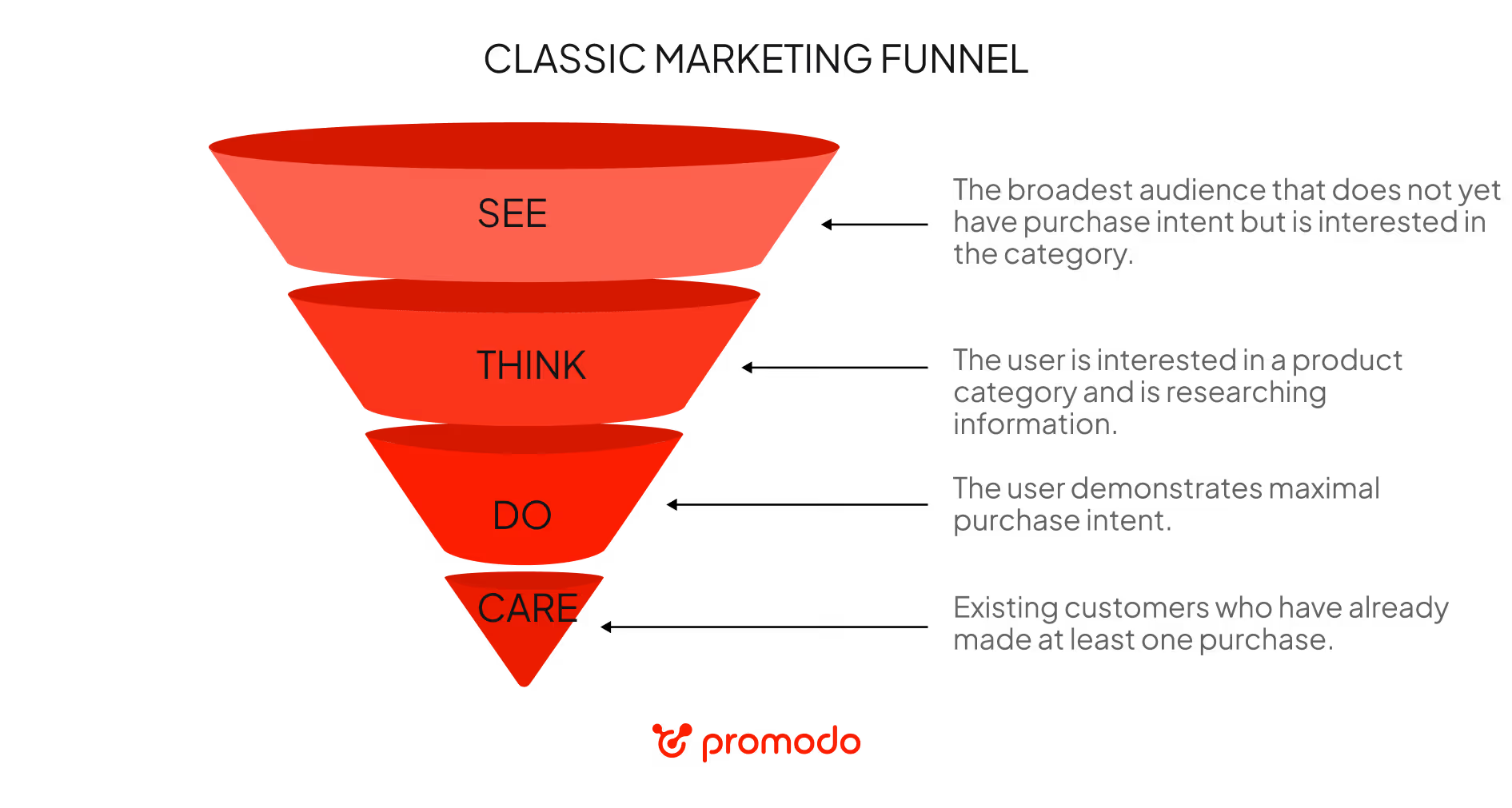
For years, the See–Think–Do–Care model has been the foundation of marketing strategies. It provides a structured view of the customer journey—from the first interaction with a brand to repeat purchases—and remains a useful framework for understanding intent.
Let’s briefly revisit how it works.
At the See stage, you’re targeting a broad audience with no clear purchase intent. Users aren’t actively searching for your product yet, but they may be open to discovering a category or brand.
The goal here is to capture attention and generate initial interest. eCommerce brands typically rely on:
These channels help create demand and introduce your brand to new audiences.
At the Think stage, users are already familiar with the category and begin comparing options. They evaluate brands, explore features, and form preferences.
Your task is to stay in the consideration set and build trust. Effective tools at this stage include:
These channels combine reach with intent, helping you influence decision-making.
The Do stage is where intent becomes explicit. Users know what they want and are looking for the best offer. Here, the focus is on capturing demand and driving conversion. This typically happens through:
Being visible at the right moment is critical to winning the sale.
Finally, the Care stage focuses on existing customers. This is where brands build loyalty, drive repeat purchases, and increase customer lifetime value (LTV). Key tactics include:
Why the Traditional Funnel Falls Short
While the See–Think–Do–Care model is still relevant, it has one major limitation: it assumes a linear customer journey. In reality, eCommerce users don’t move step by step:
For example, a user might discover your brand via a video (See), immediately search for reviews (Think), leave without buying, and only convert days later after a remarketing ad (Do).
The traditional funnel struggles to capture this complexity.
“Your customer doesn’t just see an ad and make a purchase. They encounter competitors’ ads, compare options across different websites, analyze prices and delivery terms. If the product isn’t unique, this journey is definitely not linear. That’s why it’s important to understand that user behavior scenarios can vary—and each of them requires its own interaction logic,” — Anna Tarasova, PPC Specialist at Promodo.
The 4S marketing model works not only in theory. We have proven its effectiveness through real PPC case studies.
For example, while working with the Solmar brand, the Promodo team didn’t limit itself to a traditional funnel. Instead, we deeply analyzed user behavior at every stage of the journey. This allowed us to precisely distribute the roles of Google Ads tools and build an effective campaign structure.
Since the fashion niche is highly seasonal, we strengthened the media component with YouTube advertising to effectively support seasonal offers and maintain a presence at the Stream stage. Additionally, we launched Google Demand Gen campaigns to inform the audience about new collections and increase brand awareness in the Polish market. This tool worked at the Scroll stage. At the same time, we ran Google Performance Max campaigns by product categories to capture users with formed intent and close demand at the Search stage.
Thanks to systematic customer journey analysis, adapting tools to user behavior, and continuous optimization, we were able to achieve not only short-term results but also ensure sustainable long-term brand growth. As a result, we achieved +190% in monthly revenue from the channel and +50% in conversions within the agreed ROAS.
Digital environments and user behavior are constantly developing, and strategies that worked yesterday may no longer deliver the same results today. To stay competitive, brands must move beyond static approaches and embrace continuous optimization, adapting their marketing efforts to real user behavior.
A flexible, data-driven strategy needs to be based on a deep understanding of how users interact with your brand across different touchpoints. Models like 4s of marketing and tools like influence maps help turn scattered interactions into a clear, structured system that supports every stage of the customer journey.
With over 20 years of experience, Promodo helps businesses scale and achieve consistent results through a systematic approach, strong analytics, and modern digital marketing tools.

Team Lead of Content for promodo.com
Experienced in working with data, expert recommendations, and real business cases to create clear and valuable content that delivers real business impact. Passionate about discovering new insights, exploring industry trends, and turning complex topics into practical, easy-to-understand content.
You may also like
Choose quality and trusted services to improve the presence of your company on the Internet, and feel free to contact our UK team if you have any questions.

Some time ago, on our Facebook page, we invited eCommerce owners to talk with our Promodo SEO experts about the issues they face when promoting their website.

We have prepared an article with Promodo PPC specialist Yuriy Dederchuk about the not always obvious reasons for blocking an account.

Getting quality backlinks from reputable real estate sources will make your real estate website way more authoritative for search engines and clients.
We at Promodo are ready to help you improve your performance across all digital marketing channels.
Get started



.avif)
.svg)


