
Content


Copywriter at Promodo
Over nearly three years as a copywriter, I’ve written for US and European startups and companies, including SE Ranking. I enjoy working with words—finding the right phrasing, organizing ideas, and turning them into clear and useful content that shows real value and helps businesses grow.

You invest in content for your eCommerce businesses. But a blog might attract thousands of visitors without generating orders, while a well-optimized category page can quietly bring in customers who are ready to buy. What should you do then?
Effective eCommerce content marketing starts with understanding what customers need before they buy and where content can influence their decisions. In this guide, we'll explain how to build an eCommerce content marketing strategy and prioritize the right pages. We'll also look at two real Promodo projects to see how these principles work in practice.
eCommerce content marketing is the process of creating and distributing useful, relevant content that helps people discover, evaluate, and purchase products online.
It answers shoppers’ questions, explains product differences, and gives them the information they need to choose confidently.
Consider someone shopping for a new laptop. They might start by researching what specifications matter, compare several models, and eventually check prices, availability, and delivery options. Content can support every part of that process.
And it’s not only in the blog. Product descriptions, category pages, comparison tables, videos, customer reviews, and post-purchase emails are all examples of eCommerce content.
Different types of content serve different purposes. Some attract potential customers, while others help people choose between products or encourage existing customers to buy again.
The most useful format depends on what you're selling. A consumer electronics retailer, for instance, might benefit from detailed comparisons explaining the differences between laptop processors, battery life, and display types.
For a tire retailer, content about choosing the right tire size or comparing winter and all-season tires can help shoppers narrow their options before visiting a product page.
A beauty retailer might rely more on tutorials, product demonstrations, and educational content that explains ingredients and routines.
Choose content based on customer questions rather than simply following popular formats.
You also don't need every format at once. For many eCommerce websites, improving existing product and category pages can deliver more immediate value than launching an entirely new blog.
Publishing more content isn't necessarily the answer. If your team is producing articles that attract traffic but rarely lead customers toward products, increasing the volume won't solve the problem.
- Mariana Hlodan, SEO Content Specialist at Promodo
An effective eCommerce content strategy focuses on your business goals and the content that can help achieve them. Here's how to approach it in six steps.
Before deciding what to create, think about what you want content to improve. That might be increasing non-branded organic traffic to profitable categories, generating more sales from existing product pages, or improving visibility for products that customers frequently compare.
A retailer entering a new market may prioritize discovery; an established store with substantial traffic but weak conversions may benefit more from improving existing pages.
Then decide which products or categories deserve attention first. Search demand matters, but it's only one factor. Consider product margins, availability, competition, seasonality, and existing organic performance.
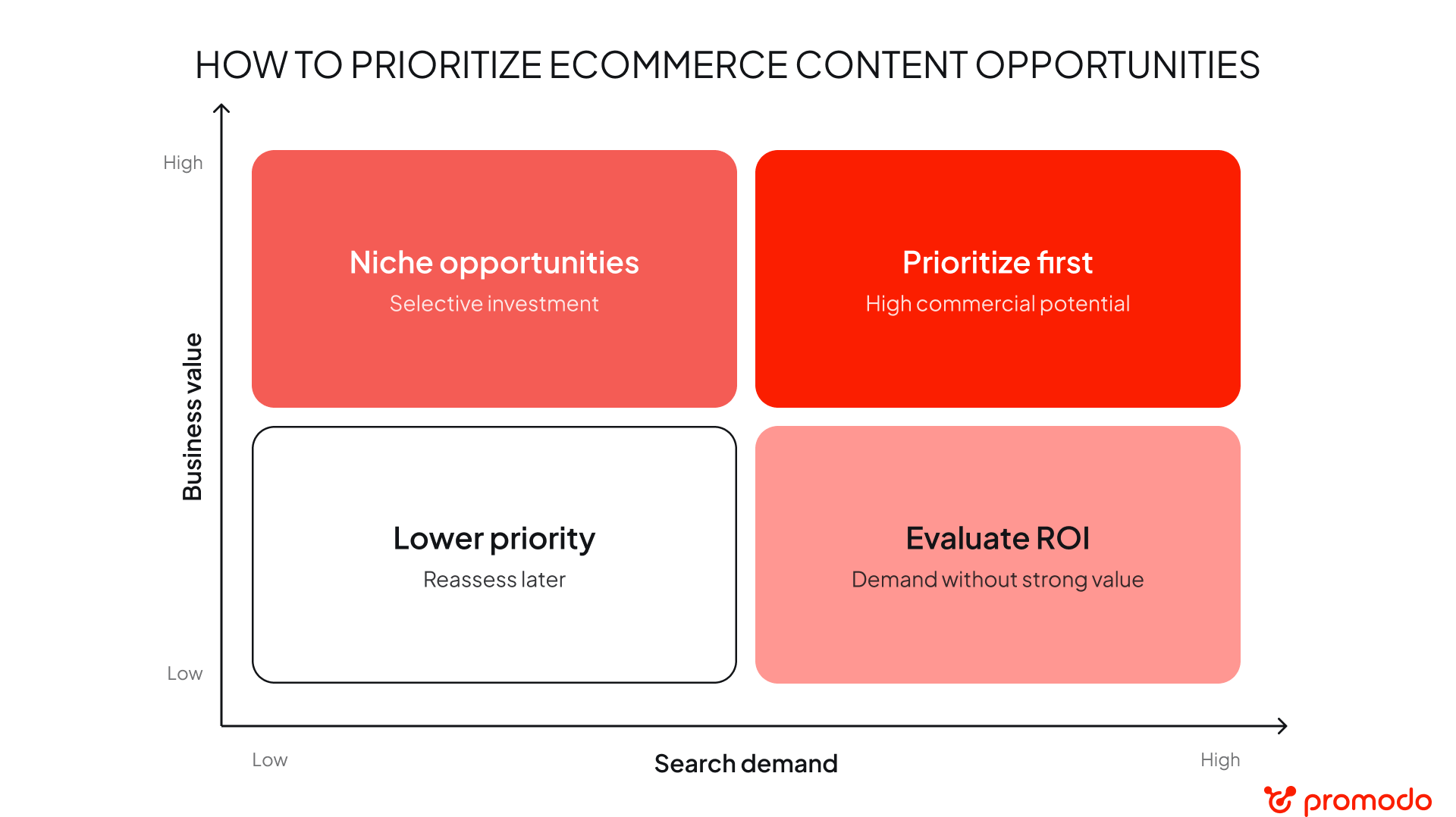
Imagine an automotive retailer deciding between creating 20 general car maintenance articles and improving its winter tire category pages. If winter tires have good margins, strong seasonal demand, and existing search traffic, optimizing those pages may bring better results.
A simple way to prioritize is to evaluate opportunities against four questions:
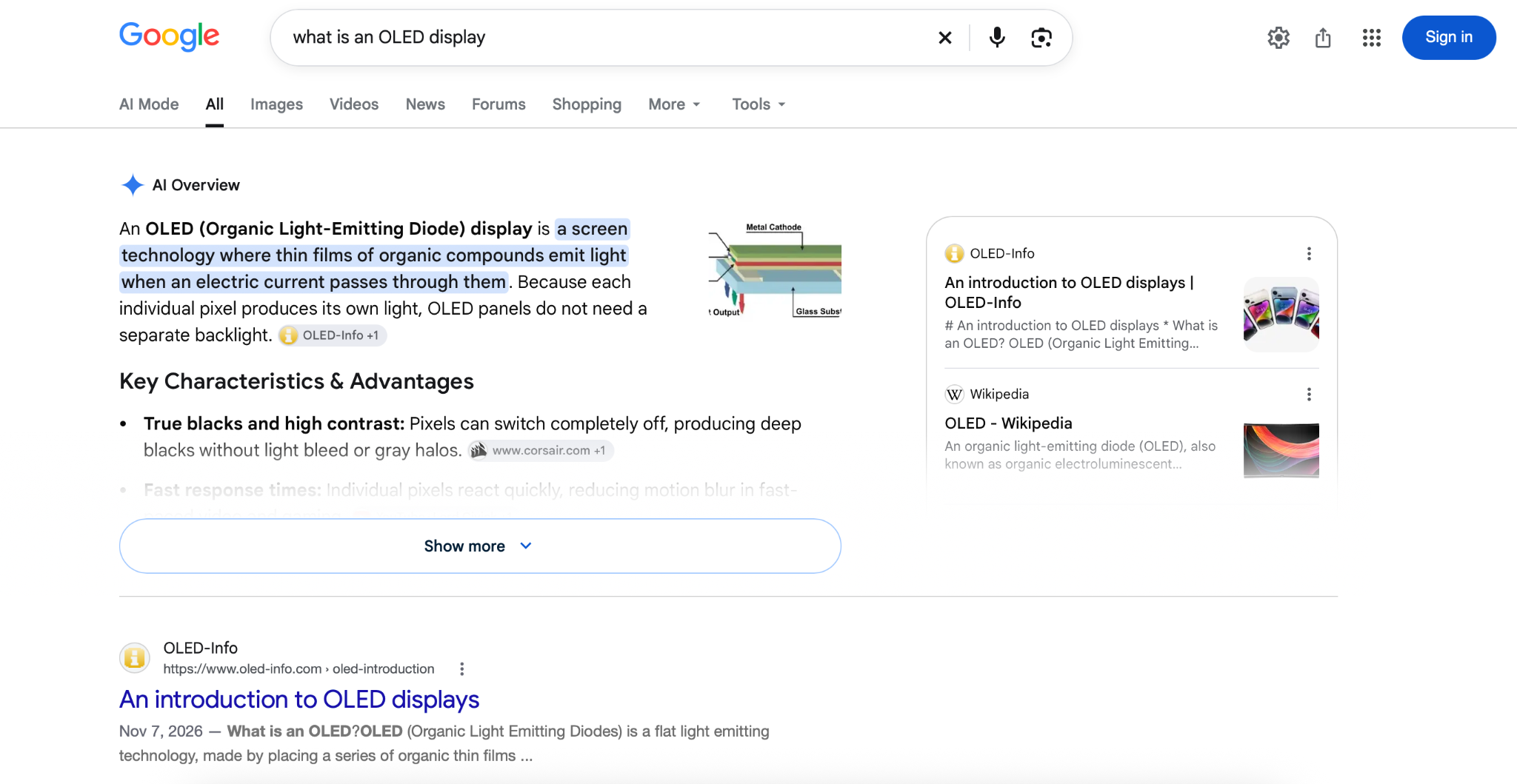
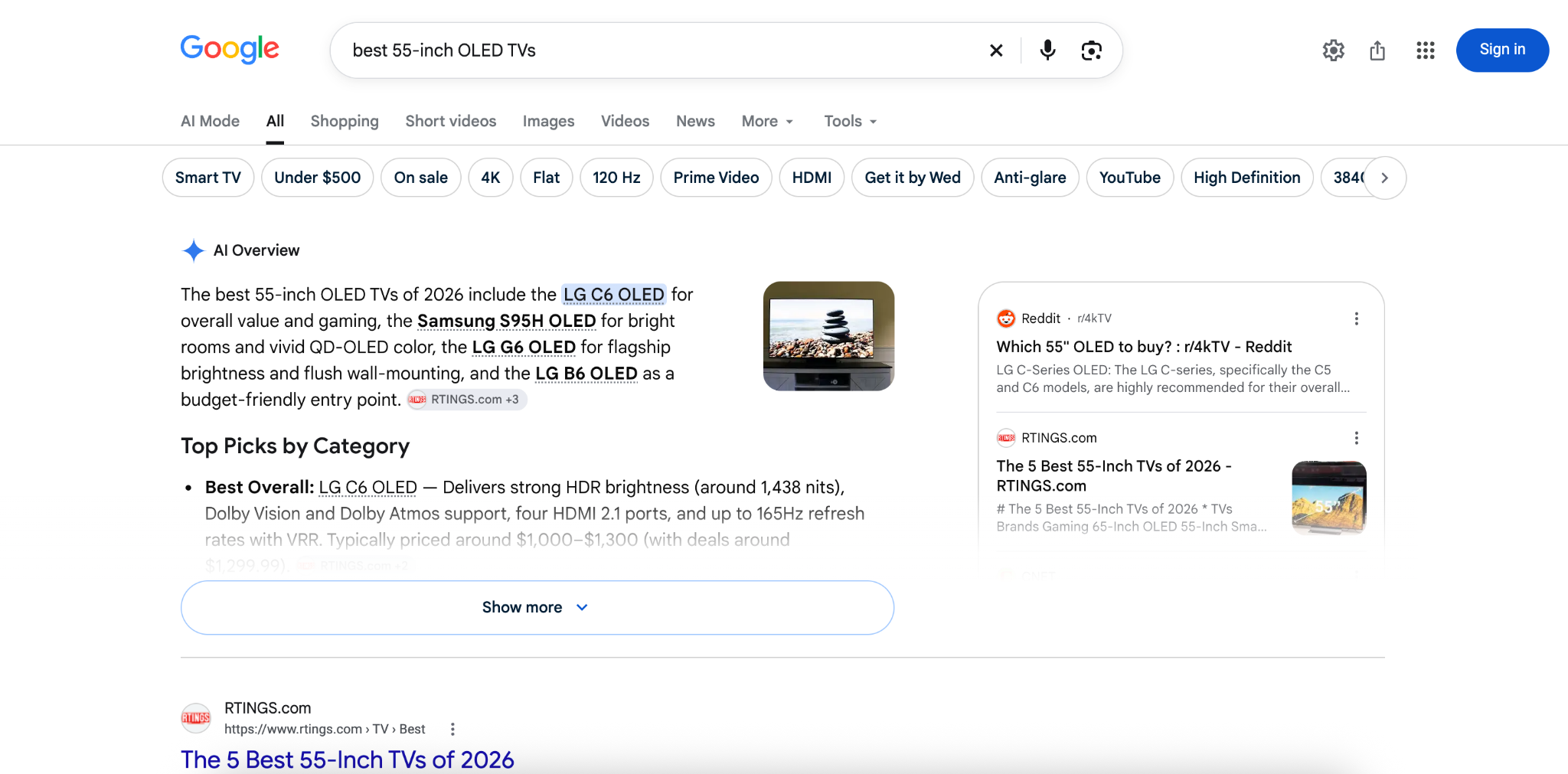
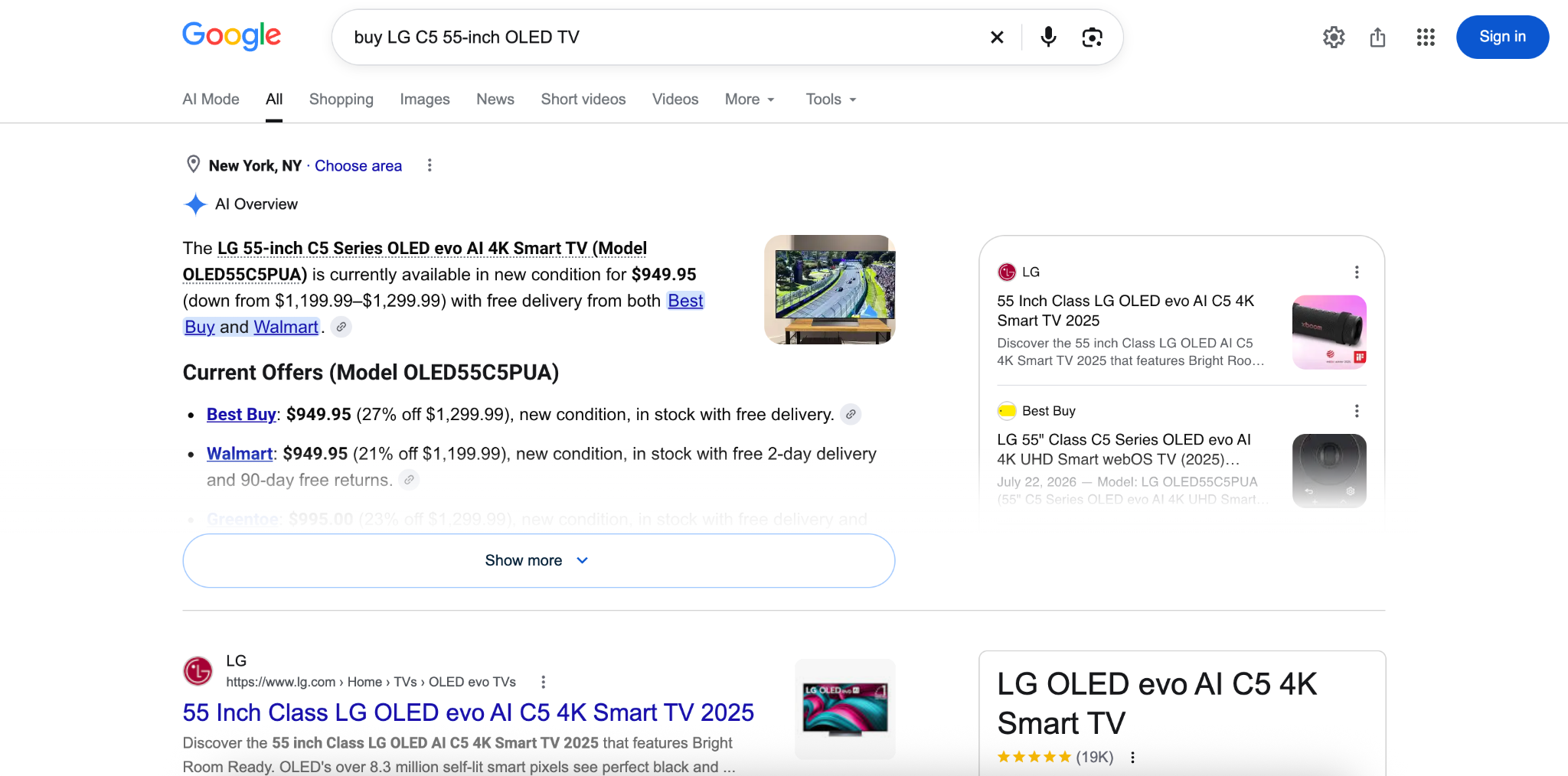
Good eCommerce content begins with real customer questions, and they change depending on how close someone is to purchasing.
A person searching for "what is an OLED display" is learning about the technology. Someone searching for "best 55-inch OLED TVs" is comparing options. And someone searching for a specific TV model and size may already know what they want. All three searches are relevant, but they require different content and have different commercial potential.
[[SLIDER-START]]
[[SLIDER-END]]
To identify opportunities, start with Google Search Console. Look at the searches that already bring visitors to your website, especially those where your pages receive impressions but relatively few clicks.
Then look beyond keyword tools. Customer support conversations can reveal recurring questions about sizing, compatibility, or delivery. Product reviews often explain which features customers value and what disappointed them. Sales teams may know which objections appear repeatedly before a purchase.
Competitor research helps you understand which questions other retailers answer and where their content falls short. Once you have this information, group queries by intent and the type of page that can best satisfy them.
Before creating new content, review what you already have. Start with your priority product and category pages. Check whether they provide the information shoppers need, including specifications, sizing, compatibility, delivery details, and reviews.
Pay attention to content quality, too. A product description copied from a manufacturer's website may list all the specifications but do little to help customers understand which product suits their needs.
- Mariana Hlodan, SEO Content Specialist at Promodo.
The same applies to category pages. For example, a running shoe category might offer filters for brand, size, and price but no guidance on choosing shoes for everyday running, marathons, or trails. Adding a short explanation and relevant product recommendations can make the page more useful.
Also, check whether search engines can access important content and whether duplicate URLs compete with your main pages. Content in tabs isn't necessarily a problem, as long as it's properly rendered and accessible.
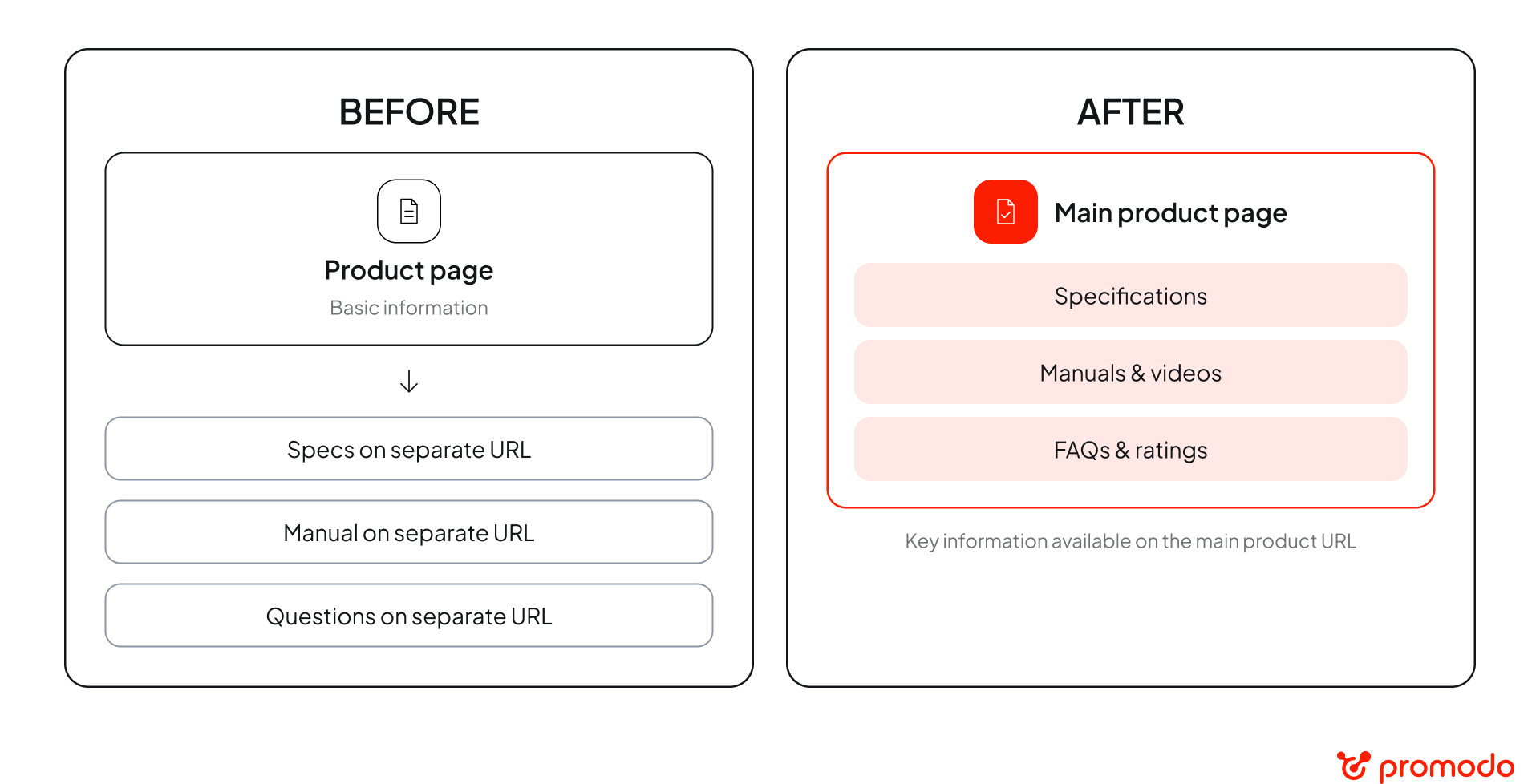
The goal is to identify which pages need improvement, which need new content, and which should be consolidated before investing in more content production.
Customers need different information at different stages of the buying journey. Your content should help them find answers, compare options, and choose the right product.
For example, someone shopping for a washing machine might start with a guide on choosing the right capacity, then compare models within their budget, and finally check product pages for dimensions, energy efficiency, and delivery options.
Content also matters after purchase. Setup instructions, care guides, and relevant emails can help customers use their products and encourage repeat purchases.
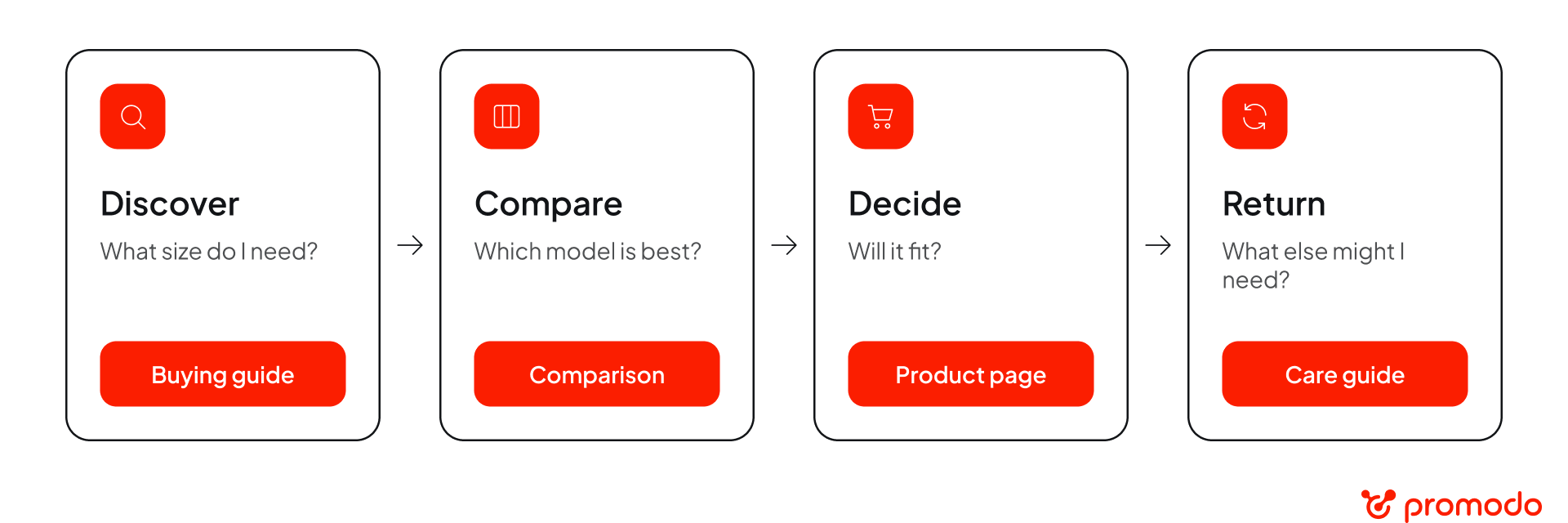
Start with the stages where customers need the most help, then expand your content based on their needs and behavior.
Once you've set your priorities, create a content calendar that includes topics, target pages, deadlines, responsible team members, and business goals.
Prepare clear briefs for each task that cover the target audience, search intent, key product information, competitor references, and internal links. This helps writers, SEO specialists, and product experts work toward the same goal.
Think about distribution, too. A buying guide can attract organic traffic, support an email campaign, or provide content for social media. You can get more value from each piece by using it across relevant channels.
Finally, review and update your content regularly. Products, prices, and customer needs change, so keeping information accurate is an ongoing task.
For a more detailed approach to organizing production, see our guide on how to create a content plan.
eCommerce content needs to be visible in both traditional search engines and AI-powered tools like ChatGPT and Gemini.
According to Adobe's October 2026 report, traffic from AI sources to US retail websites grew 71% year over year in September 2026. Visitors arriving through AI referrals converted 90% better than non-AI traffic and generated 83% more revenue per visit.
Google's guidance on optimizing for generative AI search emphasizes helpful, original content that search engines can easily access and understand. It means you should make product information complete, accurate, and easy to find.
Here's what to focus on:
Keep in mind that structured data and well-organized content don't guarantee inclusion in AI-generated answers. They help make your information accessible and understandable, but visibility also depends on other factors.
Generative engine optimization (GEO) takes this further. It focuses on improving how AI-powered search tools discover, understand, and reference your brand and products in their answers.

Two examples from us on how we help eCommerce brands handle content and make it bring results.
A global manufacturer of power tools and electronics already had detailed product specifications, videos, manuals, and reviews. However, much of this information was stored on separate URLs, making it harder for search engines and AI assistants to access it through the main product pages.
Our team brought this content together on the main product pages, resolved issues with competing URLs, improved customer rating information, and fixed structured data errors.
Just three months later, the results were:
Before creating new content, make sure your existing product information is complete and easy for both shoppers and search engines to access.
Read the full Promodo GEO case study.

9 Realms, a Germany-based online retailer of cannabinoid products, faced low organic visibility, changing regulations, and technical limitations on Shopify.
Our team focused on attracting shoppers with buying intent. We improved the site's navigation, optimized 38 category pages (32 existing and 6 new), and supported these changes with technical SEO, multilingual optimization, and link building.
The results included:
These results reflect the combined SEO efforts, not content improvements alone. Read the full case study:

For more Shopify-specific advice, see our guide on how content marketing boosts Shopify traffic.
Focus on improving your priority product and category pages, creating content that answers real customer questions, and measuring its impact on business results.
At Promodo, we help eCommerce businesses develop content strategies that improve search visibility, reach customers through AI search, and support sales. No matter what you need: optimize existing content or build a strategy from scratch, our team can help.

[[FAQ-START]]
It depends on your business goals. Paid ads are useful when you need traffic and sales quickly, while email marketing helps bring existing customers back. SEO and content marketing take longer to show results, but they can attract potential customers over time without paying for every click.
For most eCommerce businesses, a combination works best. These channels also support each other.
Start with your most important product and category pages, especially those with strong sales potential. Make sure shoppers can easily find product specifications, comparisons, reviews, and information about delivery and returns.
Next, look at the questions customers ask before buying. If they struggle to choose between products, create comparison guides. If they need help understanding a category, publish a buying guide. Prioritize content that solves real problems rather than publishing blog posts just to keep your website active.
There's no fixed timeline. Improving an existing product or category page can deliver results faster, especially if it already gets traffic. New content usually takes longer to gain visibility in Google, particularly in competitive markets.
[[FAQ-END]]
Copywriter at Promodo
Over nearly three years as a copywriter, I’ve written for US and European startups and companies, including SE Ranking. I enjoy working with words—finding the right phrasing, organizing ideas, and turning them into clear and useful content that shows real value and helps businesses grow.
You may also like
Choose quality and trusted services to improve the presence of your company on the Internet, and feel free to contact our UK team if you have any questions.

87% of patients who discover healthcare providers online proceed to schedule appointments.

Compared to Google Universal Analytics, GA4 offers fewer standard ready-made reports.

UTM tagging is a tool that helps you track the effectiveness of online campaigns and better understand which channel your traffic is coming from.
We at Promodo are ready to help you improve your performance across all digital marketing channels.
Get started