


Content



Team Lead of Content for promodo.com
Experienced in working with data, expert recommendations, and real business cases to create clear and valuable content that delivers real business impact. Passionate about discovering new insights, exploring industry trends, and turning complex topics into practical, easy-to-understand content.

The eCommerce market in 2026 operates under constant pressure. Consumer behavior continues to shift due to economic instability and competition in the digital space is intensifying at an unprecedented pace.
In this environment, effective online store promotion requires a structured and flexible strategy that combines multiple marketing channels, data-driven decision-making, automation, and customer retention.
Promodo works with large eCommerce businesses, giving us deep hands-on experience on how to promote online stores and scale eCommmerce under complex market conditions. In this article, we share our proven approaches and case studies that demonstrate how eCommerce brands can grow and stay competitive in 2026.
Start promoting online store with clearly defined business goals.
If your first questions are “What budget should we allocate to Google?” or “Which channels should we use?”, that’s a red flag. Channel selection and media spend come after strategy, not before it.
Your 2026 business plan should be the foundation for marketing objectives and clearly defined KPIs. At this stage, it’s critical to define:
A well-defined goal framework allows eCommerce businesses to build predictable growth models rather than experiment blindly with channels and budgets.
Defined KPIs have little value without reliable analytics. Properly configured tracking allows you to evaluate performance, monitor traffic dynamics, assess channel efficiency, understand marketing’s impact on sales, and adjust your strategy before problems turn into losses.
Start by setting up reports for micro-conversions on your website, such as product page views, add-to-cart actions, and newsletter sign-ups. These signals are critical for improving UX and CRO, helping increase conversion rates without additional traffic acquisition costs.
Use cohort analysis to evaluate customer behavior over time by grouping users based on acquisition date, channel, or interaction scenario. This approach helps identify which marketing decisions influence retention, LTV, ROI, and CAC — and which cohorts deliver the highest long-term business value.
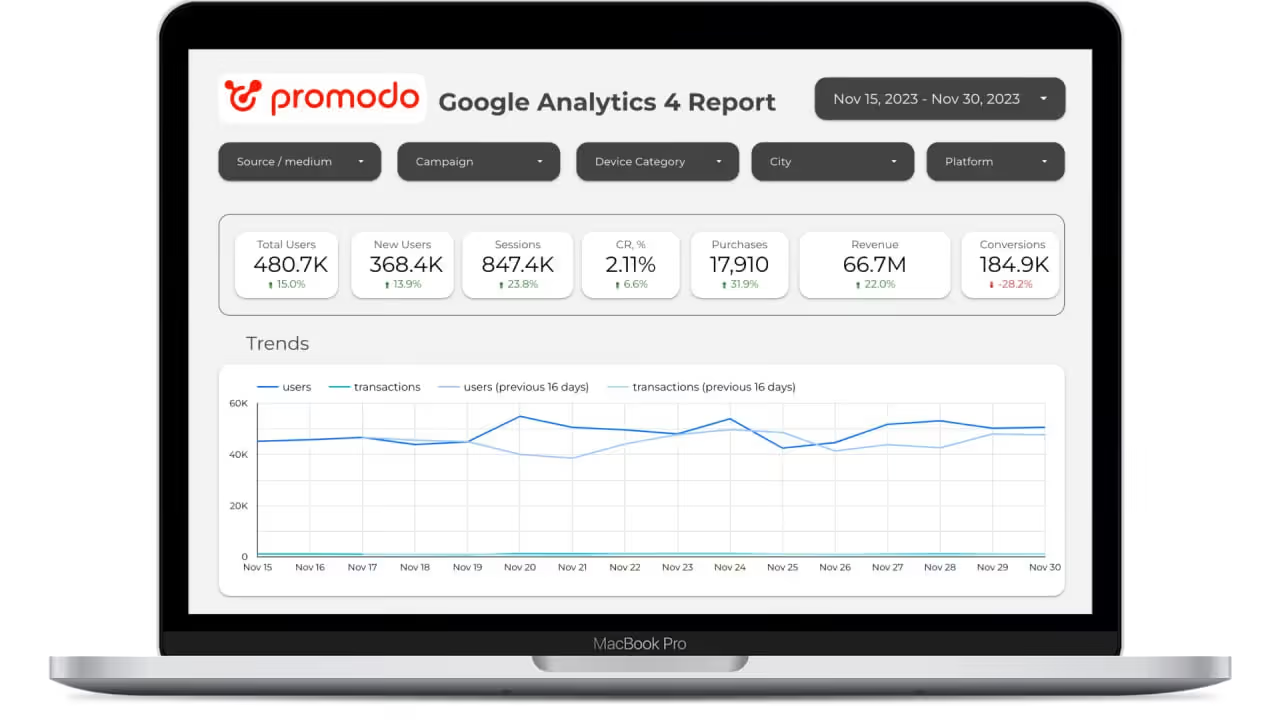
GA4 remains the foundation of eCommerce analytics, but large-scale online stores increasingly rely on BI systems that consolidate data from websites, advertising platforms, CRM systems, and mobile apps into a single interface. One option is Promodo’s custom Essential report, which is a fast-to-implement BI dashboard designed to cover the core analytics needs of eCommerce businesses with clear, actionable insights.
Many businesses face the challenge of advertising theironline store. PPC remains one of the most important sales channels for online stores. Even without a strong brand, it allows businesses to capture existing demand and engage users at the exact moment they are actively searching for products.
Effective PPC starts with the right focus. It’s crucial to identify which categories, product groups, or brands are worth promoting. Most often, these are high-margin items — they allow you to maximize budget efficiency while maintaining strong profitability.
A major PPC trend in 2026 is the use of enhanced product feeds.
In the past, a standard feed with product name, category, brand, and price was enough to launch campaigns. Today, feeds need to be enriched with detailed information and additional tags. This enables more precise audience targeting, better product segmentation, and higher ad relevance.
Beyond basic attributes, consider adding:
Google reads this feed data to match search queries, generate ads, and prioritize products in listings. The more complete and structured your data — including categories, specifications, attributes, and promotions — the higher the chance that algorithms will promote products with the greatest sales and margin potential.
Enhanced feeds aren’t only beneficial for Google campaigns. The same approach significantly improves Meta campaigns, where users make faster decisions and respond strongly to visual and informational triggers.
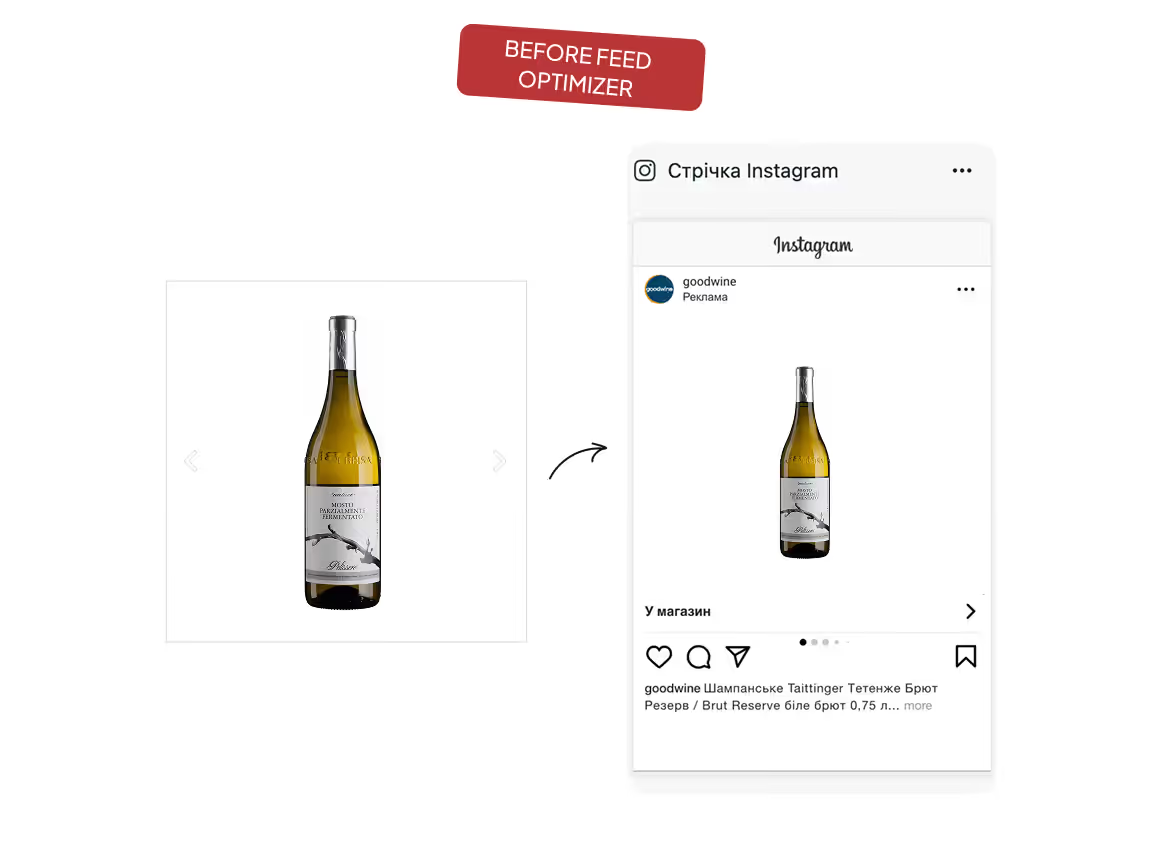
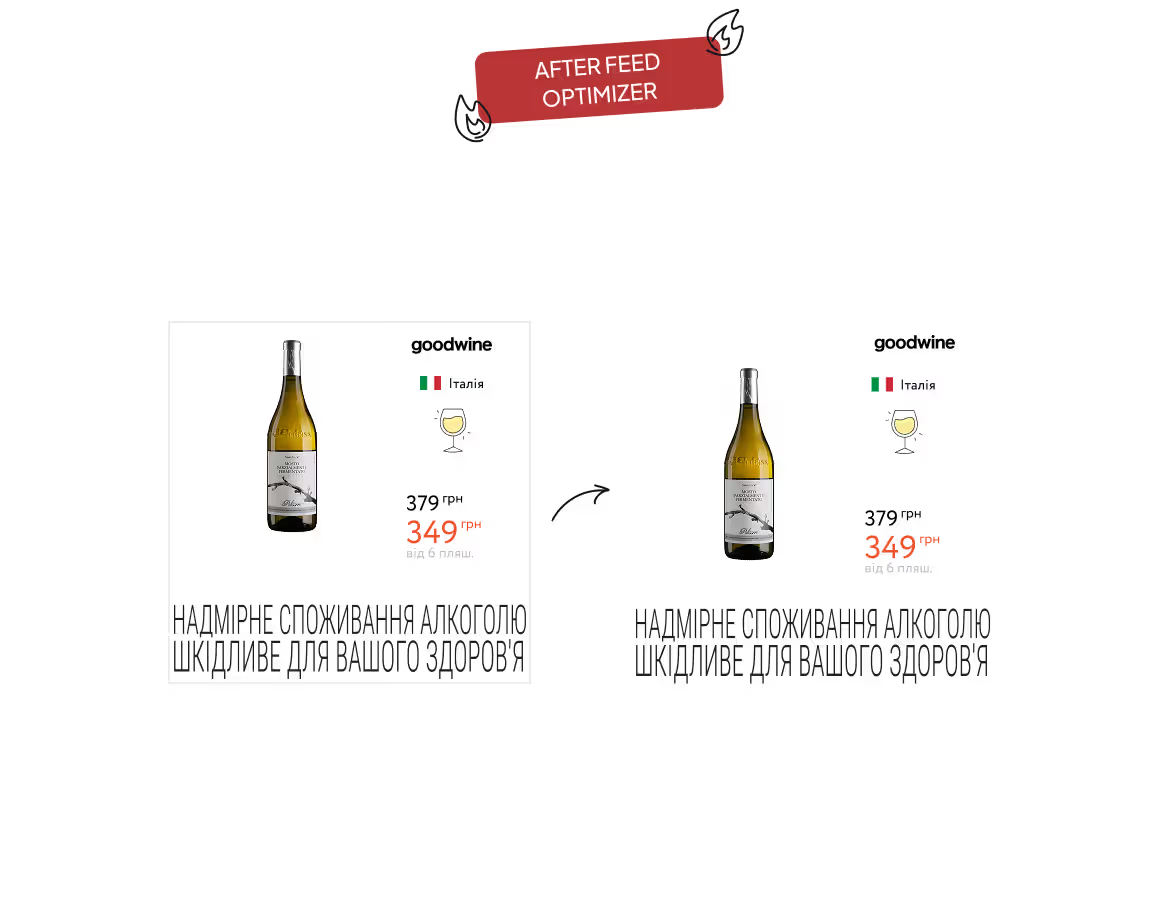
For example, in a collaboration with the online store Goodwine, we identified the key factors influencing customers’ wine choices: variety, country of origin, and discounts. Based on these insights, we expanded the product feed with corresponding tags and, using Promodo’s Feed Optimizer, implemented additional overlays on product cards in Meta campaigns, resulting in higher engagement and conversions.
[[SLIDER-START]]
[[SLIDER-END]]
This approach made the ads more informative, increased the relevance of impressions, and simplified the decision-making process for users already at the catalog browsing stage. As a result, conversion rates increased by more than 300%.

In addition, continuous work with product feeds is one of the most practical answers to a common question: how to make online store advertising truly effective. It’s not just about data accuracy — it’s about systematically managing which products are promoted across advertising channels and how they are prioritized.
Our experience shows that even when campaigns are already live and formally meeting their KPIs, budgets are not always used at maximum efficiency. Google’s algorithms do not automatically prioritize products that generate the highest profit or deliver better margins for an online store.
That’s why we regularly conduct ABC and XYZ analysis of the product assortment to identify SKUs that drive the majority of revenue and profit, as well as those with strong scaling potential. Based on these insights, we:
This approach allows us to align advertising spend with real business value, rather than relying solely on platform automation.

In 2026, effective PPC advertising for online stores requires a combination of multiple campaign types rather than reliance on a single format.
For most eCommerce projects, Performance Max campaigns remain the foundation of a PPC strategy. Today, product advertising is fully integrated into Performance Max — standalone Shopping campaigns no longer exist as a separate format and now operate within PMax.
Performance Max allows advertisers to run product ads across multiple placements simultaneously and scale reach quickly. However, this flexibility comes with reduced control over individual search queries and specific product prioritization, making it essential to complement PMax with other PPC campaign types.
To compensate for these limitations, Search campaigns should be added to the mix. They work with specific user queries and are especially effective for model-based products or categories with clear purchase intent. Running Performance Max and Search in parallel allows brands to occupy more real estate on the first page of Google and attract higher-converting traffic.
A distinct role in the PPC mix is played by demand generation campaigns. These campaigns help build interest in the assortment, support new product launches, and reach users at earlier stages of the funnel. While they don’t replace Search, they strengthen it by increasing the overall volume of qualified, relevant traffic.
Another essential element of an eCommerce PPC strategy is paid social advertising. Like Google campaigns, it relies on the product feed and enables flexible audience targeting across platforms.
In 2026, remarketing campaigns remain particularly effective, allowing brands to re-engage users who have already interacted with the website and show them relevant products based on their behavior and intent.
In eCommerce, the volume of data, the number of active campaigns, and the need for rapid adjustments often exceed the limits of manual management. Automated solutions help reduce operational workload for marketing teams, enable faster responses to market changes, and minimize errors caused by human factors.
By automating routine processes, eCommerce businesses can shift focus from execution to strategy, optimization, and growth.
Ads Hub is Promodo’s custom-built solution designed to automate advertising account management and provide full visibility into campaign performance and product feed data within a single interface.
The tool is particularly valuable for:
G-MOS is a self-service solution for eCommerce that enables automated bid and budget management in Google Ads. It analyzes campaign performance metrics and dynamically reallocates budget toward the most effective segments — including categories, brands, and individual products.
G-MOS Capabilities:

In 2026, SEO remains a critical channel for driving traffic to online stores. The primary focus continues to be on content quality, user value, and building trust in the brand.
One of the key SEO trends, which has only intensified in 2026, is the emphasis on E-E-A-T principles — Experience, Expertise, Authoritativeness, and Trust. For eCommerce, this means search engines evaluate not just the product, but the niche expertise of the business selling it.
For example, when a user searches for “buy iPhone 17 Pro Max”, Google is more likely to favor a specialized Apple electronics store over a large marketplace with a broad assortment of electronics and unrelated products.
To strengthen eCommerce expertise in 2026, online stores must provide in-depth, structured product descriptions that answer real customer questions, explain use cases, highlight model differences, and clarify product limitations.
Well-optimized product pages play a critical role. Detailed specifications, model comparisons, customer reviews, and high-quality photos and videos demonstrating real product use not only reduce user hesitation at the decision stage but also directly influence organic search rankings.
Engage real experts or consultants to create this content. AI should be used only as a scaling tool, not a replacement for genuine expertise. This level of depth and practical value builds user trust and aligns with Google’s E-E-A-T requirements for authoritative, trustworthy content.
Last year, online stores has already started receiving traffic and conversions from various AI platforms. In 2026, this trend is set to accelerate: users are increasingly turning to generative assistants and AI-powered search to compare products and make purchase decisions.
The Promodo team has successful experience with SEO for AI and can help ensure that platforms like ChatGPT, Gemini, and Perplexity recommend your products to users, while your website appears in Google AI Overview results.
At this stage, you’ve already determined how to drive traffic to your site. But how do you convert visitors into paying customers?
Even with a steady stream of visitors, low conversion rates indicate issues with site interface, structure, or user motivation. That’s why conversion rate optimization (CRO) remains a key UX/UI trend in 2026.
eCommerce businesses generate up to 60% of revenue from returning customers. Retention marketing allows brands to maximize revenue from existing buyers while reducing reliance on costly acquisition campaigns.
Segmentation is the foundation of effective retention marketing. Customers should be grouped based on behavior, purchase history, financial value, or engagement level.
For example, RFM analysis can divide the audience into segments such as VIP, Loyal, Potential Loyalists, At Risk, and Lost. Each segment receives tailored strategies:
VIP and loyal customers: personalized trigger sequences and Next Best Offer recommendations
At-risk customers: reactivation emails, reminders about bonuses, or notifications of new products
Using product feeds in email and push campaigns enables dynamic recommendations of items with the highest purchase likelihood. Dynamic discounts and individualized offers based on RFM segmentation increase both average order value and repeat purchase frequency.
Interactive mechanics, such as quizzes or gamified experiences, drive engagement without relying solely on discounting, improving CTR and open rates.
Behavior-based triggers, such as abandoned carts, product views, or loyalty program interactions, allow brands to send highly relevant messages at the right moment. Combining analytics, CRM data, and external services helps accurately assess each customer’s value and improve the efficiency of repeat sales.
Loyalty programs in eCommerce turn one-time buyers into repeat customers. They may include points accumulation, cashback, tiered status levels, exclusive offers, and referral incentives, all designed to increase repeat purchases and average order value. Effective programs rely on personalized conditions, systematic audience management, and high-quality service, ensuring customers return consistently and contribute to stable revenue.
Gamification is one of the most effective tools for acquiring new customers in eCommerce. Game-like mechanics encourage users to voluntarily provide up-to-date contact information, such as emails and phone numbers, in exchange for immediate value, like a discount, bonus, or a chance to win a prize.
These contacts do more than populate your CRM; they become a strategic asset for ongoing marketing efforts. They can be leveraged as targeted audiences for advertising, email campaigns, SMS, and other multichannel communications, increasing engagement and conversion potential over time.

Combining multiple channels, data-driven insights, and effective tools enables online stores to grow even in challenging conditions in 2026.
For over 20 years, Promodo has worked with eCommerce businesses of all sizes and niches. During this time, we have built deep expertise in developing comprehensive growth strategies across SEO, PPC, media, CRO, and retention marketing. We help brands create an integrated growth system that drives revenue and builds long-term brand value.

Team Lead of Content for promodo.com
Experienced in working with data, expert recommendations, and real business cases to create clear and valuable content that delivers real business impact. Passionate about discovering new insights, exploring industry trends, and turning complex topics into practical, easy-to-understand content.
You may also like
Choose quality and trusted services to improve the presence of your company on the Internet, and feel free to contact our UK team if you have any questions.

When most people hear SEO, they think of Google. That’s not a surprise as it holds almost 90% of the market!

These insights will provide you with the knowledge necessary to make informed, data-driven choices and shape strategic initiatives for 2026.

Shopify is a service that provides tools to create your online store.
We at Promodo are ready to help you improve your performance across all digital marketing channels.
Get started





.svg)


