


Content



Journalist at Promodo
For over 6 years, I have been working as a journalist in the communications and marketing industry. I help brands communicate effectively through written content, engage with market experts, and create professional materials on topics related to business and marketing, sharing insights on working with marketing tools.
.png)
In 2026, social commerce accounts for 15.2% of global eCommerce, and that share keeps growing.
In plain terms, social media increasingly pushes people to buy through content, influencer recommendations, search, and the platform's own recommendation algorithm. This concept is called social commerce, and today we'll explain why social media is becoming part of the customer journey.
Social commerce is an approach in which social platforms and their mechanics are integrated into the customer journey. It spans everything from search and content engagement to product selection, purchase, and ongoing communication with the brand.
Scrolling through Reels and spotted a video of a model posing in the perfect fall coat, with an overlay that lets you go to the website? That's social commerce.
Found a small handmade candle shop whose entire catalog is its Instagram profile feed, and orders are placed in DMs? That's social commerce.
Came across a TikTok video of an artist showing how they create a new painting? That's social commerce too.
In all these scenarios, social media becomes the point of contact between the audience and a product or its creator. Whether or not your brand sells directly on social media, social commerce has become an integral part of nearly every consumer journey today.
This is the most integrated scenario: the social platform itself becomes a marketplace, and users can buy through a built-in payment system.
For example, TikTok Shop lets sellers showcase products in regular videos and LIVE streams, while users can browse product cards, read reviews, and buy without leaving the app. TikTok calls this model discovery eCommerce.
In the US, TikTok Shop sales grew 120% year over year in the first half of 2025, and brands and creators hosted more than 8 million hours of LIVE shopping streams in 2024.
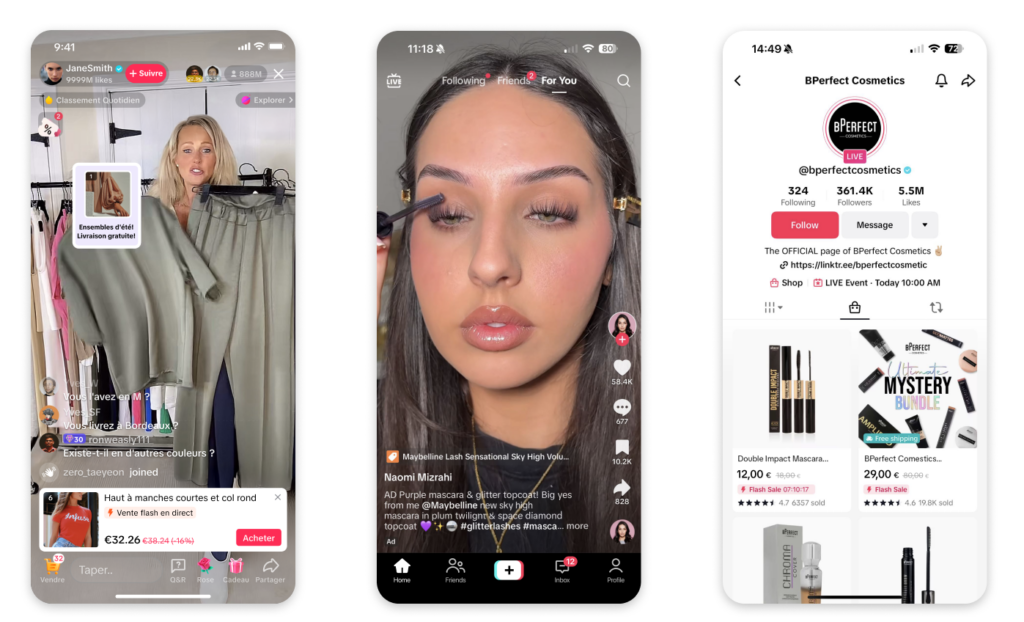
For a long time, Meta also developed shopping within its platforms and tried to integrate a marketplace into its social networks. There were catalogs, a separate tab on the main page, checkout, and even Live Shopping. This growth happened during the pandemic, when eCommerce wasn't available everywhere. But as offline shopping returned, users began complaining about commerce on Instagram, so Meta removed these features starting in 2023.
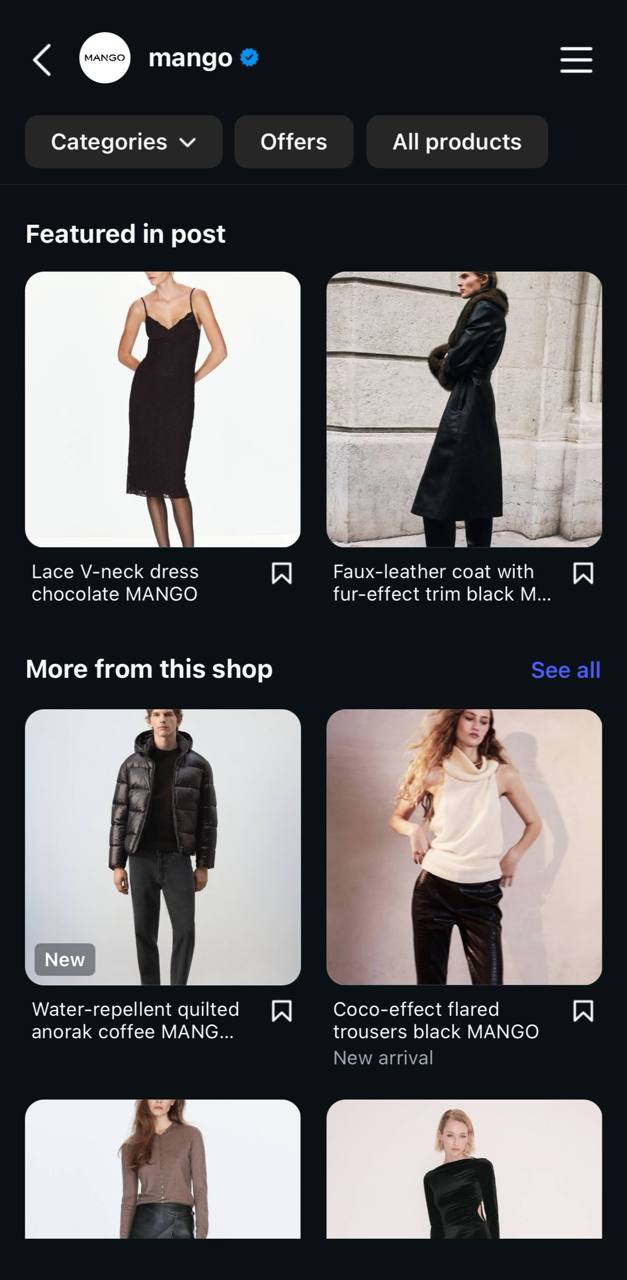
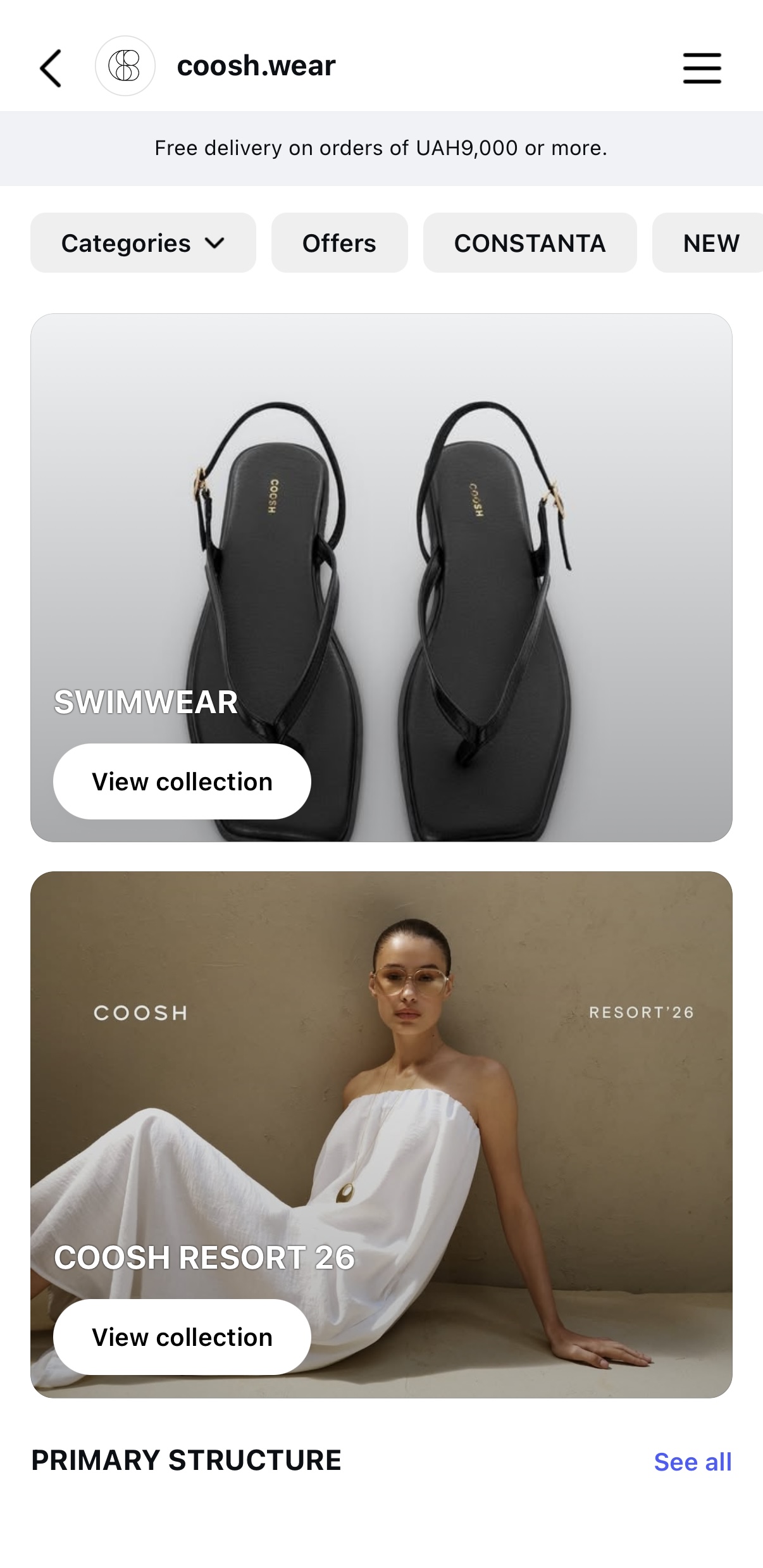
Today, businesses can only use a product catalog displayed on the brand's Instagram page. Users can browse the main, more creative content in the feed, or open the catalog, which looks like product cards on a website with detailed descriptions. But they still have to go to the website to make a purchase.
In the second scenario, there's no separate website, and an Instagram or TikTok profile serves as the online store.
The assortment is shown in posts, Reels, and Stories; prices and details may appear in descriptions or messages; and consultation, order placement, and communication with the customer all happen in DMs. For a small business, this can be enough to build all its sales around a social network.
At the same time, this model has risks: the business effectively depends on the platform, including its rules, algorithms, and account access. If Instagram becomes unavailable to businesses, you can lose your usual sales channel.
That's why, when a business outgrows social media, a separate website can become the next step.
Social commerce can be not only a sales tool but also a model around which a business builds its commercial presence. This is the third scenario.
A brand may not show its full catalog, prices, or sizes, but it can regularly showcase its products and work with influencers, reviews, UGC, and recommendations. In this case, social media primarily drives discovery and generates interest and demand, while the purchase may happen later.
It's a long game: through content, a brand becomes more than just a product on a shelf. It becomes a brand that's interesting to follow, whose new releases people want to learn about first, and whose community they want to be part of. This emotional closeness can drive loyalty: Sprout Social research shows that 64% of consumers feel more loyal to a brand when they feel connected to it, and 76% will choose it over a competitor.
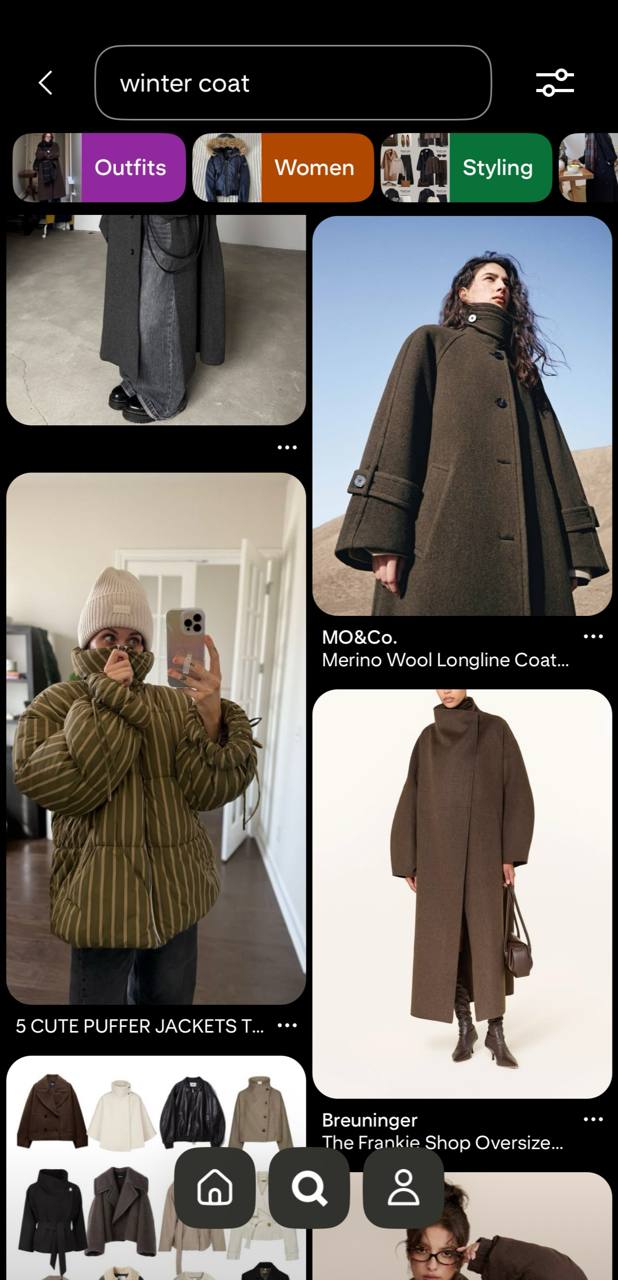
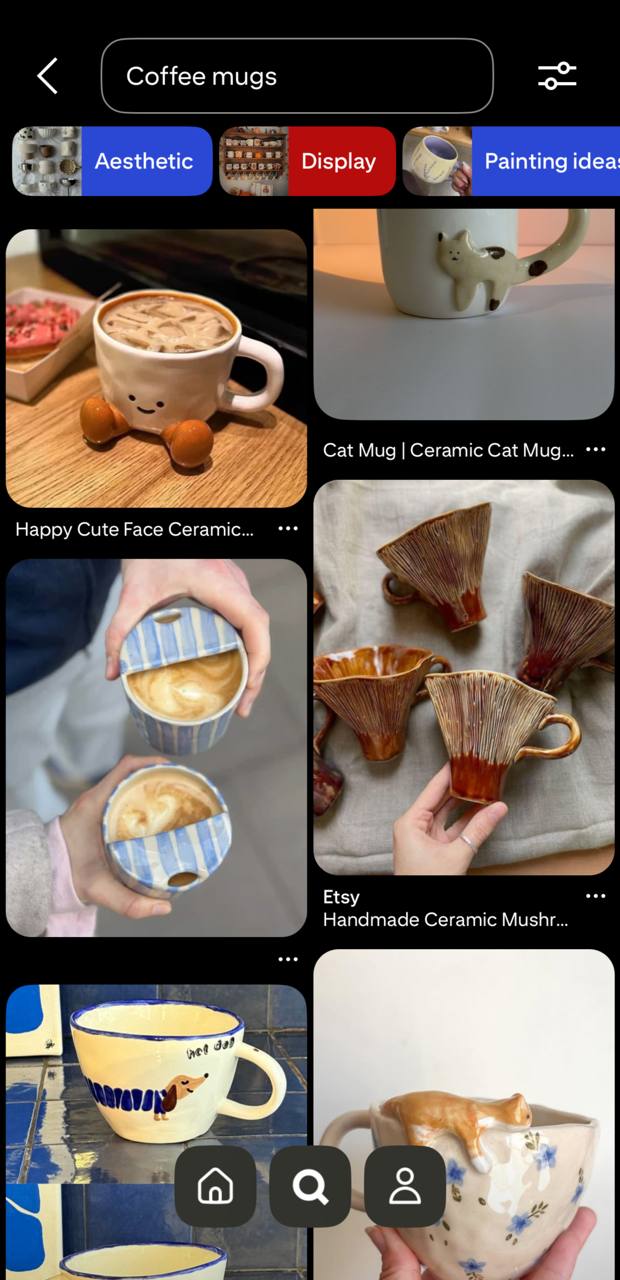
Another example of demand generation through social media is Pinterest. The platform is mostly used to search for inspiration, and businesses can fit into this scenario through their own pins (posts).
On Pinterest, keywords matter, but search isn't limited to specific product names. A user might search for "trendy fall coat" or "fall aesthetic looks."
[[ROW-START]]
[[ROW-END]]
The platform also lets users combine text and image search through Pinterest Lens. For example, you can upload a photo of a dress and add the query "for fall," and the platform will show similar looks and products that take both inputs into account.

That's why social commerce should be viewed not only as a technical ability to sell inside Instagram or TikTok, but as a range of ways to integrate social platforms into the customer journey.
For many users, TikTok, Instagram, and Pinterest have become places to discover new brands and products. Audience research shows that people increasingly use social media instead of traditional search.
According to various 2025 studies:
A person might go to TikTok for makeup reviews, Instagram for a wedding guest dress, and Pinterest to collect renovation ideas. In each case, they're not just looking for content. They're looking for what to buy, where to buy it, and whether it's worth buying at all.
For brands, this means content increasingly has to work before a person even visits the website. It helps people find the brand among others, understand the product, get social proof, and ultimately influence their choice. That's why social commerce overlaps with content marketing, influencer marketing, UGC, and social search.
Next, we'll look at the principles to build into your content strategy.
Analyze how exactly your audience behaves on different platforms: what they search for, what content they watch, whom they trust, and at what stage they're ready to engage with a brand. Also consider how the platform itself is evolving.
The brand's task is to understand what already works for its audience and find a way to fit its content naturally into new behavior.
This channel is relevant for niches where shoppers search for and choose products visually: fashion, beauty, furniture and decor, travel, and food. A user can come to the platform without a specific brand or product in mind, looking for an idea, a style, or a solution, and find a product along the way.
In this kind of strategy, it's worth working not just with individual beautiful pins but with the whole system:
Pinterest's value here is that content can work beyond the moment of publication: pins can stay relevant for months and keep driving users to your website longer.
If people come to social media not only to scroll the feed but also to search for something, this should be reflected in your content strategy. Think about how your audience would phrase a query and whether your content would show up for those words.
We covered more about what social media algorithms read and how to use Social Media Optimization in a separate article.

An Instagram catalog doesn't make sense for every business. For a large eCommerce store with a full website and a wide assortment, it can be unnecessary duplication. However, for a small business that sells mainly through Instagram, or for brands with a small assortment, the catalog can be a convenient way to organize products on the profile.
In other words, creative, search-optimized feed content remains the main way to communicate, while the catalog serves as a tab with key products so users can quickly find what they need.
[[ROW-START]]
[[ROW-END]]
If you have a lot of products, start with what sells best: bestsellers, new arrivals, and seasonal or limited collections. You can add them to the catalog manually through Meta Commerce Manager, even if the business doesn't have a full website integration.
To set up a catalog:
Look at where else people are already talking about your category, what interests them in it, and which use cases they discuss.
For example, a sportswear brand's audience may overlap with running clubs, travel creators, wellness communities, or urban lifestyle content creators. These adjacent communities can create new contexts for the product.
The 2026 BCG study also recommends looking for creators not by follower count but through communities and topics where there's already organic interest in the category.
Social commerce changes more than the place where the purchase happens. It changes the path to purchase: a person may first see a product in their recommendations, find it through social media search, read other people's opinions, watch a creator's content, and only then buy.
The more of these scenarios move to social media, the more important it is for a brand to understand not only what to publish, but also how people search for, choose, and recommend products.

Journalist at Promodo
For over 6 years, I have been working as a journalist in the communications and marketing industry. I help brands communicate effectively through written content, engage with market experts, and create professional materials on topics related to business and marketing, sharing insights on working with marketing tools.
You may also like
Choose quality and trusted services to improve the presence of your company on the Internet, and feel free to contact our UK team if you have any questions.

Paid advertising is one of the best channels for attracting a relevant audience to your website.

Learn how to properly track your campaign results and download a free email marketing tracking template.

We explain what mobile analytics is, what metrics businesses need to pay attention to in order to understand user behavior, and what analytics services to use.
We at Promodo are ready to help you improve your performance across all digital marketing channels.
Get started





.svg)


