


Content



Journalist at Promodo
For over 6 years, I have been working as a journalist in the communications and marketing industry. I help brands communicate effectively through written content, engage with market experts, and create professional materials on topics related to business and marketing, sharing insights on working with marketing tools.

Approximately 46% of Gen Z and 35% of Millennials in the United States prefer social media for search. At the same time, social media platforms have become a key channel for discovery. According to HubSpot, 70% of users say they find new brands through social media.
However, in 2026, social media optimisation strategies go far beyond hashtags. They analyze content at a deeper level, which includes text, voiceovers, and even how users interact with your content after viewing it. This means that if hashtags are your only optimization tool, you’re already falling behind.
To stay competitive, eCommerce brands need to adopt a more advanced approach to optimise social media, namely Social Media Optimization (SMO).
In this guide by Promodo, we’ll provide social media optimisation definition, how it works, provide SMO tips, as well as social media optimization examples, and how you can apply proven SEO principles to your social media strategy to increase visibility, attract high-intent audiences, and drive more conversions.

Social Media Optimization (SMO) is the process of optimizing your brand’s social media profiles and content to increase visibility within both social media platforms and search engines. This matters because Google also indexes social media profiles. As a result, they are also an important part of your overall digital presence.
The logic behind SMO strategy is similar to traditional SEO. When your content is properly optimized, it becomes easier for users to discover your brand. It leads to higher engagement, which includes clicks, follows, saves, and shares.
Social media algorithms interpret these interactions as positive signals. As a result, your content is more likely to be promoted organically. It helps your brand reach a wider audience without relying solely on paid advertising.
For eCommerce brands, this means more than just visibility. It translates into increased traffic, stronger brand awareness, and ultimately, more conversions.
Optimizing your social media profiles is essential if you want your brand to appear in search results, recommendations, and discovery feeds, such as Instagram’s Explore page.
By using relevant keywords, hashtags, and a well-structured profile, you increase your chances of being discovered by the right audience at the right time.
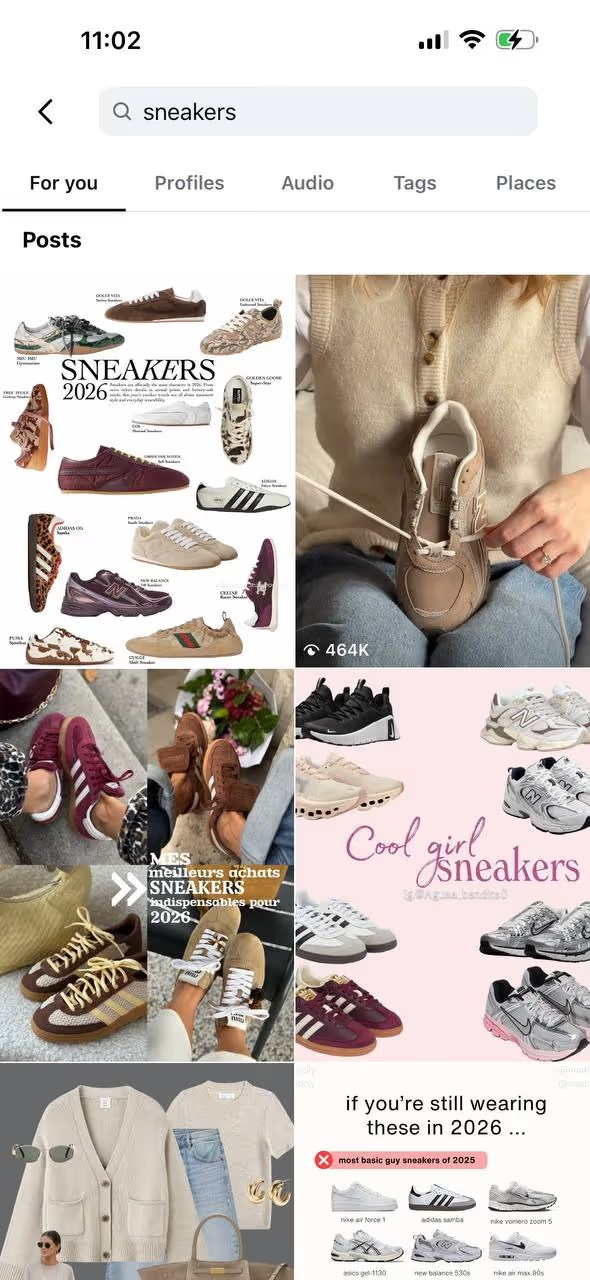
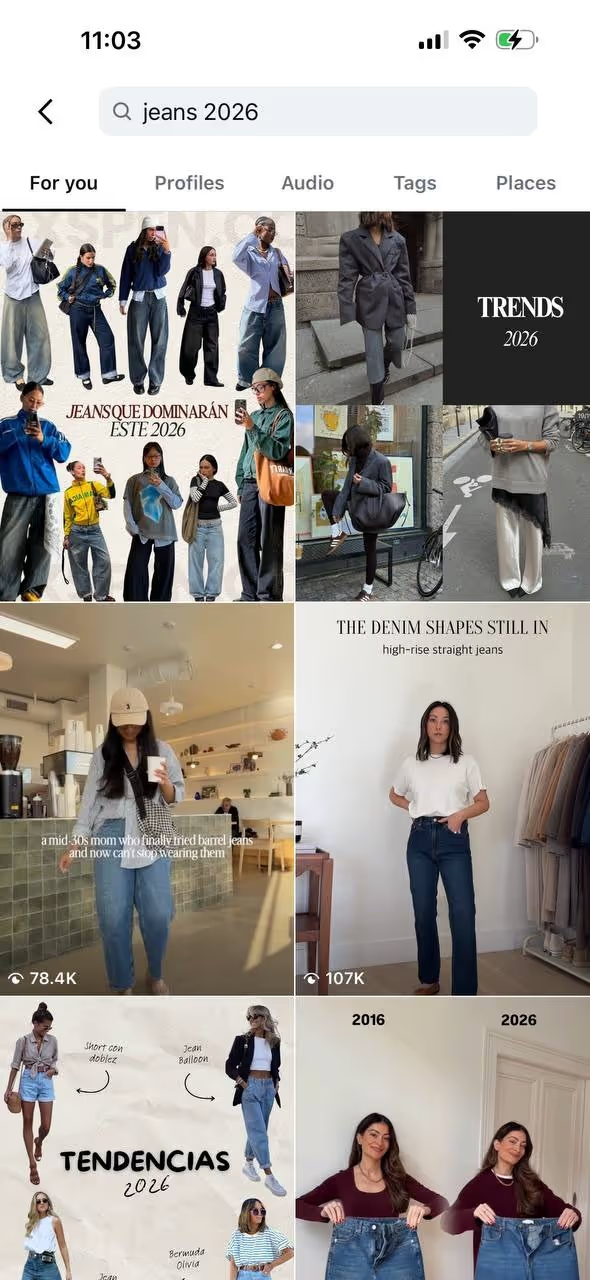
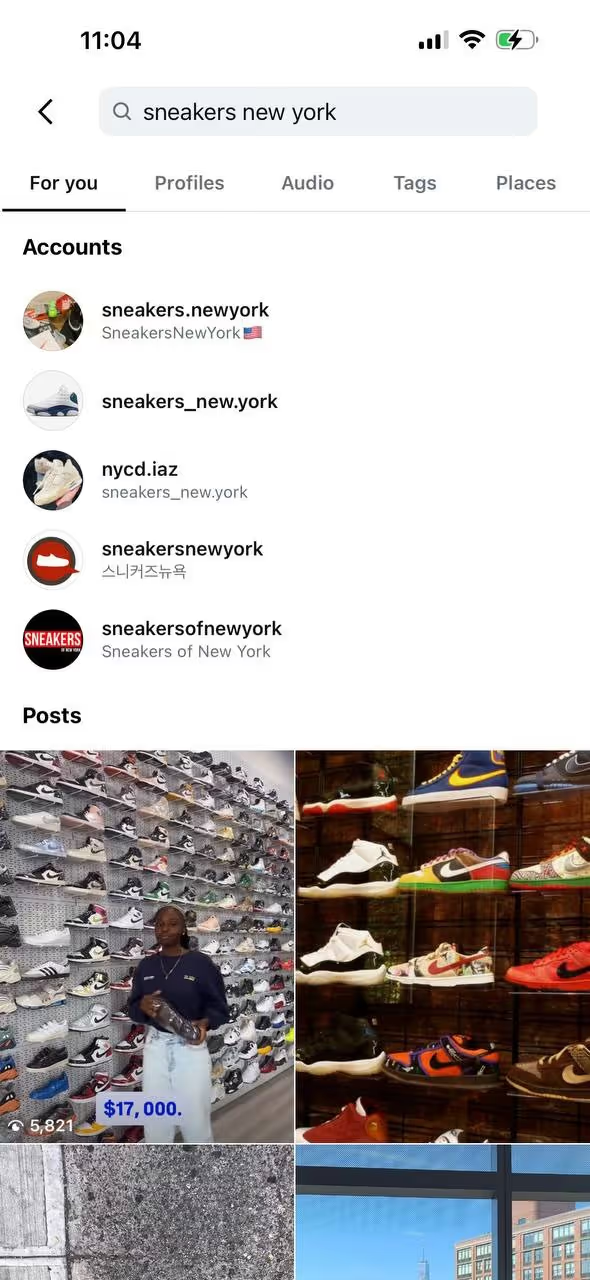
For example, Instagram’s search experience is divided into multiple discovery surfaces, each driven by its own algorithm:
What’s important to understand is that even for the same search query, users will see completely different results. This is because Instagram’s algorithm considers both SMO optimization and individual user preferences.
Your job as a business is to maximize your visibility across all these surfaces. That means optimizing not just your posts, but your entire profile, which includes bio, keywords, content structure, and engagement signals.
For eCommerce brands, this directly impacts discoverability and product visibility. And as a result, it impacts sales.
[[ROW-START]]
[[ROW-END]]
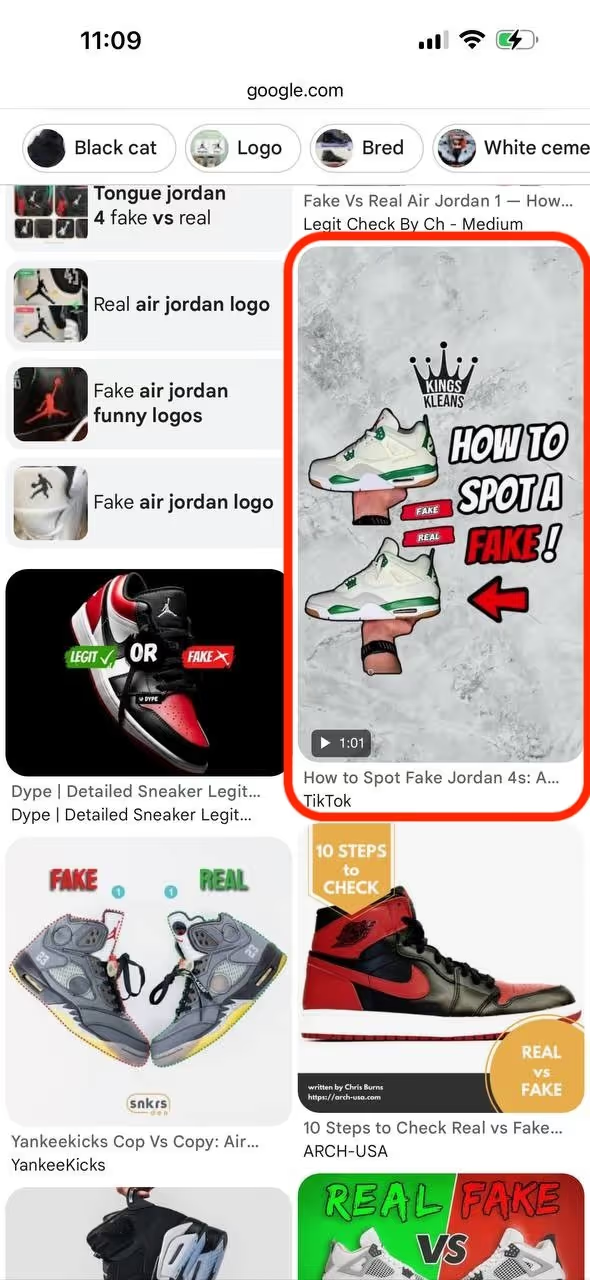
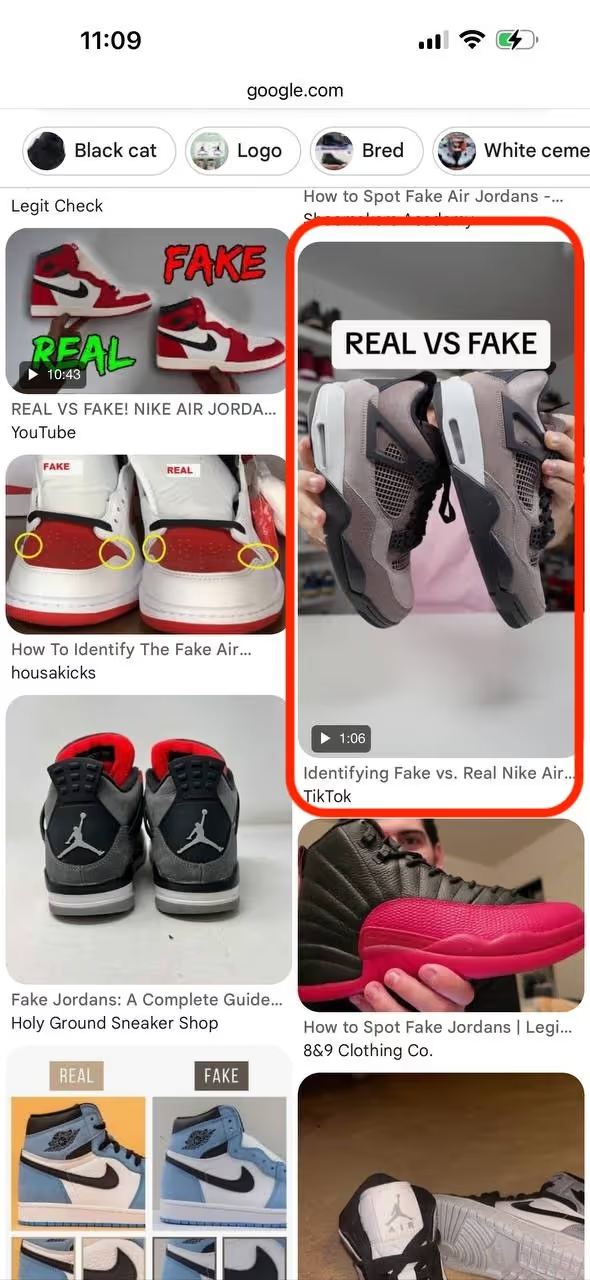
Instagram and TikTok posts can also be indexed in Google Search and Google Images. If your profile is public and your content is accessible for crawling, Google can analyze captions, alt text, keywords, and page metadata.
[[ROW-START]]
[[ROW-END]]
While it’s difficult to compete with traditional SEO in highly competitive search results, social media content can still rank for niche queries. They especially play a role where visual context plays a key role.
For eCommerce brands, optimization social media creates an additional opportunity to capture organic traffic outside of social platforms. Well-optimized posts can appear in image results, product-related searches, and inspiration-driven queries, helping you reach users at the discovery stage of the buying journey.
Another key benefit of social media optimization (SMO) is its indirect impact on visibility in AI-generated results.
Large language models (LLMs), such as those used in AI search and chatbots, rely heavily on publicly avaliable sources when generating answers. This means that well-optimized social media profiles can strengthen your brand’s overall digital presence and increase the likelihood of being discovered across AI-driven platforms.
Here’s how this works in practice:
However, it’s important to understand that this is an indirect relationship.
Optimizing your social media alone cannot guarantee that your brand appears in AI-generated answers. Instead, generative engine optimization should be part of a broader strategy focused on building a strong, consistent digital footprint. It includes your website, content marketing, PR, and overall SEO.
The first principle is to focus on search intent rather than content format.
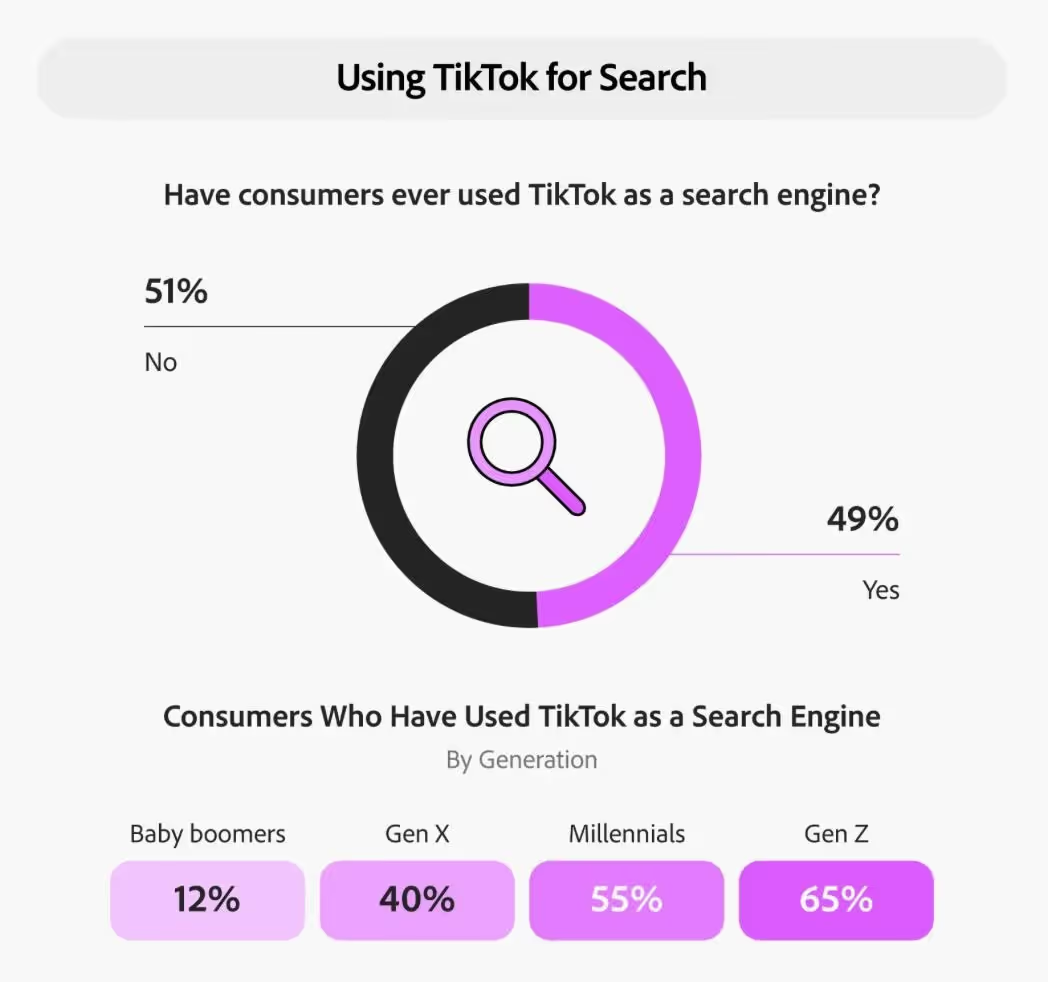
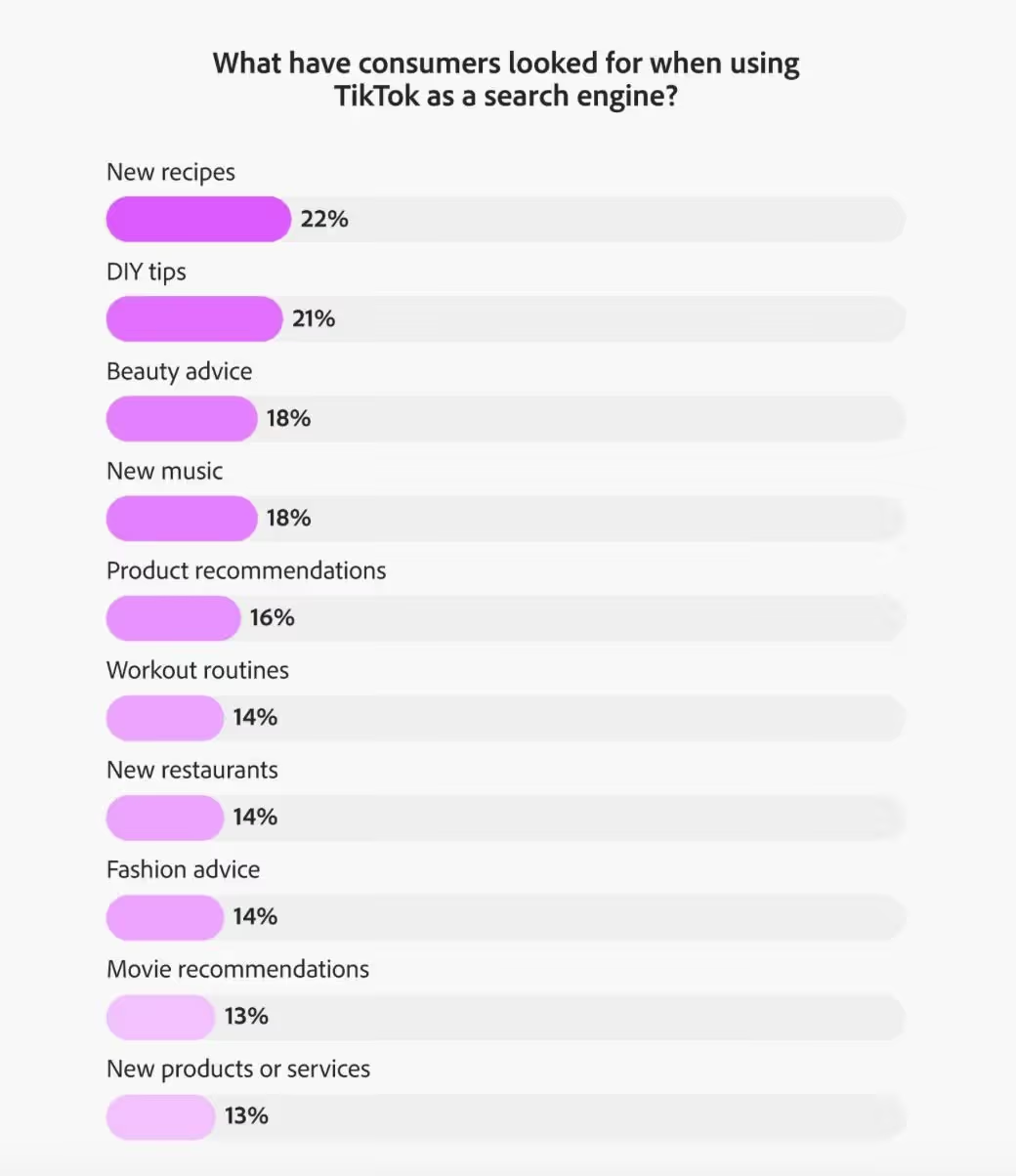
This trend is clearly visible on TikTok. According to a study by Adobe Express, in January–February 2026, half of the respondents use TikTok as a search engine. The most common topics include: recipes, DIY and beauty tips, new music, product recommendations, and new products and services.
[[ROW-START]]
[[ROW-END]]
That’s why businesses should create educational or explanatory content on social media. It will help them appear in search queries relevant to their target audience. For example, an eyewear store could cover topics like “how to choose contact lenses,” “which eyeglass frame suits your face shape,” or “is it safe to…?” In other words, answer the real questions that concern your audience, no matter how simple they may seem.
In the past, captions and hashtags served mainly as explanations for the algorithm. You could indicate the topic of a video through the caption and a large number of hashtags. Even if the topic wasn’t clearly presented in the content itself. On TikTok, for a long time, creators could add unlimited hashtags within the character limit, with one of the most popular being “#fyp,” supposedly signaling the platform to recommend the content to a wider audience.
Even if this worked initially, the logic has changed. With the development of AI technologies, platforms now analyze content more deeply. It refers to everything: the first few seconds of a video, voiceovers, on-screen text, captions, and alt text. At the same time, the number of hashtags allowed has decreased.
In 2025, TikTok officially limited the number of hashtags to five, and Instagram later did the same. This shift confirms how social media algorithms now interpret content and what truly affects its reach.
Behavioral signals are another key part of Social Media Optimization. Algorithms now consider both how you structure the content and how users interact with it.
Likes are no longer the main indicator. Algorithms now track whether viewers watch a video to the end, scroll through an entire carousel, leave a comment, save a post, or share it with friends. Social platforms prioritize meaningful engagement. So, the interaction doesn’t stop at a simple like or scroll.
Google can index two elements in your Instagram profile header, namely your username and your Instagram name.
Your profile name should be unique — most often, it’s your brand name or brand name + format (e.g., techtoro.io). Usernames may also include a geo element (e.g., sens_kyiv) if you operate multiple locations and need separate pages for each.
The Instagram name serves a different purpose: it helps with internal Instagram search. This is important because it allows the platform’s algorithms to match user queries with the most relevant profiles. Don’t ignore this field. Here, you can include not just your business name but also a brief description of your positioning, relevant keywords, or your industry.
Optimizing both the username and Instagram name ensures better discoverability both on Instagram and in Google search results. It will help your eCommerce brand reach a wider audience.
The bio acts as a short piece of text that provides additional context about your brand. Currently, it doesn’t have a direct impact on search within the platform, so you can use it flexibly — combining keywords that describe your products or services with more creative messaging that conveys your brand’s idea and эмоція.
Captions are one of the key social content optimization elements that Instagram uses to understand what your content is about. For example, if a user is searching for black satin ruffle pants, but your caption only includes a generic hashtag like #pants and a vague description like “a stylish addition to your wardrobe,” your post will struggle to compete even if your product perfectly matches the search intent.
That’s why your goal is to create captions that resonate with your target audience, match your brand voice, and include relevant keywords for search.
For example, in the case of pants, your caption should include:
At the same time, this doesn’t apply to every single post. Your brand’s social media page is still a space for engagement — where content builds interest, trust, and purchase intent.
Avoid trying to trick the algorithm by adding irrelevant descriptions or hashtags that don’t match the image or video. Authenticity and relevance remain key requirements for long-term visibility and performance.
One of the latest shifts on Instagram, which is driven by the rise of LLM technologies, is the platform’s ability to analyze content itself, not just captions. This social content optimization element means your keywords should appear not only in the description, but also directly within the content: in voiceovers, subtitles, and on-screen text.
Another critical factor is content structure. Since user retention is a key ranking signal, your content needs to quickly address the search intent. If the first few seconds don’t clearly communicate what the video is about, users will scroll past. And the algorithm will take that as a negative signal.
Hashtags still serve as a supporting signal to help platforms better understand the topic of your content.
The optimal number today is a few (3–5), but highly relevant ones. They should describe the specific post, not just your niche in general.
For example, if you run an eyewear online store and create a video on Instagram about how to choose glasses for your face shape, your hashtags should reflect the core topic — such as #glasses, #eyewearfit, #faceshapeguide — rather than broad, generic tags like #style or #fashion.
On TikTok, you also need to optimize two profile elements:
The profile name plays a key role in TikTok’s internal search, so it should clearly reflect your niche or activity.
Unlike Instagram, TikTok’s bio also impacts search visibility. However, it’s limited to 80 characters, so you need to communicate your value proposition as clearly and concisely as possible.
💡 Tip: Write a longer version of your bio first without constraints, then refine and shorten it — making sure to include relevant keywords while staying within the character limit.
On TikTok, algorithms evaluate video content, viewer behavior, and contextual signals to decide who should see it. The platform prioritizes interest in a specific video rather than a user’s overall interaction history with a profile.
That means the algorithm first analyzes the video itself to understand what it’s about — and only then starts testing it on relevant audiences.
Regardless of your content format — product videos, explainers, entertainment clips, sketches, or parodies — there are several SMO techniques that can strengthen your content optimization:
On TikTok, captions for videos or photo/carousel posts can be quite long, even up to 4,000 characters. However, users typically only see the first few lines in their feed, so length doesn’t equal effectiveness.
The optimal caption length is usually around 50–150 characters. It’s enough to provide context for the algorithm without overwhelming the user.
Here’s what to consider when writing captions to optimise social media captions:
TikTok is gradually reducing the importance of hashtags. Currently, users and business accounts can use up to five hashtags, and the focus should be on relevance rather than quantity.
If your video covers a specific topic or problem, your hashtags should clearly reflect that. Do not rely on generic tags like #fyp or #viral, which provide little value to the algorithm.
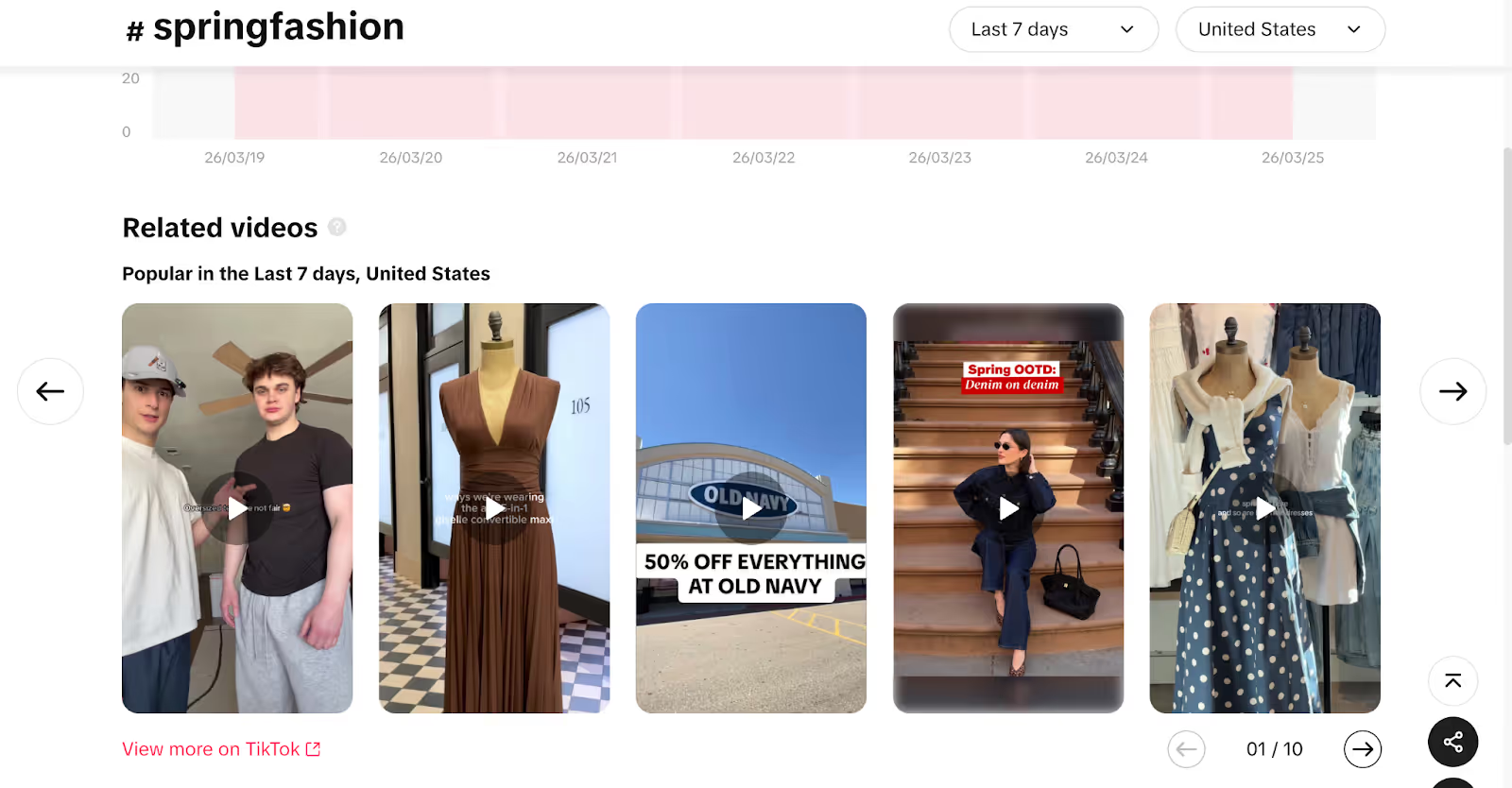
Using tools like the TikTok Creative Center, you can explore how hashtags are categorized and which ones are trending within your niche. For example, in the fashion category, a hashtag like #spring2026 may be trending. Even though it doesn’t directly describe a product, it can still support content performance by aligning with broader seasonal trends.
The key is to combine specific, topic-driven hashtags with relevant trend-based ones to improve discoverability without diluting your content’s focus.
Here’s an example of hashtags that are now trending on TikTok in the Apparel & Accessories category in the United States.
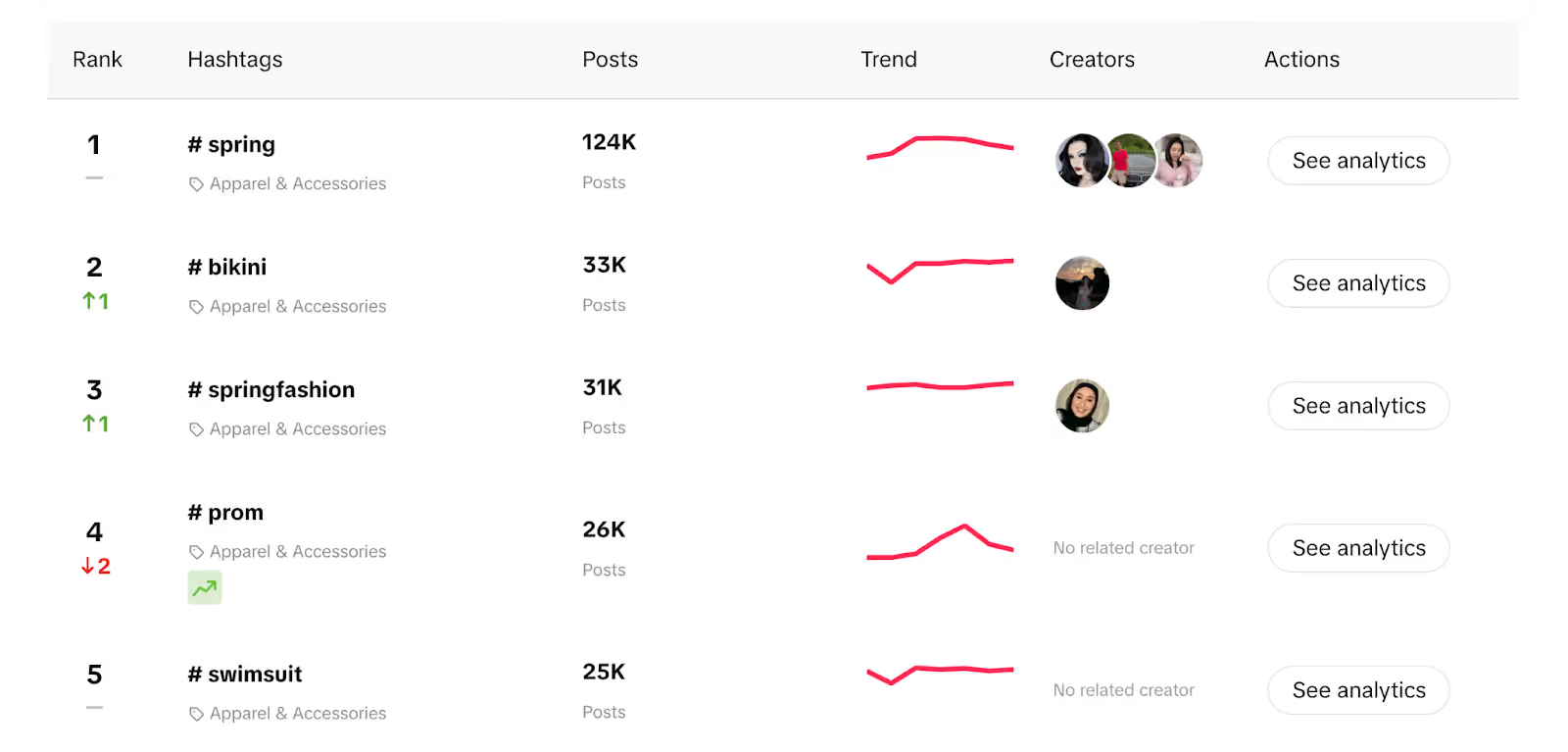
You can also explore popular videos by hashtag and even access audience analytics. These insights help you understand how to use hashtags more effectively around your brand’s topics and identify which types of content perform best with your target audience.
Audience behavior is changing: social media is increasingly functioning as a search engine, making basic profile and content optimization essential for eCommerce brands. Optimized accounts help your brand appear where potential customers are looking, making the first touchpoint with new audiences smoother and more effective.
However, this doesn’t mean every post should feel like a list of keywords. Each brand has its own strategy and style, and social media remains primarily about engaging content, visual storytelling, and a recognizable brand identity. Social Media Optimization should be used as a strategic tool — it strengthens your content and discoverability without replacing creativity or authentic brand expression.
For U.S. eCommerce businesses, leveraging SMO can boost local and niche visibility, improve engagement metrics, and increase the likelihood of converting social media users into customers.

Journalist at Promodo
For over 6 years, I have been working as a journalist in the communications and marketing industry. I help brands communicate effectively through written content, engage with market experts, and create professional materials on topics related to business and marketing, sharing insights on working with marketing tools.
You may also like
Choose quality and trusted services to improve the presence of your company on the Internet, and feel free to contact our UK team if you have any questions.

The core challenge faced by the overwhelming majority of addiction treatment centers is a lack of marketing effort.

Google is the absolute leader among search engines. That's a fact. However, ignoring SEO Bing means losing potential customers.

Online shoes and clothing store Zappos, has grown from a company with an office in a garage into a multibillion-dollar corporation under the direction of Tony H
We at Promodo are ready to help you improve your performance across all digital marketing channels.
Get started


.avif)


.svg)


