Content



GA4 can tell you that a visitor came from ChatGPT. It can’t tell you what ChatGPT said about your brand before that click, which competitors it recommended instead, or how many buyers never clicked at all. That gap is why AI visibility tools exist: they run the questions your buyers ask through AI assistants and record whether, where, and how your brand appears.
The market for AI search visibility tools grew fast, and the tools are not equal. Some check the actual ChatGPT interface, while others query smaller AI models via API. Some track just three AI platforms, while others monitor more than ten. And the same budget can buy 16 tracked prompts or 350. We compared 12 AI visibility tools on what they measure, which platforms they cover, and what a tracked prompt actually costs, so you can pick the right one for your team.

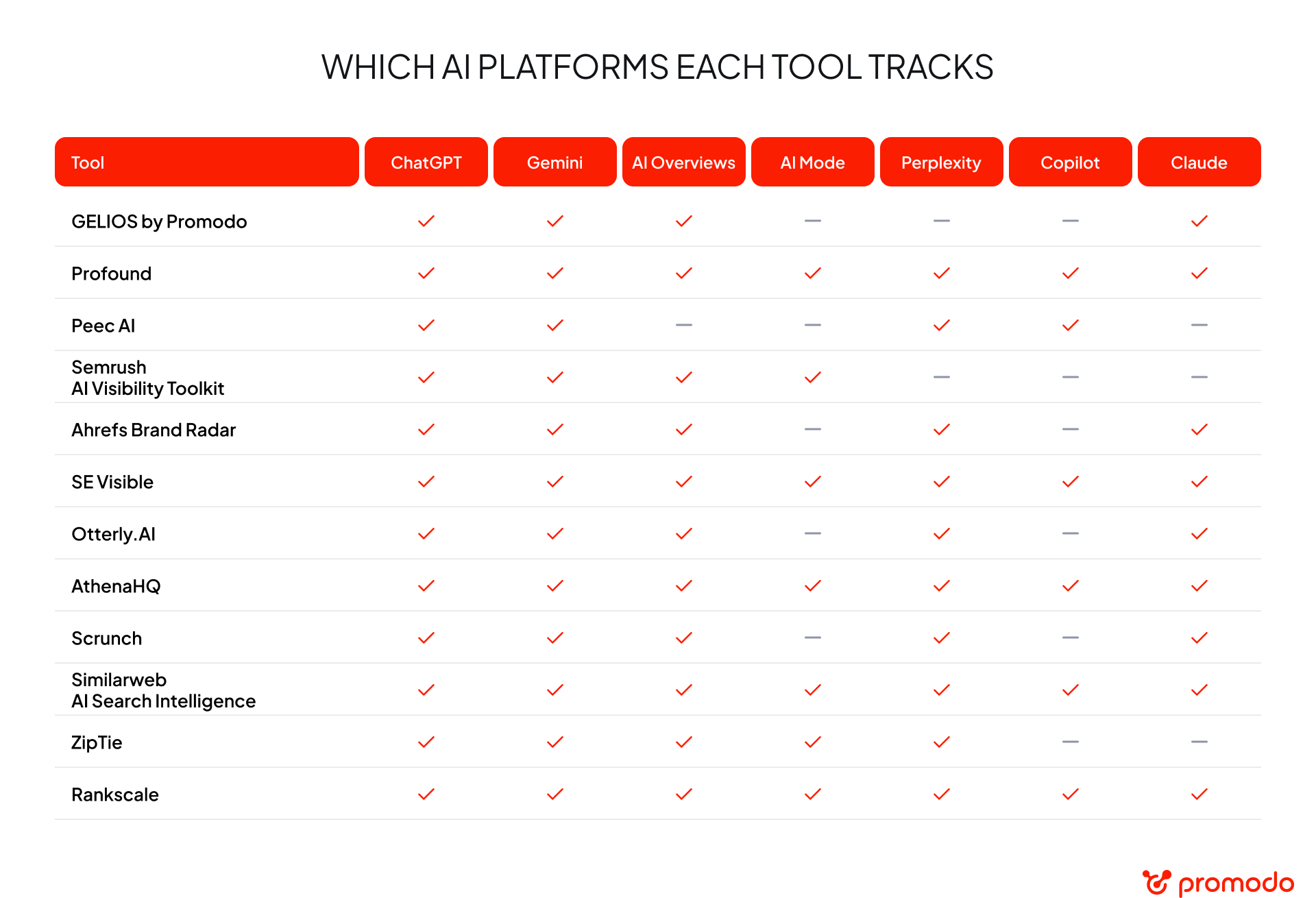
The best AI visibility tools in 2026 are GELIOS by Promodo for affordable daily tracking in ChatGPT, Gemini, Google AI Overviews, and Claude with unlimited team members, Profound for enterprise brands that need the widest platform coverage, Peec AI for agencies tracking many brands and countries, Semrush AI Visibility Toolkit and Ahrefs Brand Radar for teams already working in those suites, and SE Visible for the best price per tracked prompt. Small businesses should look at Otterly.AI and Rankscale, eCommerce brands at AthenaHQ, mid-market brands that need agent traffic data at Scrunch, teams that want AI referral traffic benchmarks at Similarweb, and SEO specialists who want pay-per-check pricing at ZipTie.
Whether vendors call them AI visibility trackers, LLM visibility tools, or AI brand monitoring tools, we looked at the same five things that change the value of the data:
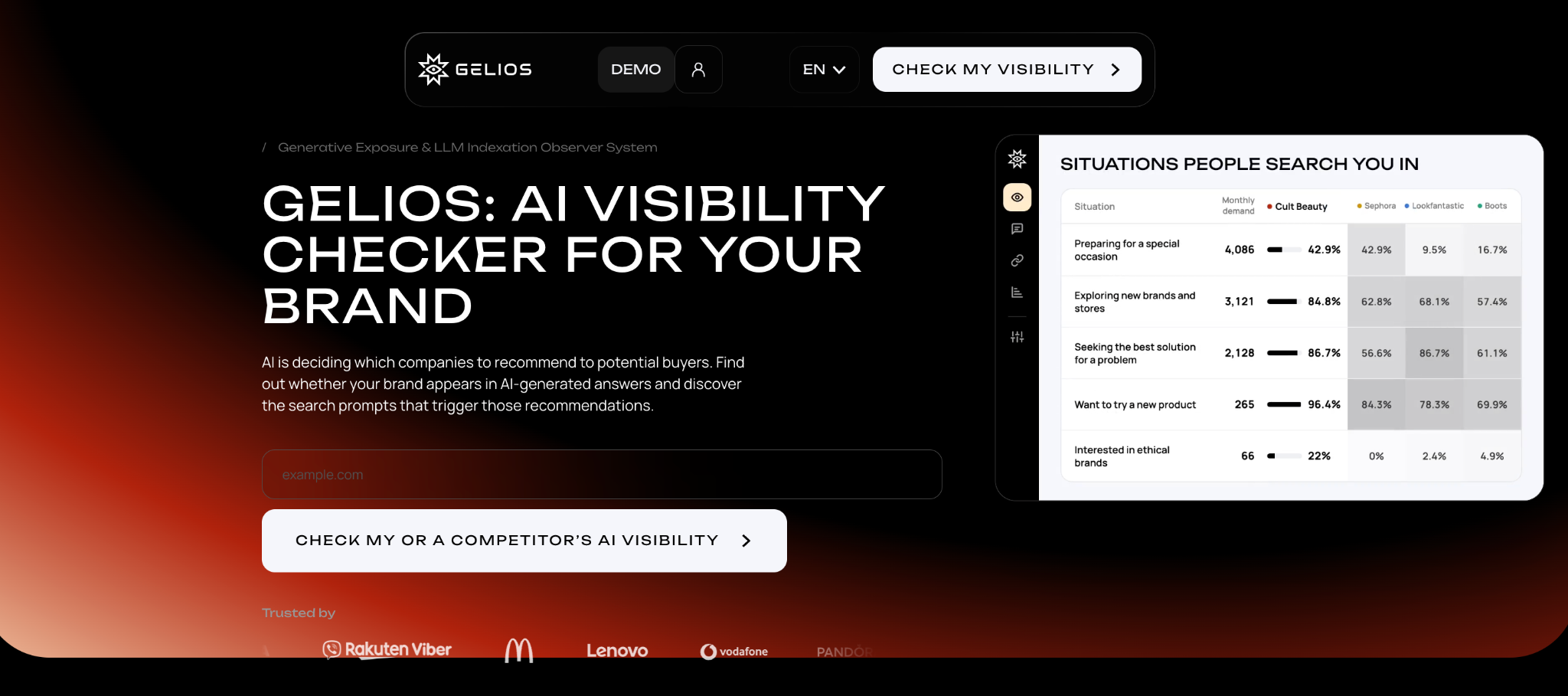
GELIOS (Generative Exposure & LLM Indexation Observer System) is the AI visibility tool Promodo built after clients and marketers kept asking for a consistent way to measure their brand presence in AI search. You enter your website, region, and language, and GELIOS generates a list of relevant queries from your site’s topic. It then checks daily whether ChatGPT, Gemini, Google AI Overviews, and Claude mention your brand, which competitors they recommend instead, and how this changes over time.
What it tracks: AI visibility (the share of queries where AI mentions your brand), share of mentions against up to 10 competitors per brand, queries where your brand barely appears or doesn’t appear at all, and trends in a visibility dashboard with six months of dynamics and full data history.
Stand-out feature: GELIOS gets answers directly through each model’s API, which reduces the effect of personalization on the checks. Every plan includes unlimited team members, so SEO, content, and marketing teams can work in one account without paying per seat.
All plans include daily checks, up to 10 competitors per brand, and a 7-day free trial. Adding a card for the trial places a $1 hold that is released right away, and you can remove the card in the tool’s settings at any time.
The goal of GELIOS is “to let brands rise above individual queries and answers.”
— Oleksandr Utkin, Service Development Manager at Promodo, who leads GELIOS development.
Best for: SEO teams, in-house marketers, and small agencies that want daily AI visibility tracking for one to five brands at a predictable price.
Watch out for: Perplexity and Copilot are not covered yet.

Read more: How to measure brand visibility in AI search.
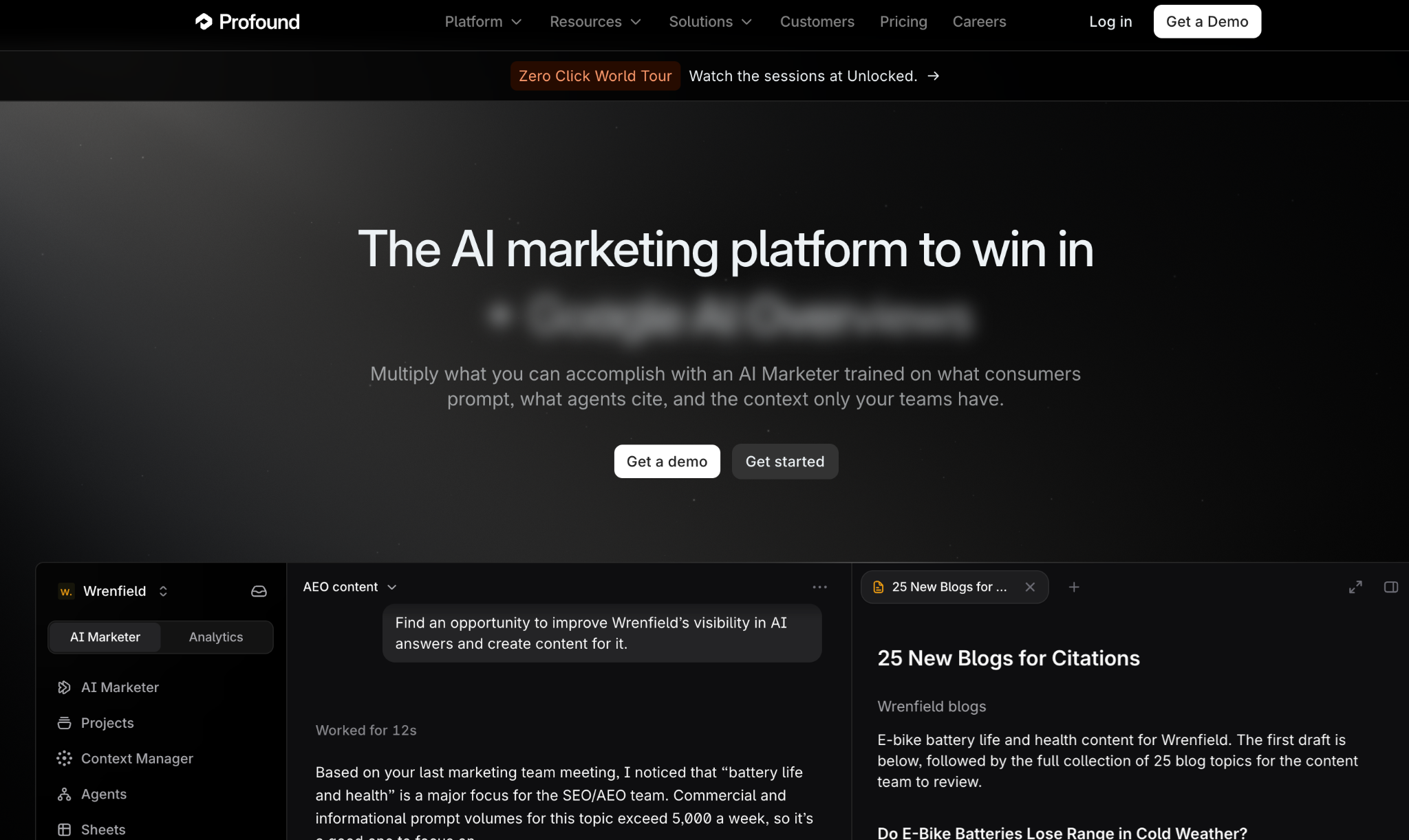
Profound is built for large brands. Beyond mentions, citations, sentiment, and competitive presence, it adds Prompt Volumes (estimates of how often topics are asked), Agent Analytics for AI bot activity and AI-referred traffic, and a Shopping module that tracks visibility at product level.
Best for: enterprise brands that need the widest platform coverage and data across marketing, SEO, and eCommerce teams.
Watch out for: no public self-serve price, and the trial covers only ChatGPT, Gemini, and AI Overviews.
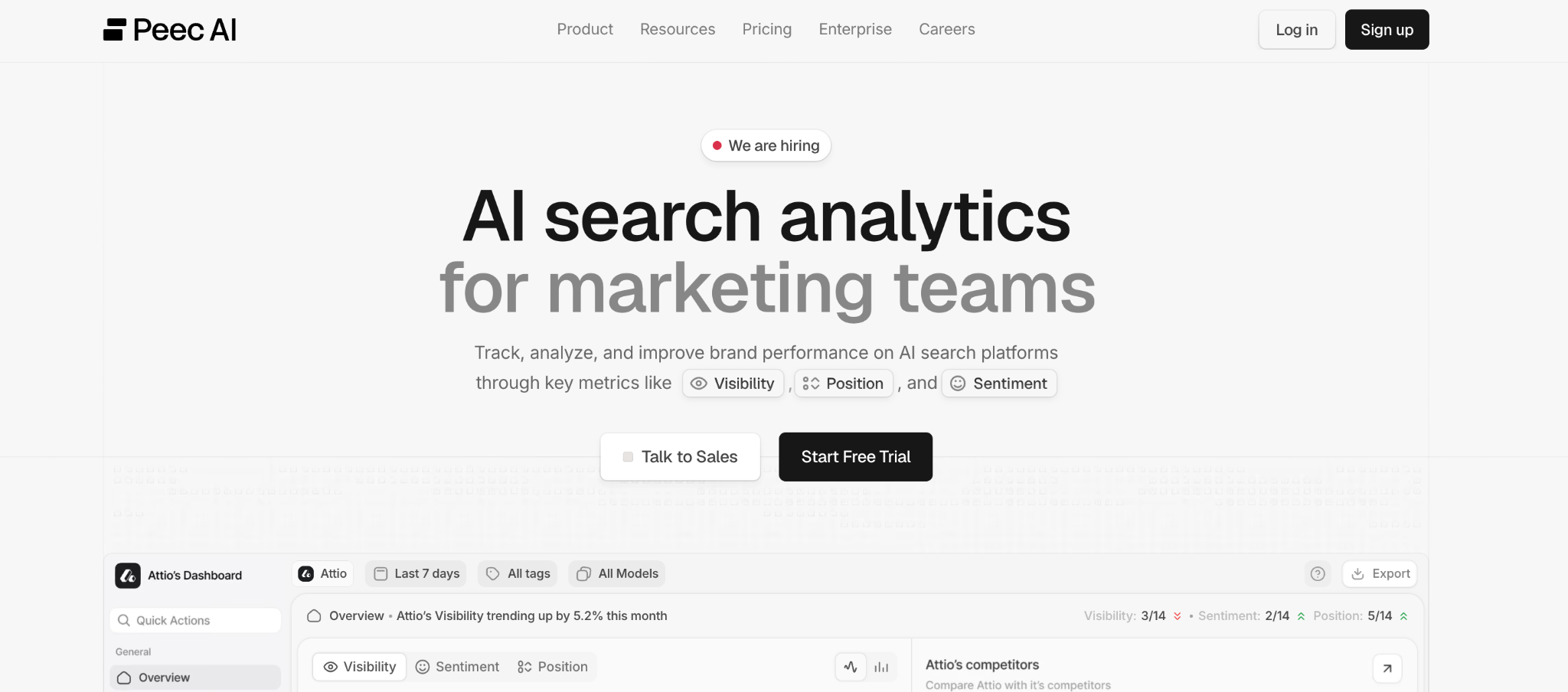
Peec AI tracks visibility, position, sentiment, and share of voice, and splits sources into those AI “used” and those it “cited”, which helps find the pages and sites worth targeting. Every plan includes daily runs and unlimited users. The Starter plan covers 50 prompts in one country; Pro adds API access and three countries.
Best for: agencies and mid-market brands that track several markets and want the whole team in one account.
Watch out for: self-serve plans include only three AI platforms, and each additional one costs $30–140 a month.
The Semrush AI Visibility Toolkit adds an AI Visibility Score, share of voice, sentiment, and brand narratives to the Semrush suite. Its Prompt Research report shows topic volume, difficulty, and intent to help you decide which prompts to track, and the AI Search Site Audit flags technical issues that could block AI crawlers.
Best for: teams already working in Semrush that want AI data next to their SEO data.
Watch out for: 25 tracked prompts on the base plan, with 50 more for $60 a month.
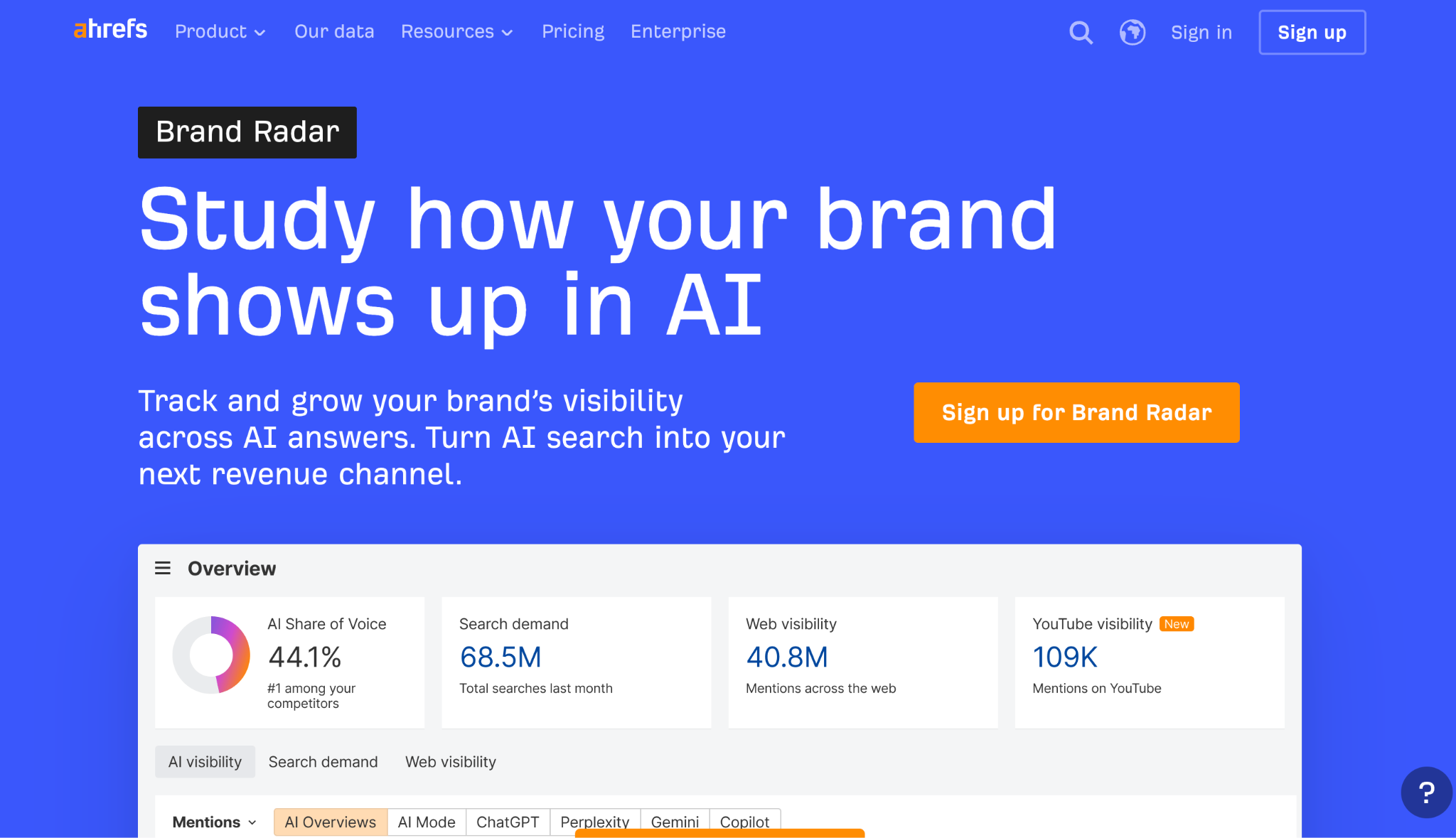
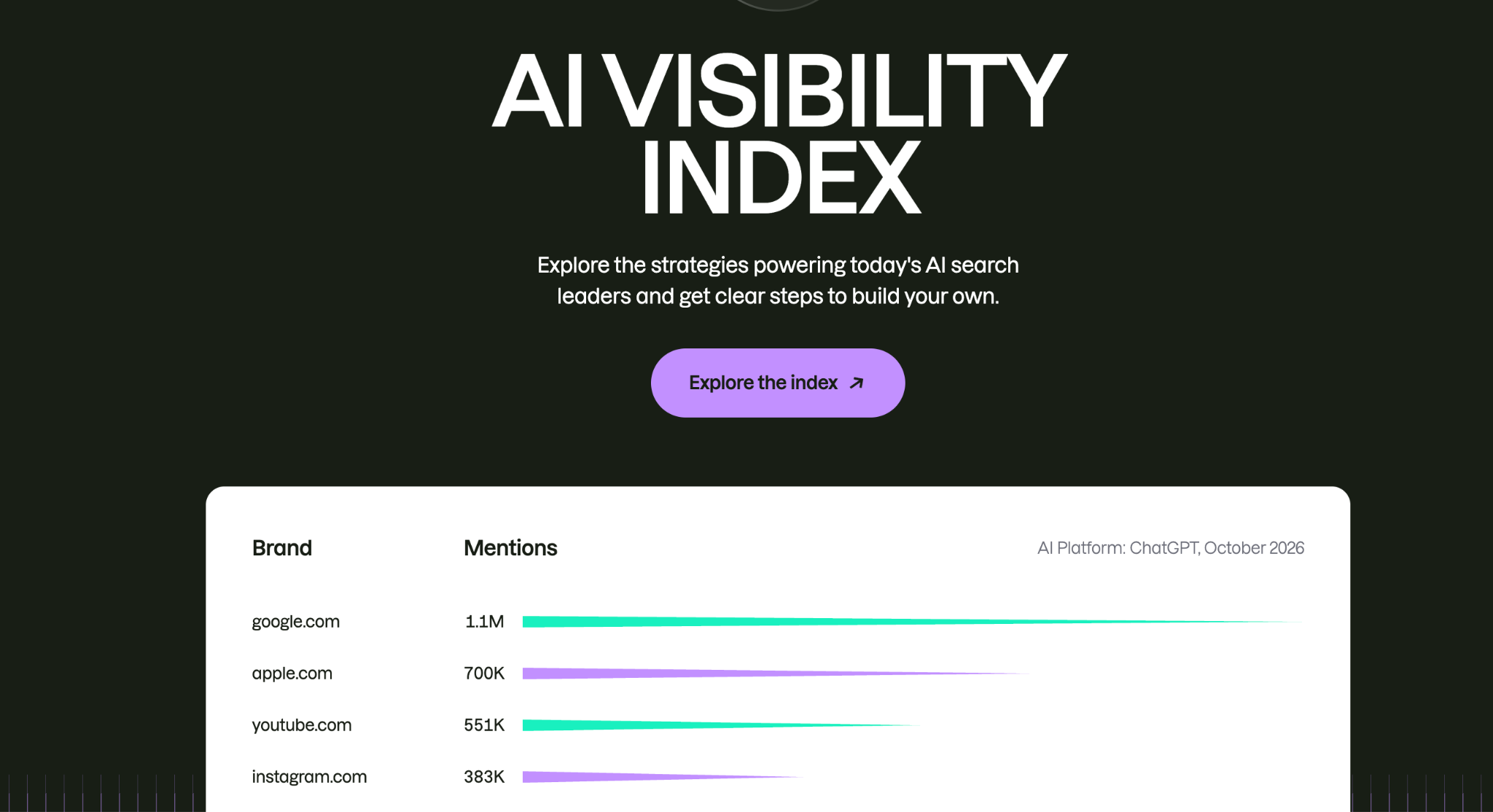
Brand Radar works differently from most trackers. Instead of starting with your own prompt list, it uses an index of more than 558 million prompts built from search data, so you can see share of voice for any brand or market without setup. Custom prompt packs from $50 a month add tracking of your own questions.
Best for: existing Ahrefs users and teams researching a whole category or competitors.
Watch out for: index prompts are generated from search data, not real user prompts, and pricing differs across Ahrefs pages, so confirm it before you buy.
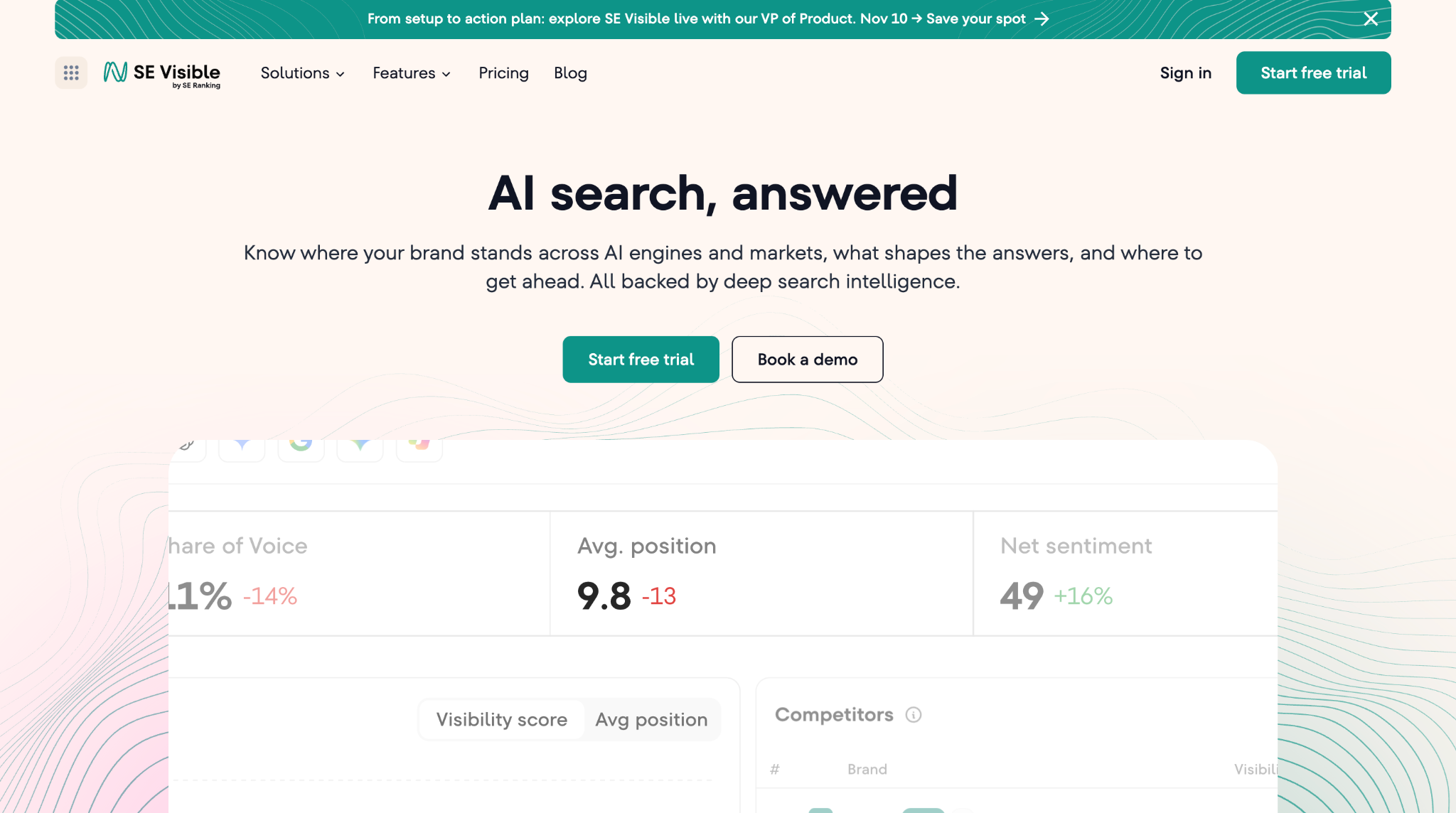
SE Visible tracks mentions, cited domains and pages, citation gaps, share of voice, sentiment, and average position. It is one of the few tools that states its method: it scrapes the real assistant interfaces, with Claude checked through the API. Looker Studio, API, and MCP access are included on every plan.
Best for: agencies and in-house teams that need many prompts on a fixed budget.
Watch out for: Perplexity is not in the plan list, and some sentiment features are still marked as coming soon.
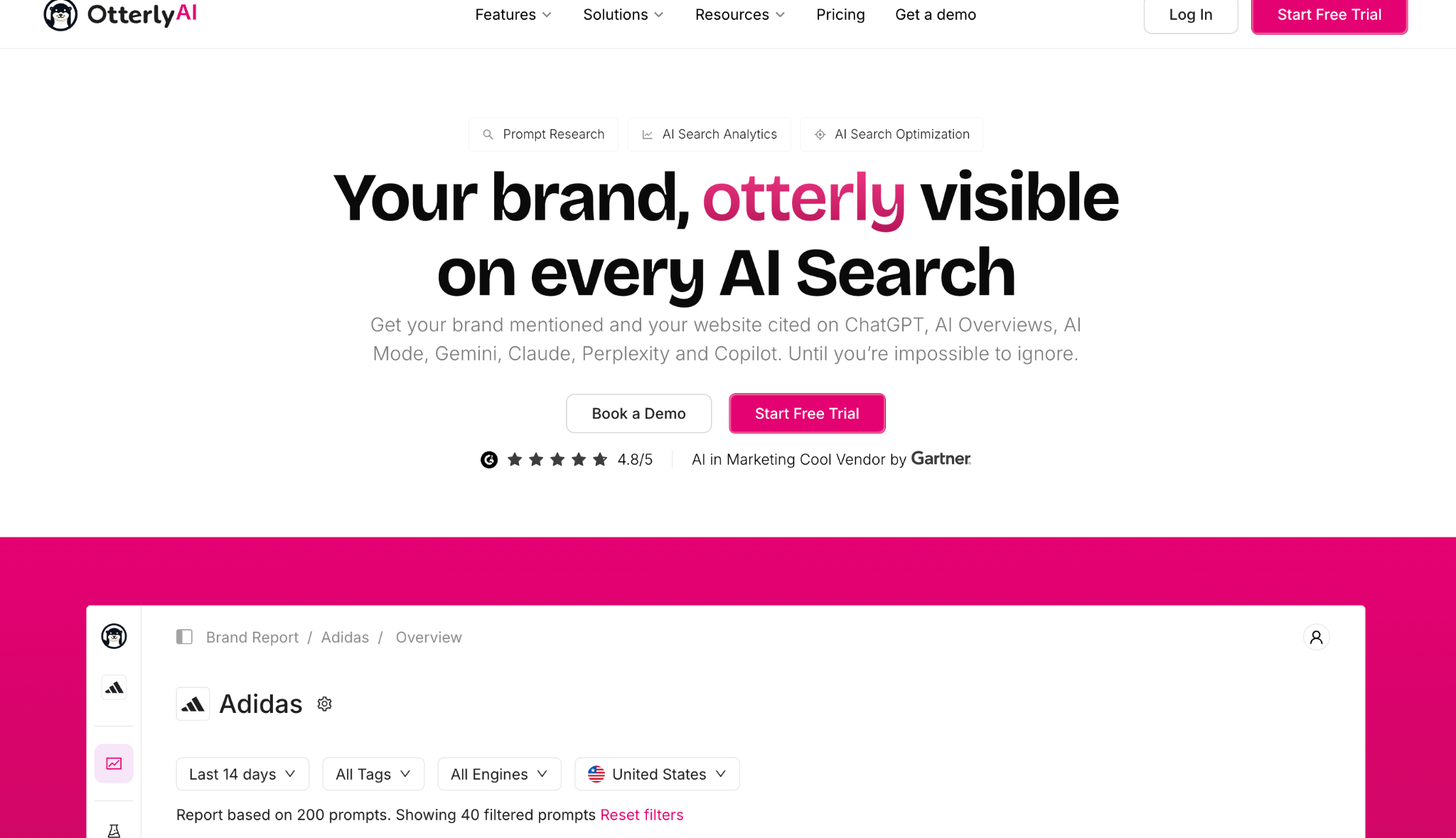
Otterly.AI combines brand mentions, a Brand Visibility Index, citations, share of voice, and sentiment with a GEO audit and keyword-to-prompt research. All plans include unlimited brands, countries, and users, and a Looker Studio connector is available from the Standard plan.
Best for: small businesses and small agencies that want to start tracking for a low monthly fee.
Watch out for: the Lite plan includes only 16 prompts, and credit rules (a Claude answer costs three credits) make costs harder to predict.
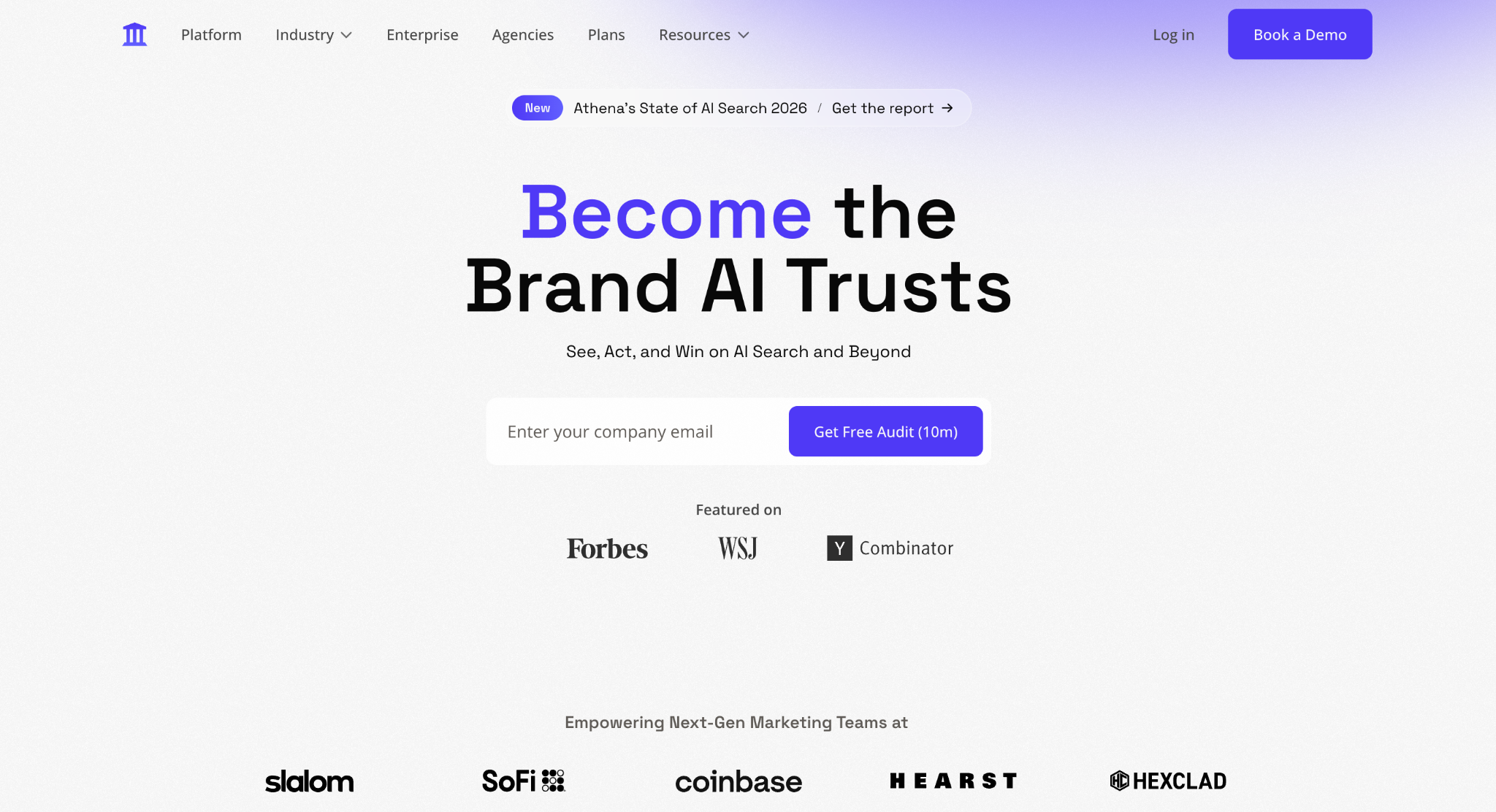
AthenaHQ analyzes prompts and responses, citations, and sentiment, and turns them into content recommendations. It covers more AI platforms on its entry plan than any other tool on this list and integrates with GA4, Google Search Console, Shopify, and Webflow.
Best for: eCommerce brands, especially on Shopify, that want to see every major AI assistant in one place.
Watch out for: one credit equals one AI response, so tracking across 11 platforms uses credits quickly.
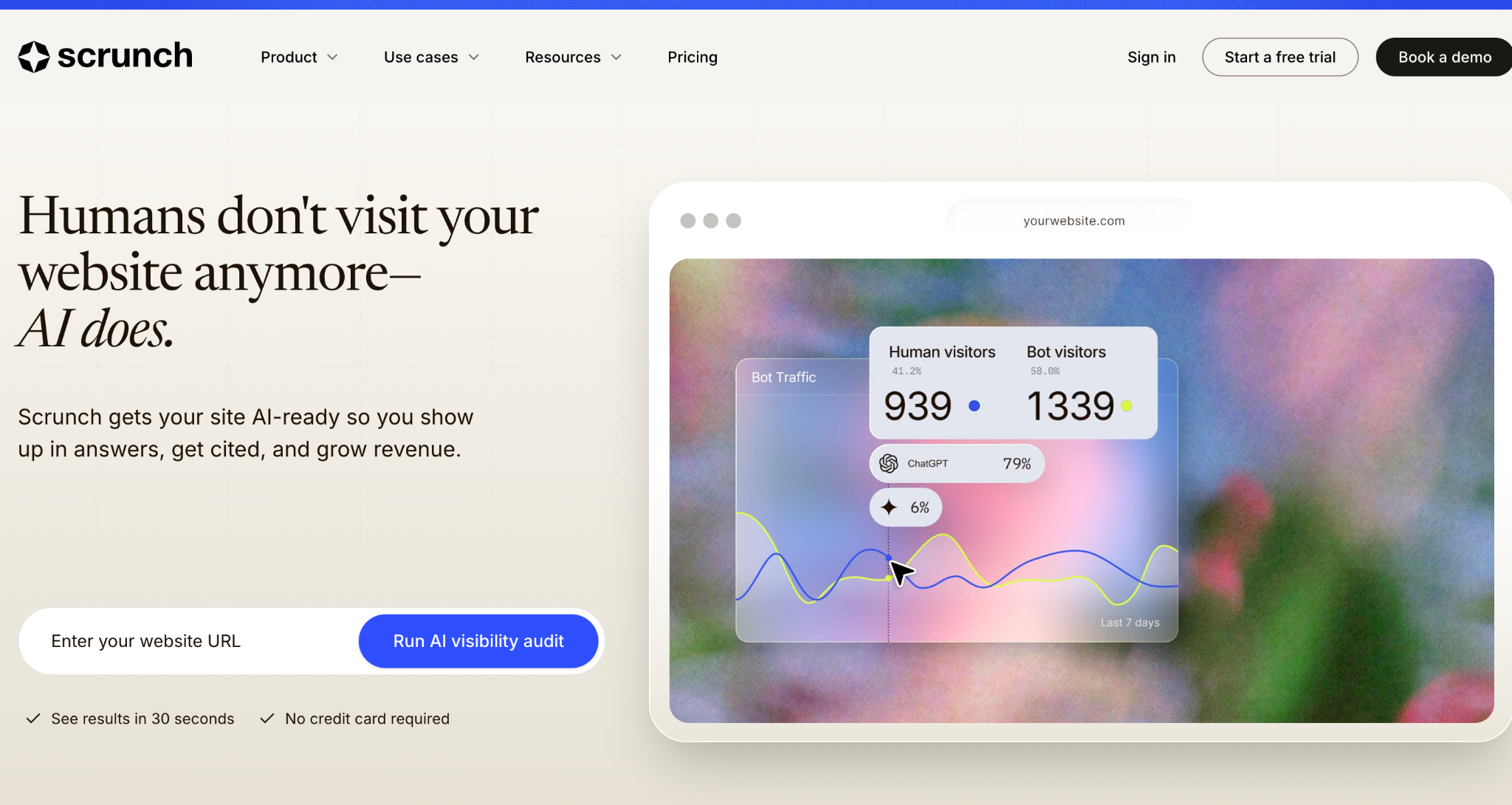
Scrunch tracks citations, attributes traffic from AI agents, and audits pages. Its AXP feature creates an AI-friendly version of your site for AI crawlers. The Starter plan includes 350 custom prompts and three seats.
Best for: mid-market and enterprise brands that want to connect AI visibility with agent traffic.
Watch out for: seat limits, with extra seats at $25 each.
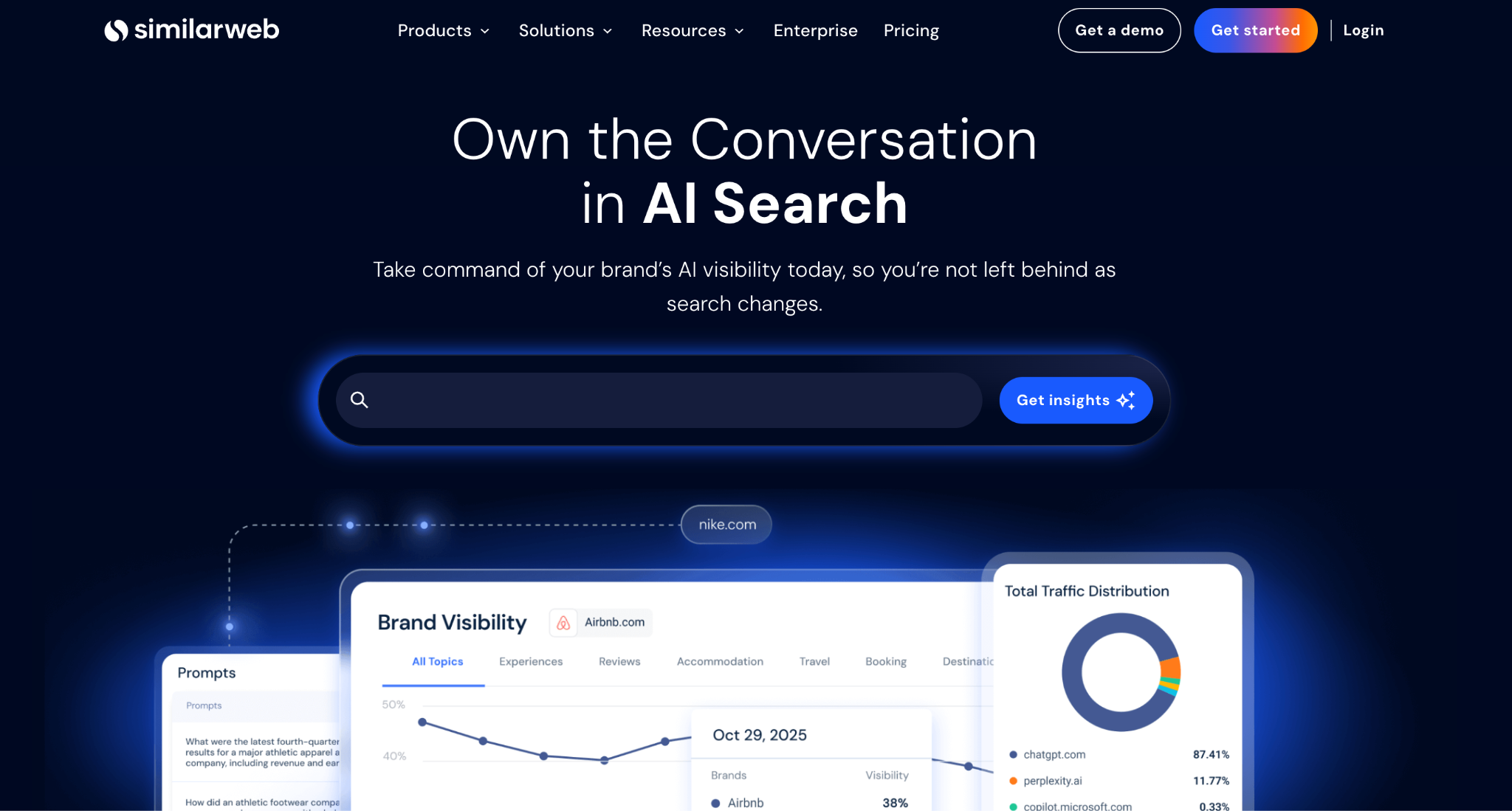
Similarweb combines brand visibility, mentions with sentiment, citations, and prompt analysis with its traffic data. That means you can compare AI referral traffic for your site and your competitors’ sites, not only mentions.
Best for: teams that need to show how much traffic AI assistants send to them and to competitors.
Watch out for: one user per plan.
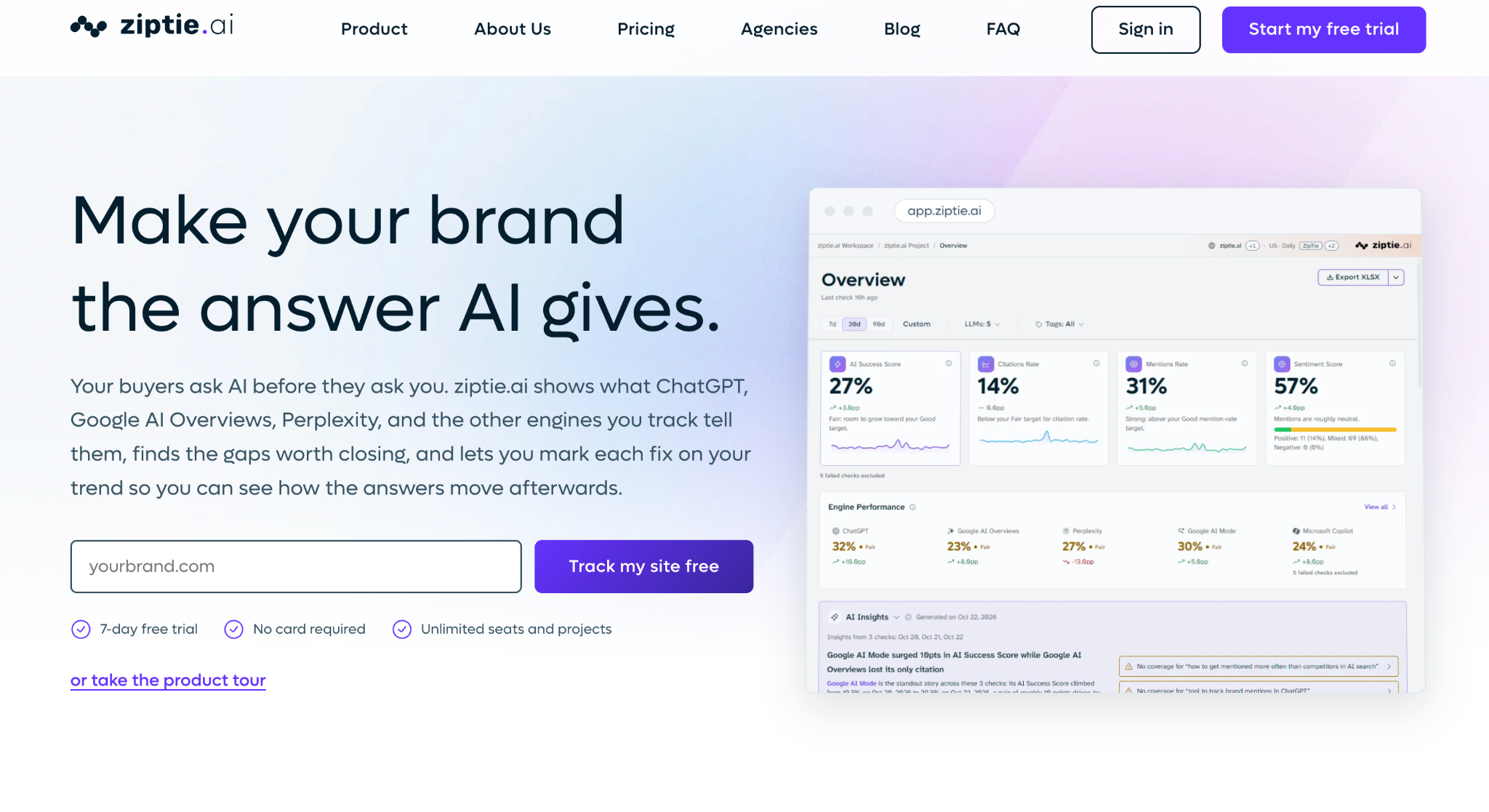
ZipTie charges for prompt slots, at about $0.01 per check on each platform, so you control exactly what you pay for. It reports citation rate, mention rate, sentiment, and the influence of Reddit and YouTube content on AI answers, and connects to Google Search Console on all plans.
Best for: SEO specialists and agencies that want granular cost control and white-label reports.
Watch out for: no webhooks or CMS connectors.
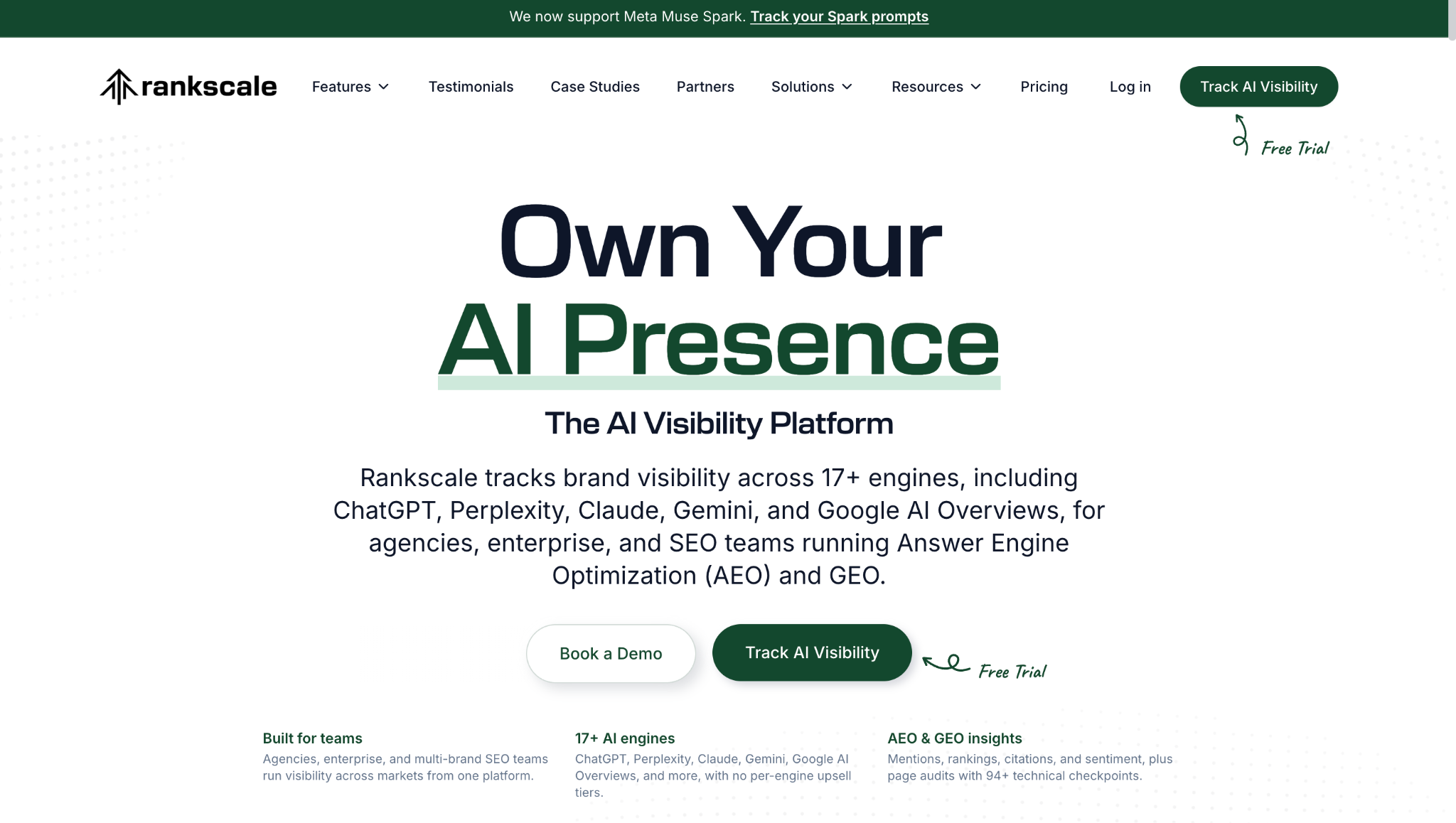
Rankscale tracks visibility, competitor benchmarks, citations, and sources, with sentiment from the Pro plan. You can set how often prompts run, from hourly to monthly, and connect Looker Studio from Pro.
Best for: freelancers and small teams that need an affordable AI rank tracker and AI visibility tracker in one.
Watch out for: credit-based limits are hard to forecast when you add platforms.
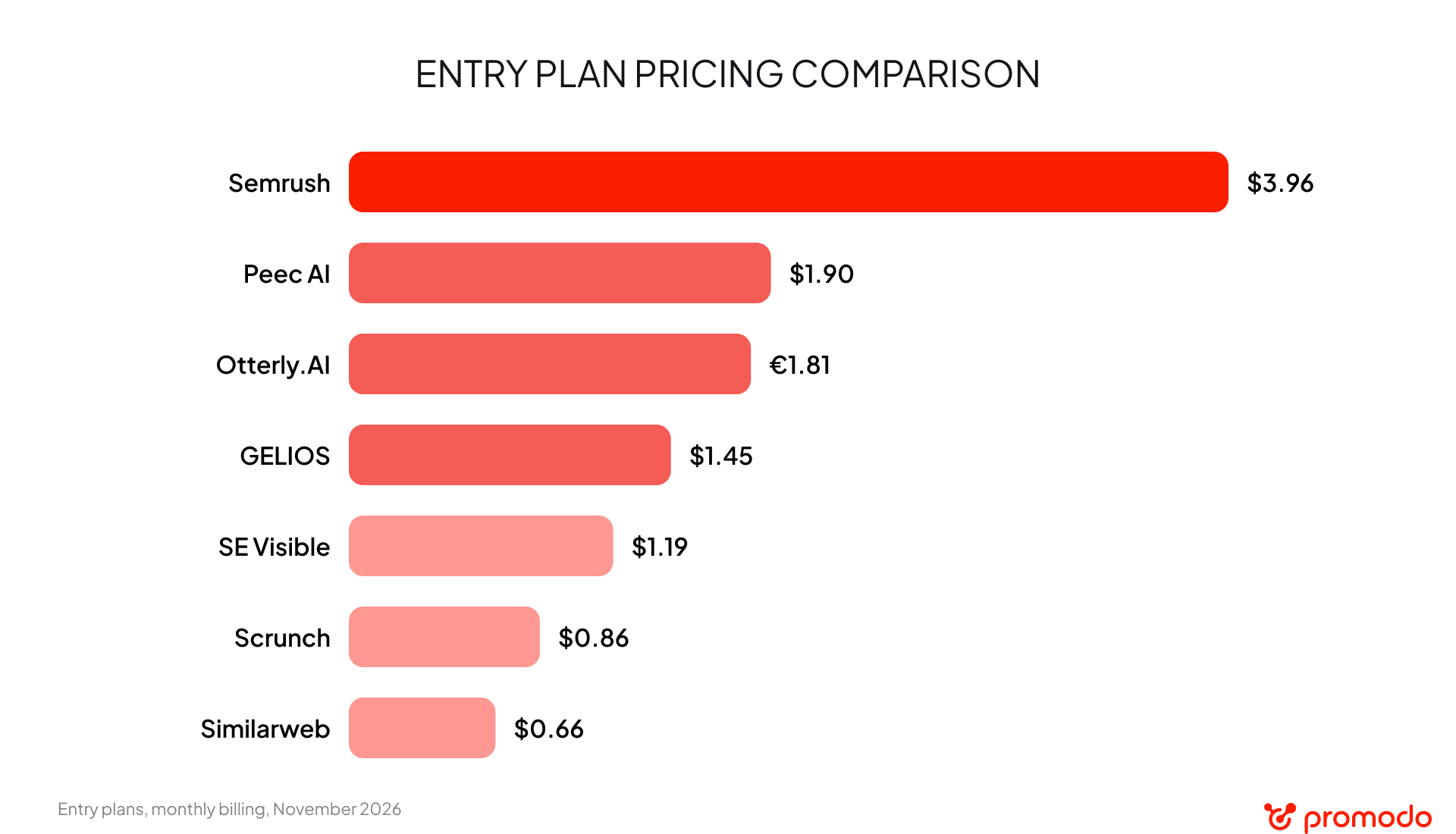
Monthly prices don’t tell you much on their own, because plans include very different numbers of prompts. Here is what one tracked prompt costs on each tool’s entry plan:
On higher plans, the price per prompt drops: GELIOS Pro, for example, costs $0.99 per prompt, and $0.79 with yearly billing. Keep two caveats in mind. First, a prompt isn’t the same unit everywhere: Peec AI runs each prompt on three platforms daily, while Similarweb’s plan has one user and three months of history. Second, credit-based tools (AthenaHQ, Rankscale, ZipTie) charge per AI response, so their cost depends on how many platforms you track and how often.
If you want a first look before you pay for an AI visibility tracker, start with these free options, or use the free trials most paid tools offer (GELIOS, SE Visible, Scrunch, and ZipTie all give 7–10 days):
Before you buy, check three things on the plan you’ll actually use: which AI platforms are included, how many prompts you get and how often they run, and whether you can export data to the reports your team already uses. For a deeper look at which metrics matter, see our guide to GEO benchmarks. And when you’re ready to turn the data into more mentions, the Promodo team can help with GEO and AI search optimization.
[[FAQ-START]]
The best AI visibility tool depends on your team: GELIOS by Promodo is the best value for daily tracking of one to five brands, Profound is the best for enterprise brands, Peec AI is the best for agencies, and SE Visible gives the most tracked prompts for the price. Teams already on Semrush or Ahrefs get the most value from the AI tools inside those suites.
Yes. HubSpot AI Search Grader, Mangools AI Search Grader, and the free Ahrefs and Semrush checkers give one-time scores, and Google Search Console shows your impressions in AI Overviews and AI Mode for free. For ongoing tracking, GELIOS by Promodo offers a 7-day free trial.
Every tool on this list tracks ChatGPT. For a dedicated ChatGPT visibility tracker or ChatGPT rank tracker on a small budget, choose GELIOS by Promodo, SE Visible, Otterly.AI, or Rankscale.
For tracking Google AI Overviews, use SE Visible or Peec AI on a mid-size budget, Rankscale or ZipTie on a small one, and Profound for enterprise. GELIOS by Promodo tracks AI Overviews daily from $29 a month, and Google Search Console shows your AI Overviews impressions at no cost, without competitor data.
Entry plans range from $20 to $300 a month: Rankscale starts at $20, GELIOS by Promodo and Otterly.AI at $29 and €29, SE Visible at $89, Peec AI at $95, Semrush and Similarweb at $99, and AthenaHQ and Scrunch at around $300. Enterprise tools like Profound use custom pricing.
A rank tracker shows your position in Google’s list of links. An AI visibility tool shows whether AI assistants mention or cite your brand in their answers, which competitors they recommend, and how often. Some rank trackers, like Nightwatch, now include AI tracking, but dedicated LLM tracking tools cover more platforms and metrics.
[[FAQ-END]]

You may also like
Choose quality and trusted services to improve the presence of your company on the Internet, and feel free to contact our UK team if you have any questions.

We analyzed 184 websites with different traffic volumes over the same period from Ahrefs, Similarweb, and Semrush, and compared the indicators.

We explain why CPA increases during peak tire season and what top marketing agencies for tire retailers do differently to keep acquisition costs under control.

Together with Kate Guzevataya, Head of Web Analytics at Promodo we have explored the topic in full and share our findings with you.
We at Promodo are ready to help you improve your performance across all digital marketing channels.
Get started