


Content



Team Lead of Content for promodo.com
Experienced in working with data, expert recommendations, and real business cases to create clear and valuable content that delivers real business impact. Passionate about discovering new insights, exploring industry trends, and turning complex topics into practical, easy-to-understand content.

According to Promodo's Mobile Marketing Benchmarks research, the average organic purchase conversion rate in mobile apps ranges from 9% to 45%, depending on the industry. Yet the gap between businesses that consistently outperform market benchmarks and those that struggle to reach them often comes down to one factor: a systematic approach to user experience and conversion rate optimization (CRO).
However, investing in Conversion Rate Optimization (CRO) benefits not only conversion growth. It helps businesses improve the user experience, maximize revenue from existing traffic, and unlock sustainable growth without relying solely on additional user acquisition.
To understand what drives successful app optimization, we spoke with Promodo's UX/UI experts. In this article, they share the methodologies they use to identify growth opportunities and improve mobile app performance.
.webp)
Every CRO project should begin with one question: How does the product make money?
A monetization model shapes user expectations, purchase motivation, and the friction points that prevent users from converting. As a result, the same UX improvement can deliver completely different outcomes depending on the type of app.
Understanding this context allows product teams to prioritize optimization efforts that directly support business goals instead of applying generic best practices.
In subscription products, users commit to an ongoing expense rather than a one-time purchase. Their decision depends on whether they believe the service will continue delivering value over time.
The biggest conversion barriers typically include:
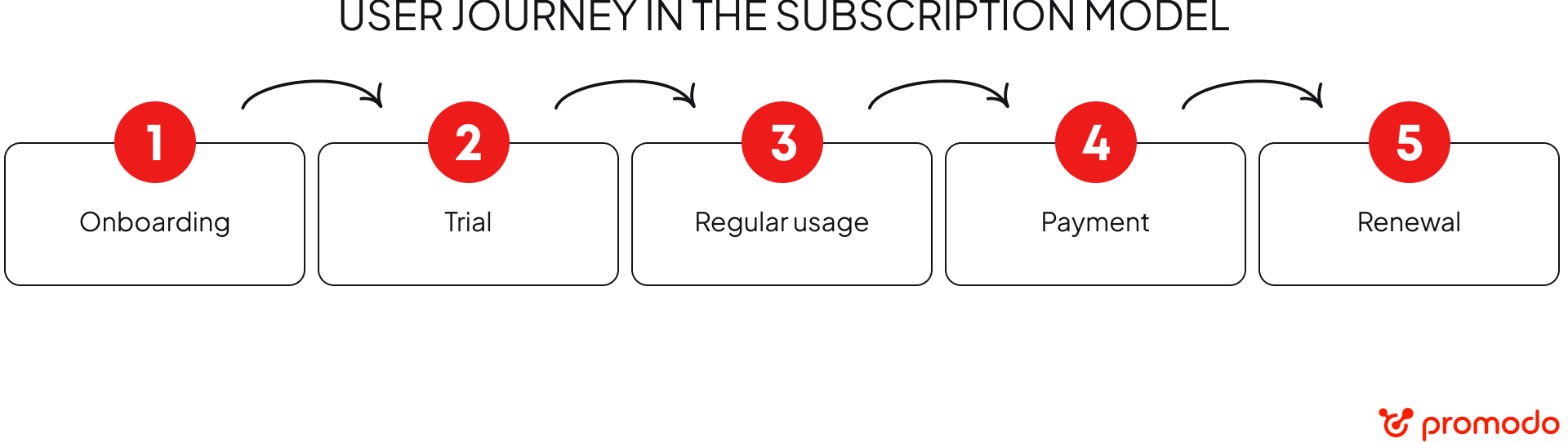
For subscription apps, the primary CRO objective is to reduce the number of steps required to activate a free trial while communicating the product's value before asking users to pay. Pricing, billing frequency, trial duration, and cancellation terms should all be transparent to eliminate uncertainty.
This approach is especially relevant for premium navigation services, vehicle maintenance apps, or digital platforms offering predictive diagnostics for car owners. Users are far more likely to start a trial when they clearly understand the long-term benefits—such as maintenance reminders, service history tracking, or roadside assistance—before entering their payment details.
User behavior is fundamentally different in Freemium products.
Instead of deciding whether to pay immediately, users first try to extract as much value as possible from the free version. They typically convert only after experiencing meaningful value or encountering limitations that prevent them from achieving their goals.
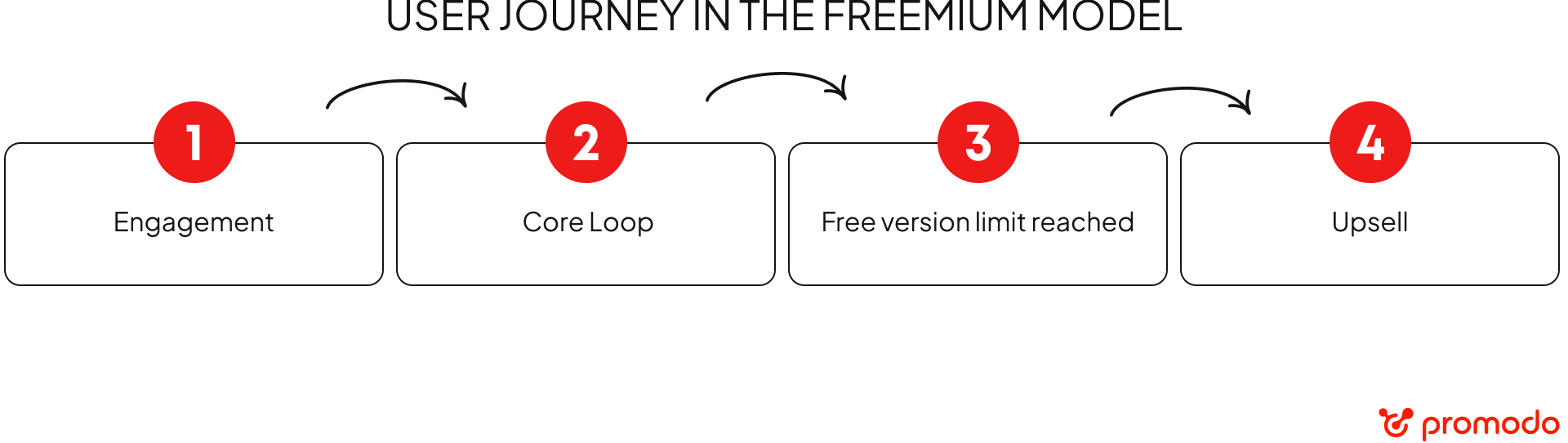
The key CRO objective is to help users reach the Aha! Moment—the point at which they clearly understand why the product is valuable—as quickly as possible. Once users build a habit of returning to the app, premium features should be introduced precisely when they solve an immediate problem rather than interrupt the experience.
Many companies jump straight into redesigning screens, updating the interface, or launching A/B tests. But without understanding why users abandon the app or fail to complete key actions, these changes often produce little or no measurable impact.
Effective CRO begins with a deep understanding of user behavior. Before developing optimization hypotheses, you need to identify how users interact with the app, where they encounter friction, and what prevents them from completing the desired action.
At Promodo, we combine quantitative analytics with qualitative research to build a complete picture of the user journey. Our CRO audits typically include:
This research helps us move beyond simply identifying where users drop off. More importantly, it reveals why they do.
For example, a consumer electronics retailer may notice that many users abandon the checkout after adding products to their cart. Analytics alone highlights the drop-off, but session recordings and user interviews may reveal the real issue: shoppers leave the app to compare prices or check product reviews elsewhere before making a purchase.
By understanding the root causes behind user behavior, we can prioritize optimization opportunities with the highest business impact instead of relying on assumptions. The result is a roadmap of CRO hypotheses that is driven by real user insights and focused on improving both conversion rates and long-term revenue.
A user's purchase decision is made long before they reach the payment screen.
The first few minutes of interacting with your app often determine whether a user will eventually convert. If they don't understand the product's value, fail to achieve an early success, or don't trust the experience, even the most optimized paywall is unlikely to deliver strong results.
By the time users see a subscription offer or checkout screen, they should already have:
That's why some of the biggest CRO wins happen before users are asked to pay.
Optimizing onboarding, user activation, personalization, and retention mechanics often has a much greater impact on revenue than redesigning the payment screen itself. These improvements reduce Time-to-Value (TTV), help users build habits, and naturally prepare them to make a purchase.
For example, а tire retailer can shorten Time-to-Value by asking for the user's vehicle model during onboarding. The app can then instantly display compatible tires, recommend seasonal replacements, and estimate installation availability at nearby service centers, eliminating unnecessary search effort.
The takeaway is simple: if users experience value early, conversion becomes the natural next step rather than something the interface has to persuade them to do.
Once we've analyzed user behavior, the next step is turning insights into actionable hypotheses.
The goal is to identify the changes most likely to improve product performance and business outcomes.
Every hypothesis is grounded in data, user research, and observed behavioral patterns rather than assumptions. If analytics show that users consistently abandon the app during onboarding or rarely engage with a key feature, we investigate the underlying causes and develop solutions designed to remove those friction points.
Not every optimization opportunity deserves immediate implementation. Product teams typically have dozens of promising ideas but limited development resources.
To objectively determine which initiatives should be tackled first, Promodo uses the RICE prioritization framework, which evaluates each hypothesis based on its potential business impact, expected reach, confidence level, and implementation effort.

This data-driven approach ensures that development resources are invested in experiments with the highest expected return, helping businesses achieve faster and more measurable CRO results.
A/B testing is one of the most valuable tools in CRO. However, it doesn't mean that every product change requires an experiment.
Some hypotheses should absolutely be validated because their effectiveness depends on your product, audience, and business model. However, many UX improvements are already backed by years of usability research and proven design principles. In these cases, extensive testing may add unnecessary time and cost without significantly reducing risk.
For example, features such as a sticky "Buy" button, recent search history, and cross-sell recommendations in the shopping cart have consistently demonstrated positive results across thousands of usability studies. These patterns align with recommendations from the Nielsen Norman Group and Baymard Institute, making them safe, low-risk improvements for many digital products.
The same applies across industries.
For a consumer electronics marketing, displaying key product specifications, financing options, and delivery estimates directly on the product page reduces friction and helps customers make faster purchasing decisions.
For tire retailers, clearly presenting vehicle compatibility, available installation slots, and seasonal recommendations before checkout removes common purchase barriers and increases customer confidence.
The key is knowing when to experiment and when to rely on established UX trends and best practices. By combining proven usability principles with data-driven testing where it matters most, businesses can accelerate product improvements while making the most of their development resources.
Effective mobile app CRO is built on more than isolated UX improvements. It combines user research, behavioral analysis, product analytics, and continuous experimentation to uncover what truly drives conversions.
Rather than relying on assumptions, this data-driven approach helps businesses identify the highest-impact optimization opportunities, improve the user experience, and generate measurable business results.

Team Lead of Content for promodo.com
Experienced in working with data, expert recommendations, and real business cases to create clear and valuable content that delivers real business impact. Passionate about discovering new insights, exploring industry trends, and turning complex topics into practical, easy-to-understand content.
You may also like
Choose quality and trusted services to improve the presence of your company on the Internet, and feel free to contact our UK team if you have any questions.

For any business, retaining and engaging users on their website is crucial. The longer a user stays on your site, the higher the chance they will purchase.

Social Media Marketing, SMM for short, is a digital marketing tool ecommerce owners have known and used for a while now.

When preparing your digital marketing strategy for 2024, you need profound industry analysis, meaningful statistics, and credible forecasts for future trends.
We at Promodo are ready to help you improve your performance across all digital marketing channels.
Get started


.avif)

.svg)


