


Content


Copywriter at Promodo
Over nearly three years as a copywriter, I’ve written for US and European startups and companies, including SE Ranking. I enjoy working with words—finding the right phrasing, organizing ideas, and turning them into clear and useful content that shows real value and helps businesses grow.

Team Lead of Content for promodo.com
Experienced in working with data, expert recommendations, and real business cases to create clear and valuable content that delivers real business impact. Passionate about discovering new insights, exploring industry trends, and turning complex topics into practical, easy-to-understand content.

Only 13% of tire purchases in the U.S. happen online, but every third shopper starts their journey there. Digital already drives demand in the tire market, but the challenge now is turning more of that demand into actual online purchases.
To understand how, we analyzed the latest market data, customer behavior trends, and real-world brand examples in the 2026 online tire market. Working with automotive eCommerce brands also gives us a close view of how customers search, compare, and buy tires today.
The estimates are that the US tire market size was worth USD 56.27 billion in 2025, and is expected to reach USD 64.06 billion by 2030
The global automotive tire market size is expected to grow to US$175.2 billion in 2026 and can potentially reach US$260.7 billion by 2033.
What’s driving that growth? A few things at once: new vehicle technology, more focus on sustainability, and simply more cars on the road needing replacements.
As for tire online retail, its market size in 2026 is 18.9 billion. The US remains the market leader in the online tire industry. Online penetration in major European markets such as Germany, the UK, and France is estimated at 15–20%.
U.S. shoppers are already researching tires online, but most don’t complete the transaction there.
In 2025, 13% of tire purchases happened online, even though 31% of people tend to start their search online.
It shows a clear gap between research and conversion. Consumers are comfortable researching online, but still hesitate to buy, likely due to logistics, fitment issues, and other factors.
At Promodo, we understand how online marketing impacts offline sales and can help you measure the ROPO effect for your business.

Passenger vehicle owners are the primary drivers of online tire sales, accounting for roughly 58% of market share. This audience is price-sensitive, actively compares options, and values convenience.
Online channels make tire shopping easier as they allow buyers to compare brands, read reviews, and find competitive offers without visiting multiple stores. Growing vehicle usage also means tires wear out faster. It creates greater demand for replacements and makes fast, convenient online purchasing even more appealing.
Breakdown of key tire retail channels (OpenBrand):

Third-party sellers dominate online tire sales (about 71% of the market in 2025). The reason is that they offer more choice, better prices, and a more convenient shopping experience than buying directly from manufacturers.
Because these sellers source in bulk, they can often offer lower prices across a wide range of brands, tire types, and sizes. They also benefit from strong logistics networks and major marketplace exposure through platforms like Amazon, eBay, and Walmart, which makes delivery faster and builds consumer trust.
For shoppers, that means easier comparison, more competitive pricing, and quick access to exactly the right product. And that’s exactly what they need.
OpenBrand’s research says Walmart attracts the largest share of tire shoppers (around 20%). However, attracting interest does not always mean sales. Discount Tire converts shoppers more effectively, closing roughly 83% of potential buyers compared with Walmart’s 76%.
The data also highlights shopper leakage: nearly 24% of consumers who considered Walmart ultimately purchased elsewhere, with many switching to Discount Tire.
We analyzed the tire industry's retail leaders, researched their traffic distribution, and, based on this, can assume what the market situation will look like in 2026.
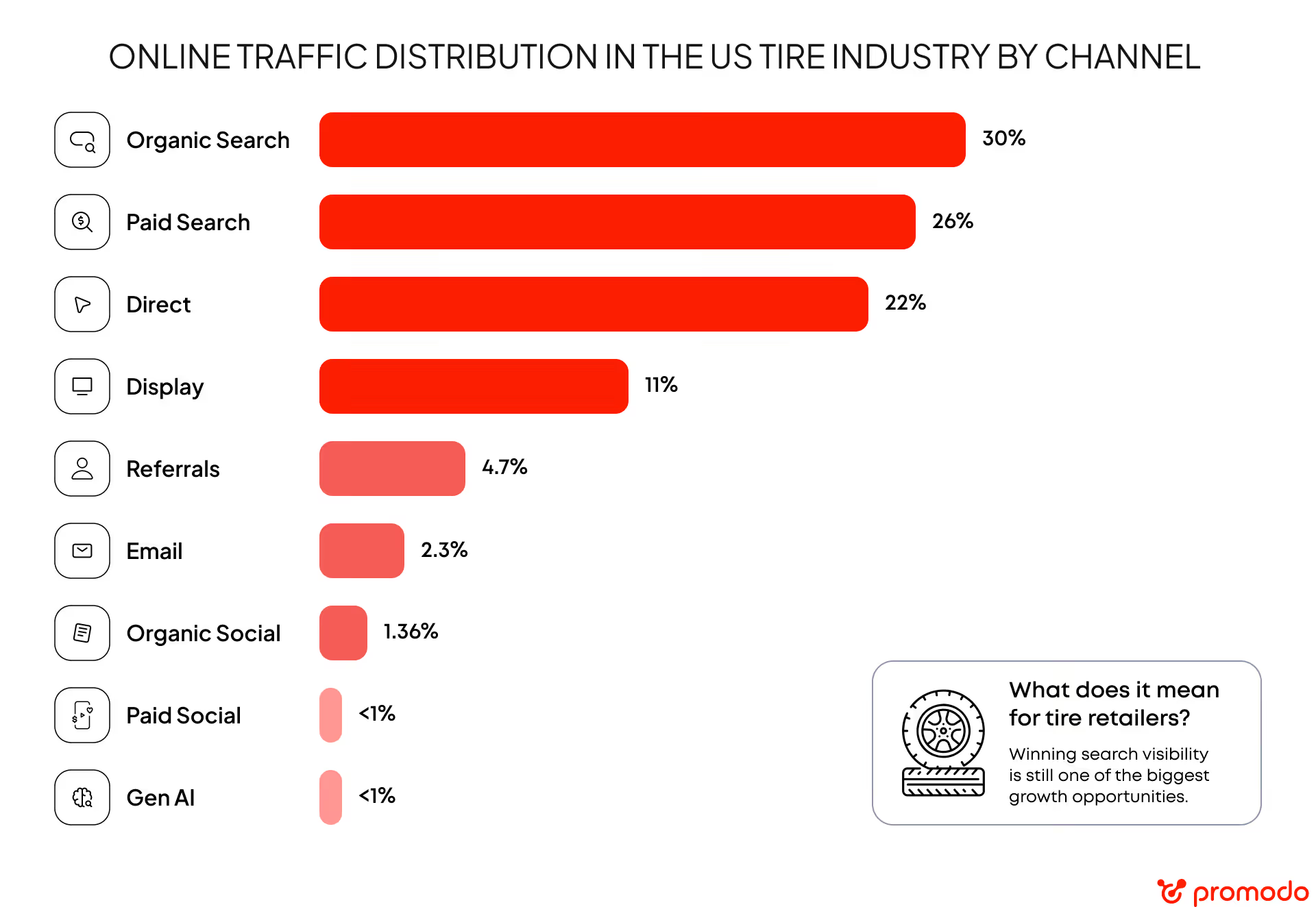
Our analysis shows that tire eCommerce is heavily search-driven. Organic search accounts for around 30% of traffic, with paid search close behind at 26%.
Direct traffic contributes another 22%, pointing to strong brand recognition and repeat demand. Display is around 11%. Other channels play a much smaller role: referrals account for 4.7%, email for 2.3%, organic social for 1.36%, and paid social and Gen AI each account for less than 1%.
What does it mean for tire retailers? Winning search visibility is still one of the biggest growth opportunities.
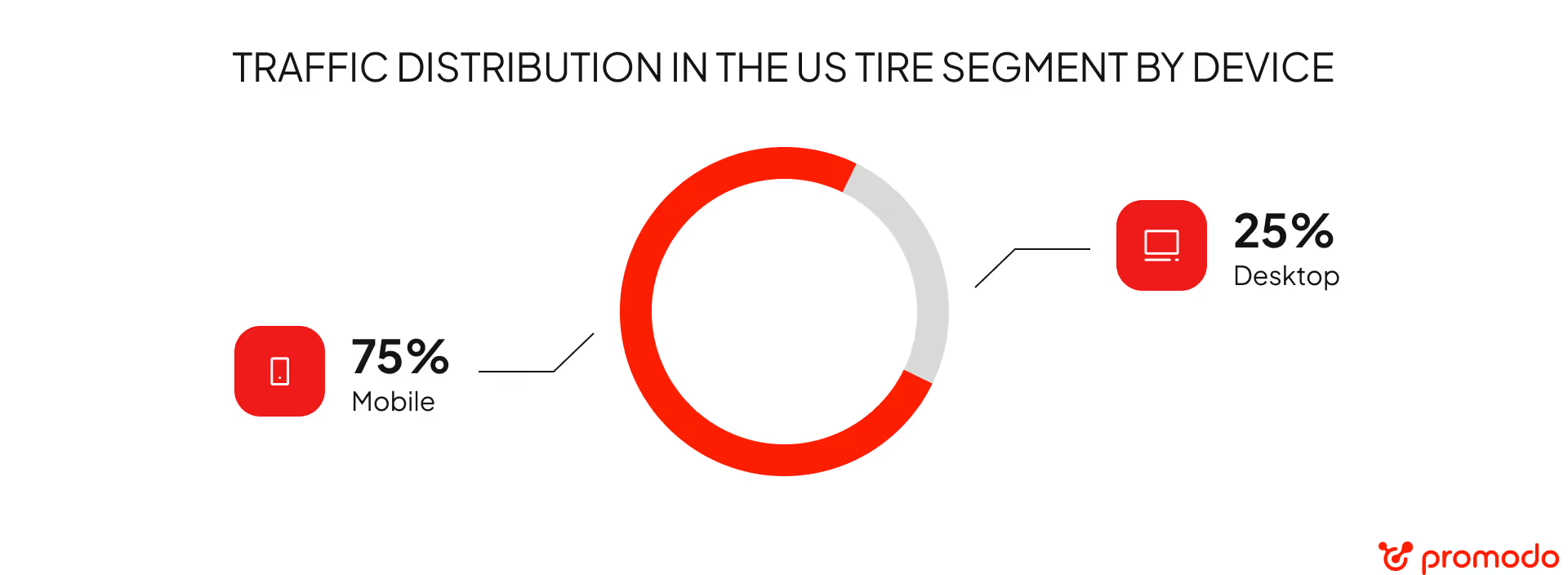
As for device distribution, mobile clearly dominates the customer journey, accounting for roughly 75% of traffic. Desktops make up the remaining 25%.
A few established brands dominate the U.S. tire market, according to OpenBrand research. Goodyear leads with 13.9% market share, Michelin with 11.7%, and Bridgestone with 9.2%. Firestone (6.5%) and BF Goodrich (6.3%) are also in the top five.
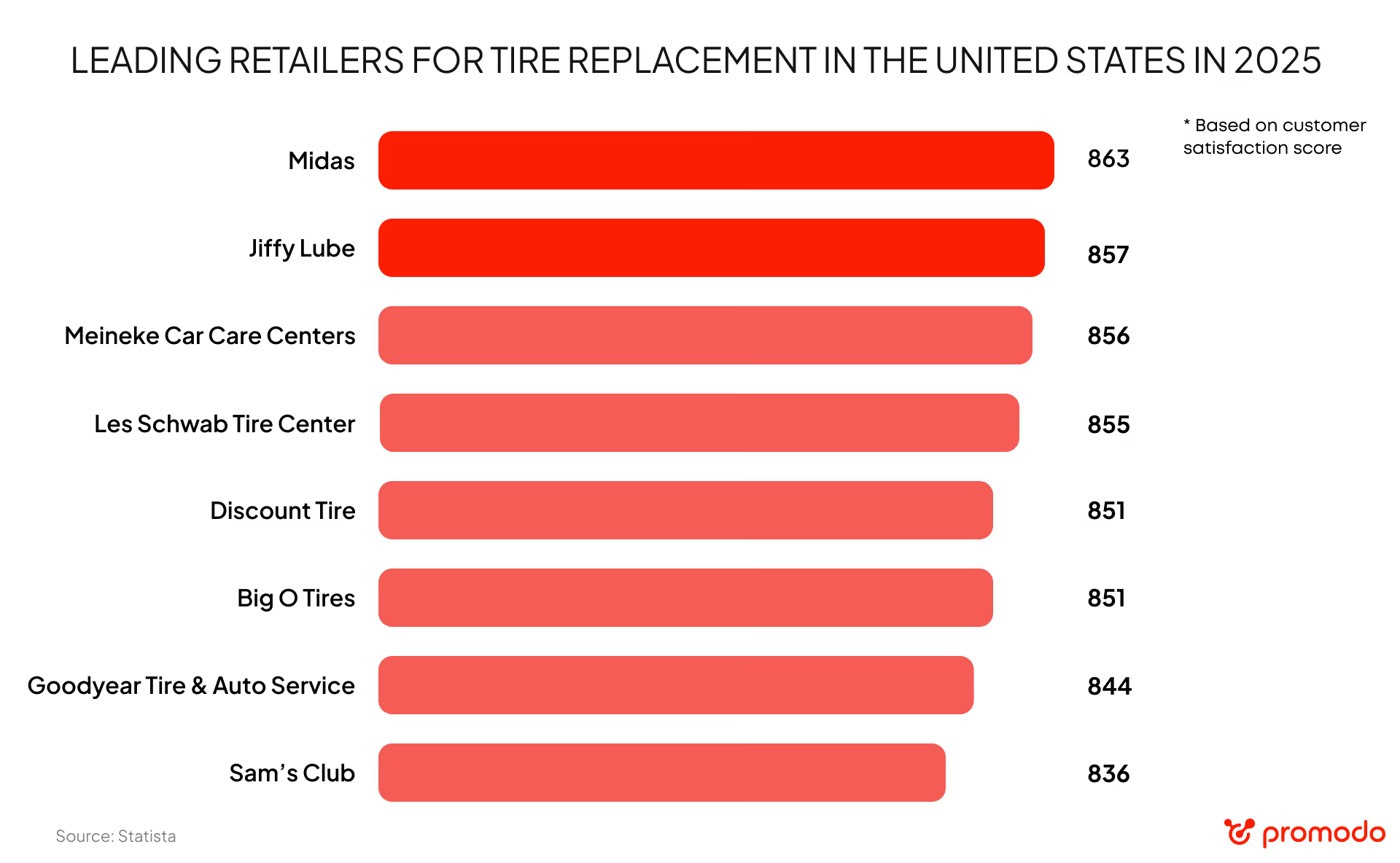
When it comes to customer satisfaction in tire replacement, specialized companies still lead the U.S. market. According to J.D. Power’s 2025 rankings, brands like Midas, Jiffy Lube, and Meineke outperform even major retail players. Selling the product is one part of the experience, but installation and after-sales service are also important drivers of customer loyalty.
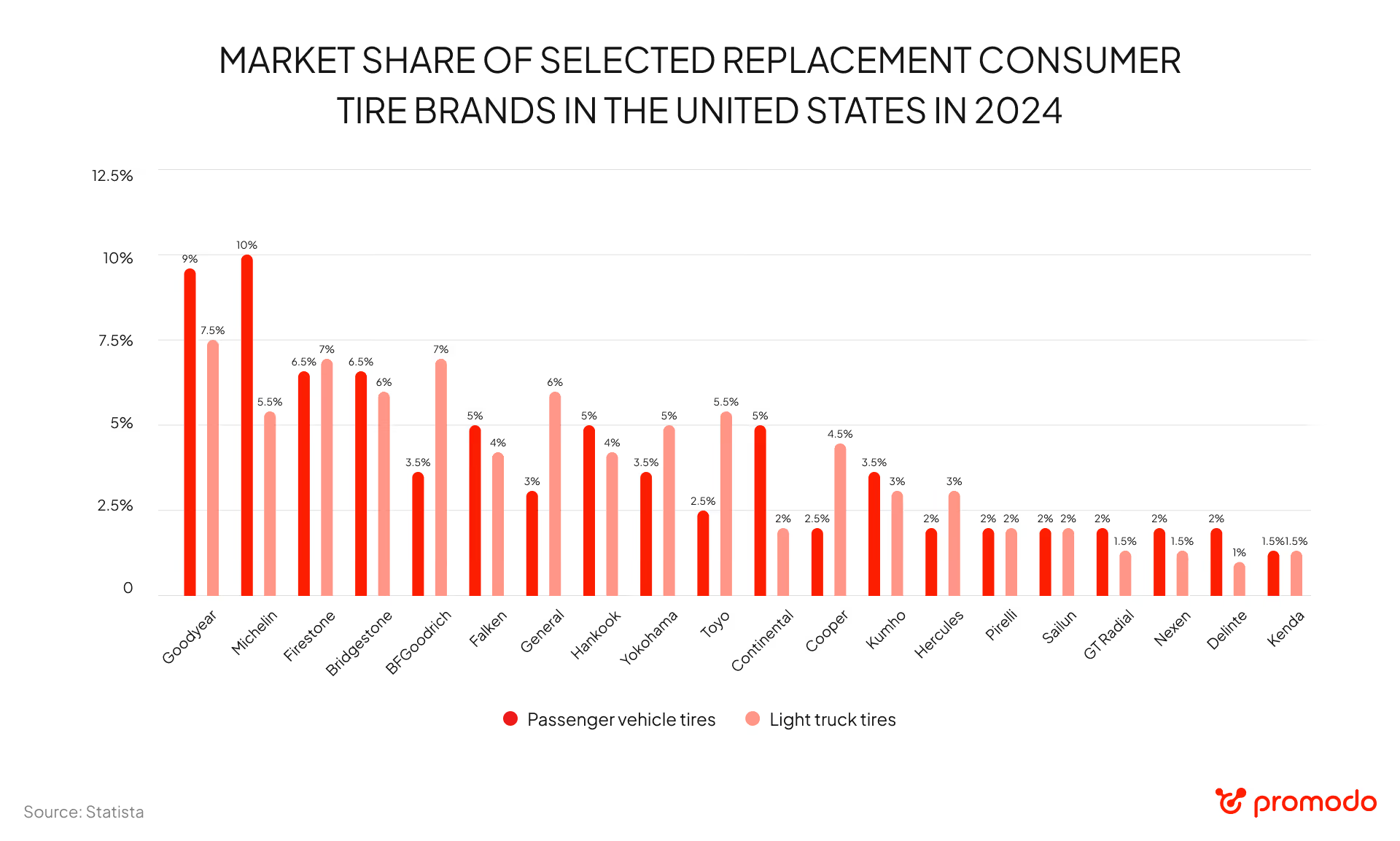
The next chart shows the leading brands in the U.S. replacement-tire market. Goodyear and Michelin lead in passenger-vehicle tires, while Michelin and BFGoodrich have a stronger position in the light-truck segment.
Beyond the top brands, market share is spread across many players, which shows that competition in the replacement market remains broad.
What actually makes someone choose one tire brand over another? That’s an important question, so we pulled the most relevant buyer insights to help you spot opportunities in your own strategy.
Weather can be a direct purchase trigger in the tire market. According to Hankook’s 2025 consumer data, 63% of the U.S. consumers said they planned to buy all-season tires.
Unlike the U.S., many European drivers still switch between summer and winter tires. It creates predictable seasonal sales spikes. Demand peaks before winter in countries such as Germany, Sweden, and Finland.
The thing is, consumers don’t always plan tire purchases far in advance; they often react to real weather changes. Based on our analysis of 5 years of data, we found a very narrow temperature threshold (±1°C) at which customer behavior shifts from browsing to buying.
For marketers, this creates a timing advantage: you react before competitors and capture peak demand while CPCs are still relatively low. Once the wider market responds, competition increases, and acquisition costs rise quickly.
“We analyzed five years of data, mapped temperature changes against sales volume, and identified a very specific tipping point—plus or minus one degree—when customer behavior shifts. That’s the moment people stop casually searching and start buying immediately. Based on that insight, we enter the auction before competitors do and capture sales while traffic is still relatively inexpensive.”
- Borys Dziundziuk, Product Owner PPC at Promodo
According to OpenBrand research, autospecialty retailers dominate, accounting for roughly two-thirds of purchases. Discount stores are gradually gaining share.
Retailer choice is driven mostly by practical factors:
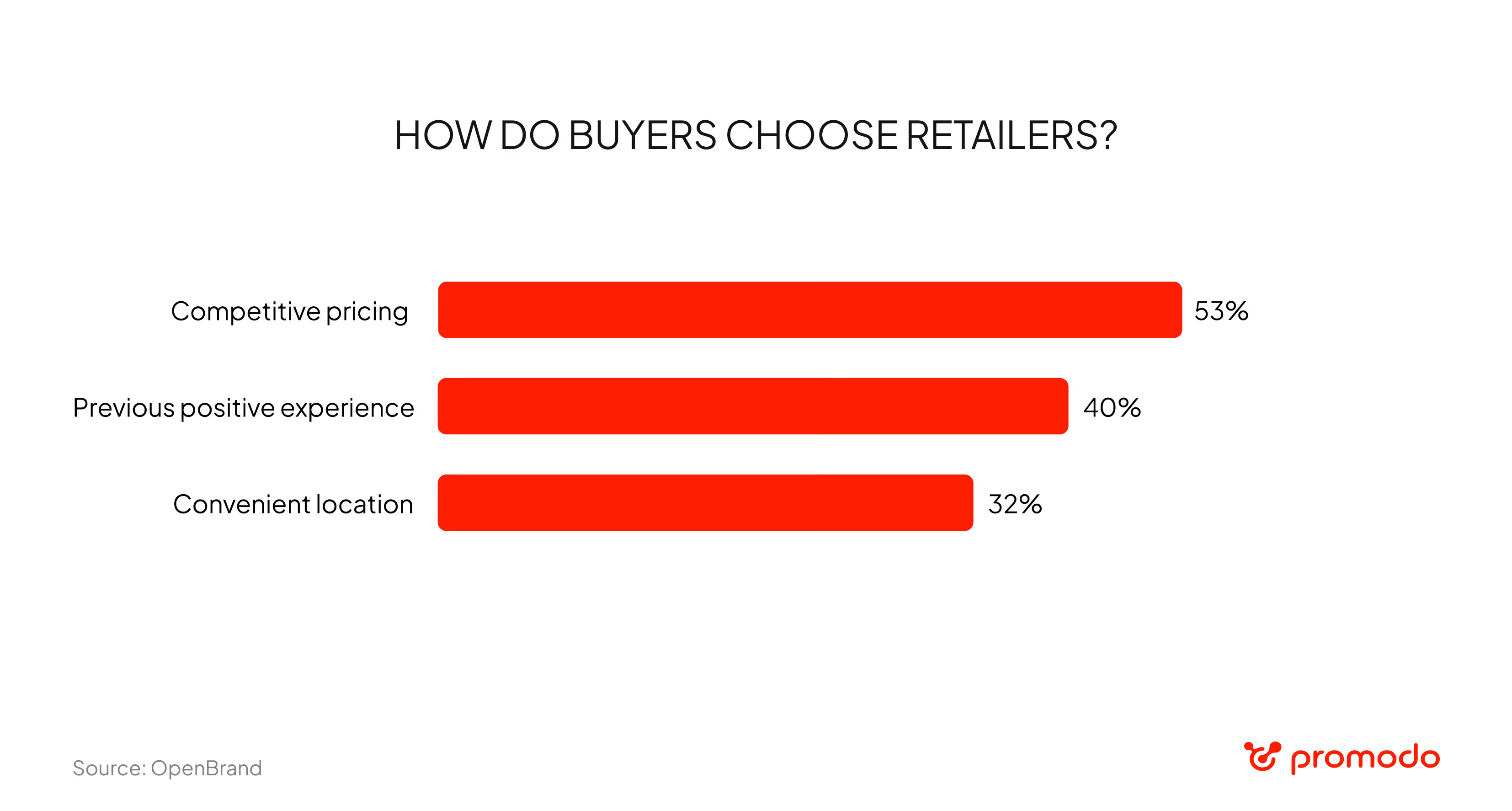
Overall, tire shoppers are price-conscious and convenience-driven, but trust and familiarity are also important factors.
According to the same source, price is still the biggest deciding factor. 52% of consumers say competitive pricing is the main reason they choose a brand. Product quality comes second at 29%. Trust also plays a meaningful role in this category—26% prefer brands they’ve bought before.
Loyalty isn’t equally strong across brands. Michelin leads in repeat purchases, with 54.4% of its buyers choosing the brand again, followed by Goodyear (46.6%) and Firestone (40.7%).
Pricing helps win the first sale, but strong brand experience is what brings customers back.

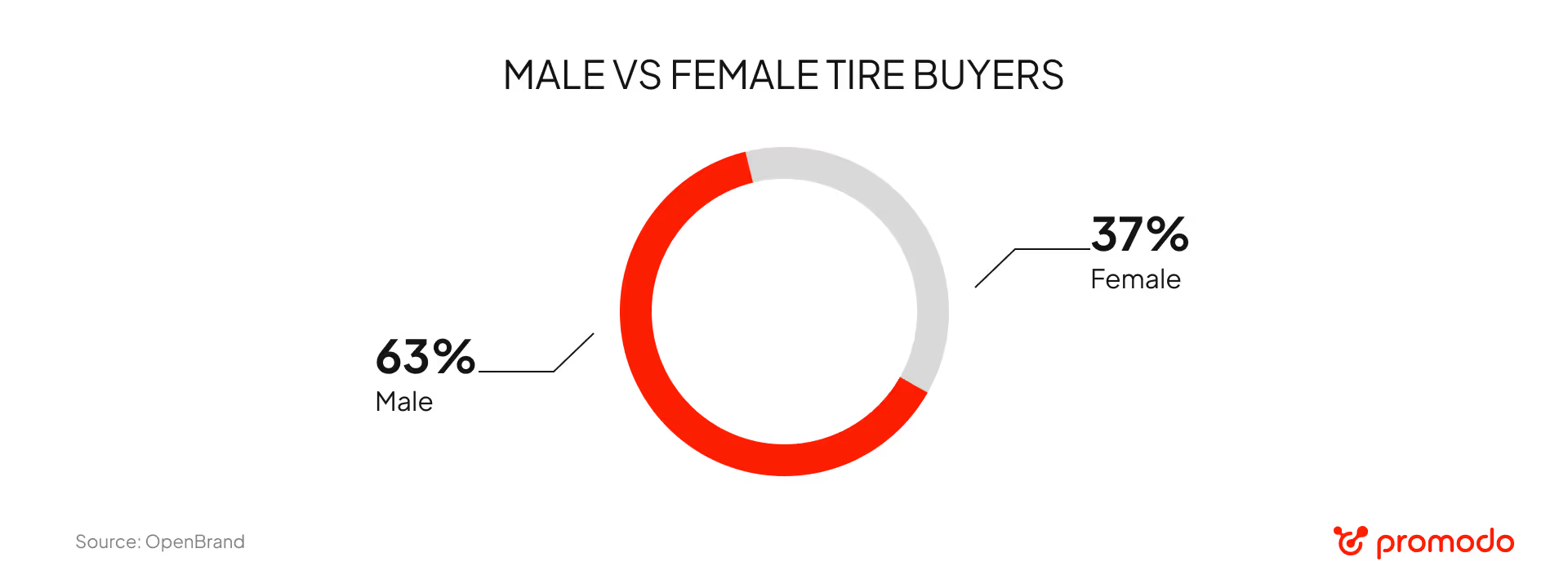
According to OpenBrand, women make up more than a third of buyers (37%). It means that tire brands that market to a narrow audience risk missing a large part of real buyers.
Most purchases fall into the 16–18-inch range, which aligns with mainstream passenger vehicles. But many buyers still don’t actually know their tire size. For retailers, that’s a clear sign that making product selection easier (offering fitment tools, vehicle lookup, or guided recommendations) can reduce friction and improve conversions.
Want to understand real search demand in the U.S. tire market? Promodo has created an exclusive research based on search behavior, trends, and consumer intent.
Since we work closely with tire brands and retailers, we see clearly what’s shaping the market in 2026.
In 2025, global EV sales reached 21.6 million and are projected to reach 22.7 million in 2026. In fact, electric vehicles are heavier than petrol and diesel cars, and their tires tend to wear out faster due to the extra weight and instant torque.
As a result, drivers are looking for tires that last longer, improve battery efficiency by reducing rolling resistance, and produce less road noise for a quieter driving experience.
This is also creating a growing premium segment in the market, as EV-specific tires are designed to meet these specific needs rather than simply serving as standard replacements.
Some manufacturers are also introducing smarter tire technologies, such as IoT sensors that monitor pressure, temperature, and wear in real time, adding another layer of value for both drivers and automakers.
Overall, sustainability is a growing concern. Euromonitor found that 61% of global consumers care about climate change and do their best to save the environment.
Consumers are paying more attention to fuel efficiency, product longevity, and eco-friendly materials. Regulations also push manufacturers toward more sustainable solutions. It creates demand for more efficient and sustainable tire options, including low-rolling-resistance tires that improve fuel or battery efficiency, longer-lasting products, and recycled or eco-friendly materials.
Buying tires online can be overwhelming for customers because there are too many sizes, technical specs, and questions about vehicle compatibility. AI engines can suggest suitable tire options based on vehicle type, driving conditions, seasonality, or past behavior. As a result, the decision process is much faster.
AI chatbots play a similar role at the consideration stage. Instead of losing shoppers who have questions about fitment, delivery, warranties, or installation, retailers can answer them instantly and keep the purchase moving.
For tire retailers, this is a practical way to remove buying friction. If customers can get instant answers and confident product recommendations, they’re less likely to abandon the purchase and more likely to convert faster.
Read more about AI in eCommerce in our article.
To close the gap between online research and offline purchase, more tire retailers are adopting online-to-offline service models. Customers can order tires online, choose a local installation partner, book a fitting at a selected service center, or even arrange mobile installation.
This matters because convenience often determines whether a person completes the purchase. Some estimates suggest platforms that integrate local installation services can capture 30–40% of local installation demand.
Goodyear is a good example of how tire brands can remove friction from the buying journey. In this case, the customer chooses tires or services online, prepares a parking space, and the technician comes directly to their location to complete the work.

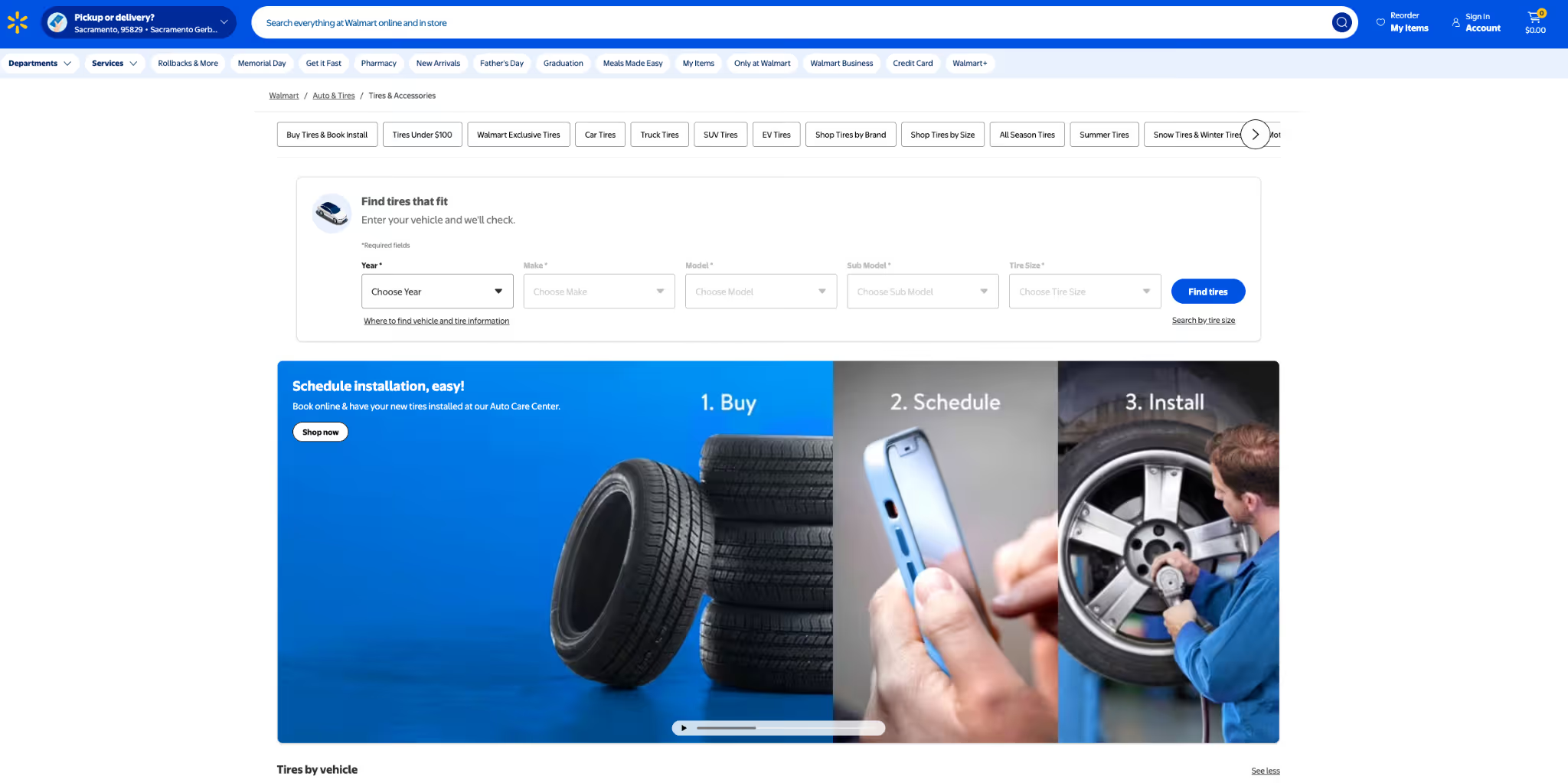
Another example is Walmart. You can buy tires there and schedule installation at Walmart Auto Care Center.
A few important things you should focus on to bring more conversions and outperform competitors:
Tire buyers rarely make impulse purchases. They compare brands, check compatibility, research seasonal options, and start with highly specific Google searches before deciding where to buy. That makes SEO a long-term acquisition channel.
Once, we helped an online tire retailer improve organic visibility for high-intent search queries through a focused SEO strategy. We optimized category structure, improved content relevance, and aligned pages with actual search behavior.
This way, the brand significantly strengthened its search presence. In fact, monthly organic traffic grew by more than 25%.

Not every tire shopper completes the purchase online. As we already mentioned, still, the majority of tire purchases end up offline. Many customers research products online, compare prices, and narrow down their options digitally, but still choose a nearby store or installer to make the final purchase.
You should capture local intent, especially high-conversion searches like “tire shop near me,” “wheel alignment in Boston,” or “Michelin tire installation nearby.”
Basic steps to do:
Tire buyers rarely search broadly. They look for very specific combinations: tire size, season, vehicle type, brand, performance features, or compatibility requirements. The more precise the need, the less effective generic PPC structures become.
If your campaigns group too many products together or rely on broad targeting, shoppers may land on irrelevant pages, struggle to find the exact match, and leave before converting. That’s why tire retailers need PPC strategies built around search intent and product specificity.
At Promodo, we work with automotive brands, and in one of our projects, we helped a tire store automate its Google Ads campaign structure using our G-MOS tool. Instead of grouping products too broadly, we clustered them based on semantic relevance and actual search behavior. This made ads more relevant to highly specific searches and improved the path from search to purchase.
The results: +30% in search transactions and up to +50% of traffic from search.
In a category with thousands of product variations, a smarter PPC structure can drive stronger performance than simply increasing ad spend.

Customers research online, react to weather shifts, compare prices across channels, and move between digital and offline touchpoints before making a purchase.
Brands that understand these patterns early can respond faster, reduce acquisition costs, and capture more demand. At Promodo, we work with automotive and tire brands to solve these exact challenges every day.

Copywriter at Promodo
Over nearly three years as a copywriter, I’ve written for US and European startups and companies, including SE Ranking. I enjoy working with words—finding the right phrasing, organizing ideas, and turning them into clear and useful content that shows real value and helps businesses grow.
Team Lead of Content for promodo.com
Experienced in working with data, expert recommendations, and real business cases to create clear and valuable content that delivers real business impact. Passionate about discovering new insights, exploring industry trends, and turning complex topics into practical, easy-to-understand content.
You may also like
Choose quality and trusted services to improve the presence of your company on the Internet, and feel free to contact our UK team if you have any questions.

Remarketing campaigns are vital to increase conversions and revenue.

A properly search engine optimized title tag helps the search engine understand the content of the page, and increases click-through rate.

While the question of how to get more patients in a dental office remains open, today we are offering a bunch of digital marketing advice.
We at Promodo are ready to help you improve your performance across all digital marketing channels.
Get started


.avif)


.svg)


